Zum Hauptinhalt springen Zur Suche springen Zur Hauptnavigation springen

Colin Marshall

Korean Newtro Where Youth Meets Tradition

Produktinformationen "Korean Newtro"

About the Book

Korea has become cool. While long seen as a bastion of traditions and customs that go back millennia, the country has now emerged as a playground of hip, trendsetting movements. At the heart of this coolness is, of course, Hallyu, the “Korean Wave” that seems to have penetrated every corner of the planet by now. From K-pop and K-dramas to Korean culinary delights and head-turning fashion statements, the world has taken notice of Korea for something other than the cars and electronics that brought it to the world stage in decades past. And the latest development in this evolution of cool is Korean newtro.

Discovering the Past Anew

In Korean Newtro: Where Youth Meets Tradition, Seoul-based essayist, broadcaster, and public speaker Colin Marshall takes readers on a trip through everything in Korea that is both new and retro, or as the cool kids say, newtro. This unique phenomenon is all about appealing to those who are too young today to have experienced the products, styles, and media that were once deemed cool twenty or even a hundred years ago, and so find themselves discovering-and not rediscovering-all these things for the first time. For those not in the know, this will also mean learning some of the latest lingo, from cohort monikers like the “1020 generation” and “MZers” to a cornucopia of new terms that cover everything under the sun, including food, fashion, and fun.

A New Take on the Old

Whether it is the bars and pojangmacha of Seoul’s “Hipji-ro” (Eulji-ro) neighborhood, where you can feast on grilled mackerel, sundae, pork belly, and chicken feet while enjoying some good old-fashioned beer and soju, or the country’s many Starbucks cafés and dabang, where you can try reimagined classic beverages like ssanghwa-cha (complete with egg yolk) or indulge in a makgeolli-flavored cream cold brew, readers will have their senses inundated by so many things they are at once familiar with yet presented in a completely fresh and unforgettable way.

A Reimagined Memory Lane

This journey down a Korean-style yellow brick road continues into the arts (film cameras and minhwa artworks) and architecture (traditional Korean homes and paper), to the TV shows and movies that have revived bygone portable music players and fashion brands, to the latest styles in hanbok worn by K-pop superstars like BTS and Blackpink. Along the way, readers will also be introduced to the newtro world of paintings, folding screens, fashion, beauty, haendeupon (cellphones), and the once ubiquitous PC bang (internet café).

Where Youth Meets Tradition Meets the World

Korea has raced into the 21st century at breakneck speed, both looking back and not looking back at the past. Contradiction though that may seem, it encapsulates so much of what sets the country apart today. Or as some have commented, Korea can now be viewed as something of a jjamppong: a seafood noodle stew that is a staple of Korean Chinese cuisine, but also a byword for a mixture of diverse and sometimes improbably combined elements. For those who have never been to Korea-or even those not familiar with much about Korea outside of Hallyu-Korean Newtro: Where Youth Meets Tradition is the perfect guide to all that is hip once again in a country redefining itself as the new bastion of cool.


Contents

Introduction: From chonseureopda to meotjida 

01 The Emergence of Newtro 

02 Newtro Neighborhoods 

03 Visual Art 

04 Design 

05 Fashion and Beauty 

06 Television, Film, and Music 

07 Architecture and Interior Design 

08 Food and Drink 

09 The Digital Age 

Epilogue: Can everything old in Korea stay new again?

Kontaktdaten des Herstellers
Hollym Corp., Publishers
15, Jongno 12-gil, Jongno-gu
03190 Seoul
Südkorea
Verantwortliche Person
Korean Book Services
Prinzenweg 10
93047 Regensburg
Deutschland

0 von 0 Bewertungen

Durchschnittliche Bewertung von 0 von 5 Sternen

Bewerten Sie dieses Produkt!

Teilen Sie Ihre Erfahrungen mit anderen Kunden.


Produktgalerie überspringen

Ähnliche Titel

Neu
Korean Beauty
There may be countless idioms about beauty in languages around the world, but to actually define beauty and how it is expressed by an entire culture is a formidable task. Fortunately for readers, Korean Beauty: Visual Expressions of a Timeless Spirit approaches the subject with an engaging, deeply enriching account of what has long constituted core elements of Korean beauty, from the philosophical and spiritual currents that run through the concept all the way to the artistic practicality of how this is carried out on a daily basis. Uniquely Korean Expressions of Beauty With a mixture of personal stories by someone who has traveled extensively around the country and fascinating insights about an aesthetic heritage developed over thousands of years, long-time Korea commentator and author Robert Koehler takes readers on a memorable trip into a land of breathtaking elegance and refinement that has influenced generation after generation of Koreans and the way they express beauty. As is clearly evident to anyone familiar with the country and its people, this sense of beauty can be generally characterized in terms such as grace, simplicity, rustic charm, and respect for nature. Of course, this ethereal sense of beauty and its functional application to day-to-day living goes far deeper than those broadly defined descriptions. Beauty in Imperfection Today, visitors to Korea will be quick to point out the polished beauty of everyday objects that can be purchased at both souvenir stands and high-end galleries, including bowls and plates, chopsticks and spoons, glassware and ceramics, and jokja (hanging scrolls featuring artwork and/or calligraphy) and sansuhwa (landscape paintings). And yet look below the surface and you will notice a uniquely Korean “artless art,” an ability to make difficult designs appear easy to create and a tendency to value the perfectly imperfect. This is even apparent in the largest of artistic productions, including Korea’s royal edifices like Gyeongbokgung Palace, Buddhist sanctuaries such as Gaesimsa Temple, and the traditional Korean homes (hanok) and their accompanying courtyards (madang) of Bukchon Hanok Village. A Timeless Odyssey of Art and Beauty Embark on a magical journey through the UNESCO World Cultural Heritage Sites of Byeongsanseowon Confucian Academy and Changdeokgung Palace, marvel at age-old ramie weaving techniques in Hansan and the sublime works of Goryeo celadon from a thousand years ago, and indulge in Korea’s distinct palette of “five direction colors” through its obangsaek—no matter where you go within the country, Korea’s rich aesthetic is all around you at every step of the way. Something for EveryoneFrom the Buddhist and Taoist notion that there is great beauty in emptiness, to the extravagant visual appeal of modern hanbok and Korean accessories and boudoir crafts, to the fascinating method behind how Dansaekhwa monochrome paintings are created, Korea has practiced its own way of celebrating beauty for millennia. For those who have already started learning about Korea through its Hallyu-led movies, music, and television shows, Korean Beauty: Visual Expressions of a Timeless Spirit will only galvanize you to further your learning about the country and its profound, one-of-a-kind aesthetic. And for those just starting their odyssey down the road of Korean beauty, this book will inspire you to see more of the awe-inspiring splendor evident in this 5,000-year-old nation by experiencing Korea’s timeless spirit for yourself. About the Author Robert Koehler was born and raised in Long Island, New York, and graduated from Georgetown University’s School of Foreign Service in Washington, D.C. He came to Korea in 1997. From 2006 to 2018, he served as editor-in-chief of SEOUL, a monthly lifestyle and travel magazine. In 2009, he published the more than 400-page English-language guidebook SEOUL, and in 2010, he received the “Foreign Journalist Award for Contributions to Seoul Tourism” at the Seoul International Tourism Fair. He currently works as an English editor at the Korea JoongAng Daily. About the PhotographerLee Jongkeun graduated from Chung-Ang University’s Department of Photography and the graduate school of the same university. He runs a photo and video production company called GuruVisual Co., Ltd., and also teaches advertising photography at his alma mater. He has long been actively engaged in product, architecture, and food photography, and has worked on many familiar advertising campaigns as a photographer. Architecture books that capture his vision include Korea Style, Hanok: The Korean House, and Hanok Today.ContentsIntroduction • 9 1. Korean Aesthetics Standards of the past • 16 Harmony between humans and nature • 16 Rustic simplicity • 26 2. Different Notions of Korean and Western Beauty Realism vs. true spirit • 38 Realistic vs. idealized worlds • 42 Grandeur vs. harmony • 45 3. The Beauty of Emptiness Humanism • 61 Humor • 64 Preserving age-old aesthetic techniques • 69 More globalized tastes • 74 4. Korean Gyubang Crafts The aesthetic of the slow • 82 Making it look simple • 84 Useful but exquisite • 86 Embroidery arts • 94 A magnificent folding screen • 100 A lavish robe • 102 5. Traditional Korean Architecture Harmony with nature • 108 Tying it all together through the madang • 114 Rustic charm • 118 The borrowed landscape • 122 6. Hanbok An outfit steeped in history • 132 The beauty of modesty • 133 Generosity, emptiness, nature • 136 Color contrasts • 139 Fabrics of nature • 142 A modern touch • 145 7. The Visual Arts An idealized world: The Korean landscape painting • 148 Celadon: Beauty in greenish blue • 159 Porcelain (non) perfection: The moon jar • 162 Dansaekhwa: Korean minimalism meets modern art • 165 Korean handicrafts: Form equals function • 170 Folk art: Beauty for the masses • 179 8. Korean Accessories Norigae • 184 Beoseon • 190 Flower shoes • 194 Traditional Korean hats for men • 198 9. The Korean World of Color Obangsaek: The five colors of the cosmos • 208 Korean palaces: A sea of red • 210 Korea’s colorful cuisine • 214 Korean wedding attire • 217 The Korean flag: A nation of harmony • 218 Dancheong • 220 Epilogue • 226

43,90 €*
%
Inside Korea: Discovering the People and Culture (Bilingual)
Description: Korea is a nation with about five thousand years of history and rich cultural heritage. It is a country which realized stunning economic growth and democratic development in a very short span of time. In addition, Korea has recently been put on the proverbial global map, propelled by the Korean wave which hit the world, yet the country is still far from well-known across the world. What is Korea really like? In fact, it is not easy for both Koreans and non-Koreans to answer to this question. This query is where the idea of this book was first created. This book is designed to increase understanding about Korea for people around the world and to present Korean society and culture in a thoughtful manner to foreigners who are not familiar with it. While a great deal of information about any country can be accessed through the internet, this book provides a broad range of information in an organized and systemized collection that is portable and easily accessible to many people. This bilingual publication is presented in both English and Korean in hopes that the information and appreciation of Korea can be shared with people around the world. This book mainly consists of three parts. The first part (pp. 1-32) offers a brief introduction to Korea with reliable barometers in many aspects of Korean identity. The main part (pp. 33-446) of this book reveals Korea by eight categories: geography, history, politics, economy, society, culture, religion and religious culture, and scientific technology and industry. Two special commentaries on the North-South relations and East-West cultural differences are to help readers better understand Korea as a "divided country" with "Confucian culture." Finally, the last appendix section contains statistical information for the reader's convenient reference. CONTENTS 머리말 Preface | 일러두기 Notes | 한국개요 Korea at a Glance 01 지리 Geography오랜 역사 속에서 한국만의 문화적 특징을 만들어온 데에 영향을 끼친 지리적인 환경, 즉 위치, 기후, 지형, 식물과 동물, 행정구역, 인구와 도시 등에 대해 살펴본다.들어가는 말 | 1. 위치와 영역 | 2. 기후와 지형 | 3. 식물과 동물 | 4. 인구 | 5. 가옥과 취락 | 맺음말 This chapter looks at Korea’s location, climate, topography, plants and animals administrative districts, population, and cities, which greatly affected the country and Koreans’ life for so long. Introduction | 1. Location & Territory | 2. Climate & Topography | 3. Plants & Animals | 4. Population5. Settlements | Conclusion 02 역사 History한반도에 처음 사람이 거주하기 시작한 구석기 시대부터 2008년에 들어선 이명박 정부에 이르기까지 한국의 역사를 간략하게 살펴본다. 1. 한국사의 여명 | 2. 삼국의 발전과 통일신라 그리고 발해 | 3. 황제의 나라 고려 | 4. 유교 국가 조선5. 근대화를 향한 노력과 좌절 | 6. 일제강점기의 수난과 독립운동 | 7. 대한민국의 성립과 발전 This chapter briefly describes the history of Korea from the early Paleolithic Age to the establishment of current government. Introduction | 1. The Dawn of Korean History | 2. The Three Kingdoms, Unified Silla, and Balhae3. Goryeo: Land of Empire | 4. Joseon, the Confucian State | 5. Modernization: Exertion & Frustration6. Japanese Colonial Rule & the Independence Movement | 7. Establishment & Development of the Republicof Korea 03 정치 PoliticsThis chapter introduces Korea’s political system and diplomatic relations with neighboring countries. 1. Constitution | 2. The Presidential System | 3. National Assembly | 4. Diplomacy5. Symbols of Korea (Republic of Korea, Aegukga, Taegeukgi, Mugunghwa)한국이 지향하는 정치이념과 체제를 살펴보고, 국제관계 속에서의 위치와 역할에 대해 조명해 본다.1. 헌법 | 2. 대통령제 | 3. 국회 | 4. 외교 | 5. 대한민국의 상징들 (대한민국, 애국가, 태극기, 무궁화) [특집] 남북관계의 이해남한과 북한이 분단하게 된 배경과 한국전쟁, 그리고 한국전쟁 이후부터 현재까지의 남북관계에 대해 고찰해 본다.[Special Feature] Understanding of North-South RelationsThis chapter examines the background behind the national division, the Korean War, and North-South relations after the war to help international community gain a greater understanding of the two Koreas. 04 경제 Economy일제로부터의 해방 이후 60여 년 동안의 한국의 경제발전 과정과 정책들을 살펴보고 이를 통해 앞으로 한국 경제가 해결해야 할 문제들을 짚어본다. 들어가는 말 | 1. 전후 경제발전 전략과 그 성과들 | 2. 중공업화 정책과 80년 위기 이후3. 86년 이후 경제민주화와 금융자유화 | 4. 1997년 금융위기와 대응 | 5. IMF 위기 이후 현대의 한국 경제 In this chapter, the history of Korea’s economic growth and the strategies that make it happen are briefly reviewed. In addition, the causes of the current economic problems are examined in detail. Introduction | 1. Economic Strategies and Achievements after the War2. Heavy Industry Strategy, the Depression of 1980 and Beyond3. Economic Democracy and Banking Liberalization after 19864. The Financial Crisis of 1997 and Solution | 5. The Korean Economy after the Asian Financial Crisis 05 사회 Society지역적, 계층적, 인종적, 그리고 문화적 다양성이 커지고 있는 현대 한국 사회의 역동적인 모습과 한국인에 대해서 살펴본다. 들어가는 말 | 1. 압축 근대화 | 2. 인구, 가구, 주거 | 3. 가족, 혼인, 여성 | 4. 국제결혼, 다문화사회5. 교육 | 6. 고용과 복지 | 7. 종교생활 및 여가생활 In this chapter, the dynamic transformation of Korean society and its people are examined. Introduction | 1. Compressed Modernization: The Key to Understanding Modern Korean Society2. Population, Households, and Dwellings | 3. Family, Marriage, and Women4. International Marriages and a Multicultural Society | 5. Education6. Employment and Welfare | 7. Religion and Leisure Time 06 문화 Culture한국인의 일상생활을 구성하는 다양한 문화적 요소 중에서 옷, 음식, 주거 양식 등을 살펴보고, 최근 전세계적으로 주목받고 있는 한국 대중문화의 몇 가지 특성을 소개한다. 들어가는 말 | 1. 한국어와 한글 | 2. 한국의 통과의례 | 3. 한국인의 옷 | 4. 주거 | 5. 음식6. 예술과 대중문화 | 맺음말 This chapter reviews some cultural elements which are a part of the everyday life of Koreans, such as clothing, food, housing, and popular culture. Introduction | 1. Korean and the Korean Alphabet | 2. Rites of Passage | 3. Clothes4. Dwellings | 5. Food | 6. Fine Arts and Pop Culture | Conclusion [특집] 동서양 문화 비교동서양의 문화 차이를 한국과 미국을 중심으로 비교 고찰해 본다.[Special Feature] Comparison of Eastern and Western CultureThis chapter focuses on a comparison between Korean and US culture to help people from other countries gain a better understanding of Korea and its culture. 07 종교와 전통문화 Religion and Religious Culture한국 종교의 특징과 각 종교가 끼친 사회문화적 영향에 대해 살펴본다. 들어가는 말 | 1. 기독교 | 2. 불교 | 3. 유교 | 4. 샤머니즘 | 맺음말 This chapter describes various features associated with religions in Korea as well as cultural traditions that have been influenced by religions. Introduction | 1. Christianity | 2. Buddhism | 3. Confucianism | 4. Shamanism | Conclusion 08 과학기술과 산업 Scientific Technology and Industry한국이 일제강점기와 한국전쟁을 통해 궤멸상태에 이르렀던 경제를 회복시키고 나아가 괄목할 만한 성장을 이루게 된 배경과 과정에 대해 산업 분야별로 살펴본다. 들어가는 말 | 1. 건설 산업 | 2. 철강 산업 | 3. 조선 산업 | 4. 자동차 산업 | 5. IT 산업6. 과학기술의 육성과 보급 | 맺음말 This chapter looks at the background of Korea’s stunning economic growth and the process of industrial development after 1960. Introduction | 1. Construction Industry | 2. Steel Industry | 3. Shipbuilding Industry | 4. Automotive Industry5. IT Industry | 6. Development and Dissemination of Science and Technology | Conclusion 참고문헌 Bibliography | 부록 Appendix  

19,90 €* 29,90 €* (33.44% gespart)
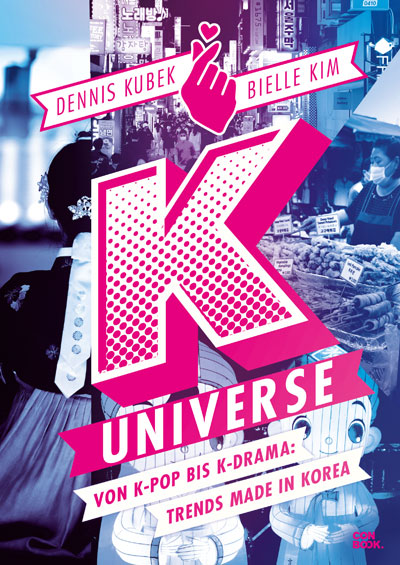
K-Universe
Von K-Pop bis K-Drama, von "Parasite" bis "Squid Game": Die koreanische Popkultur ist allgegenwärtig und K-Universe verrät uns, welche Trends uns in Zukunft erwartenKein Land hat in den letzten Jahren die Populärkultur geprägt wie Südkorea. Mit immer neuen Trends und noch mehr Kreativität verzaubert K-Pop die Welt.K-Universe zeigt in über 70 Themenbereichen, mit beeindruckenden Fotos und vielen Hintergrundinformationen, was die koreanische Kultur ausmacht, welche Trends in diesen Tagen die Menschen aktuell begeistern – und welche Kulturphänomene der »koreanischen Welle« bald auch zu uns rüberschwappen werden.Vor Ort unterwegs mit zwei Koreaexperten probieren wir K-Food, verlieren uns im K-Entertainment, singen zu K-Pop und leben den K-Lifestyle. Immer mit dem Ziel vor Augen, am Ende die komplette Vielfalt des K-Universe kennenzulernen.Trends made in Korea     K-Pop mit Superstars von BTS bis Blackpink     K-Food wie Kimchi, Dalgona Coffee oder K-BBQ     K-Entertainment mit »Squid Game«, »Parasite« und der Bang-Kultur     K-Lifestyle mit koreanischen Mode- und Kosmetiktrends, Internet-Phänomenen wie Mukbang, Robotern und Smart Cities Inhalt: K-Food Kimchi Desserts Essen gehen Ramyeon Reis Cafés Regionale Küche Streetfood Sul K-Trends K-Fashion Persönlichkeitstests Tattoos K-Beauty Schönheitschirurgie Fotos Roboter Outdoor Hanbok Kaerikteo Cha-bak K-Entertainment Squid Game K-Drama Filme Jung Hae-in Fernsehen Aeni Sport Vergrügungsparks E-Sports Bang-Kultur K-Web Apps Naver Webtoons Blogs Games Internet Mukbang Nordkorea K-City Seoul Metropolen Szeneviertel Jihaecheol Treffpunkte Clubbing Smart City Street Art Shopping Love Motels K-Pop BTS Blackpink K-Indie Trot Hallyu Dance Virtuelle Influencer K-Tigers Design & Kunst K-Pop zum Anfassen K-Life Arbeiten Services Ausbildung Feiertage Aegyo Aberglaube Supermärkte Sicherheit Wehrpflicht Wohnen Sprache Dating   Über die AutorInnen: Dennis Kubeks Vorliebe für den asiatischen Kontinent liegt in seiner Kindheit begründet: Seine Helden waren die Akteure von unzähligen ostasiatischen Filmen. Während seines Mediendesign-Studiums war das Fernweh schließlich auf ein so unerträgliches Maß angewachsen, dass er sich endlich selbst in Kung-Fu-Pose zwischen Pagoden und Reisfeldern wiederfand. Wann immer es sich seitdem einrichten lässt, taucht er in die faszinierenden Kulturen Asiens ein. Bielle Kim ist in Seoul geboren und aufgewachsen. Nach ihrem Innenarchitektur-Studium packte sie das Reisefieber, das sie fortan nicht mehr loslassen sollte. Die Streifzüge der neugierigen Weltenbummlerin führten sie von Asien über Australien nach Nordamerika, um anschließend in Europa eine neue Heimat zu finden. Seit 2011 lebt und arbeitet die Designerin und Marketing-Spezialistin nun in Deutschland.

19,95 €*