- Korean mit K-Pop
- Han Kang
- Deutsche Bücher
-
Englische Bücher
- KOREANISCH LERNEN
- Architektur
- Bildbände
- Flora & Fauna
- Geschichte
- Gesellschaft
- Kinderbücher
- Kochbücher
- Koreanisches Kino
- Kunst & Kultur
- K-Pop & Musik
- Landkarten & Atlanten
- Literatur
- Nachschlagewerke
- Nordkorea
- Politik & Wirtschaft
- Reiseliteratur
- Religion & Philosophie
- Taekwondo & Hapkido
- Zweisprachig: Korean. / Englisch
- Koreanische Bücher
- Wörterbücher
- ANGEBOTE
- Schönes rund ums Lesen & Schreiben
Englischsprachige Bücher über Korea
Hier finden Sie ein umfassendes Angebot an Büchern über Korea, die in englischer Sprache erschienen sind.
Ob Koreanisch Lernen, koreanische Küche oder zweisprachige Ausgaben, wählen Sie einfach links die gewünschte Kategorie und stöbern Sie in unserem Sortiment!
Produkte filtern
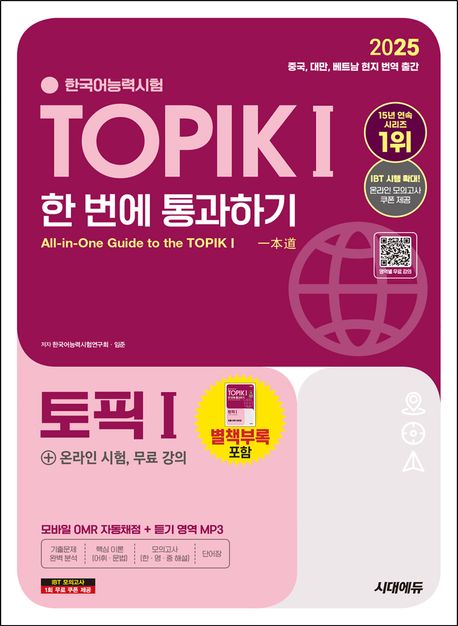
ALL THAT TOPIK I is a textbook that systematically introduces the most frequently tested question types on the TOPIK I (Test of Proficiency in Korean) for beginner learners, along with step-by-step solving strategies. It presents both the key clues for finding the correct answer and the reasons why the other choices are incorrect, helping learners understand the logic behind each question and develop their own problem-solving skills. Each unit includes "Question Type Overview" and "Step-by-Step Problem Solving" sections, allowing learners to first understand the characteristics of each question type and then follow a structured approach to solving it. The book also provides QR codes linking to English explanations, enabling learners to study the commentary in both Korean and English for better comprehension. In addition, the "Study Plus" and "Remember This!" sections summarize the essential vocabulary, grammar, and expressions needed for each question type through clear illustrations and tables. These sections also highlight effective test-taking strategies and key points to remember, making them ideal for reviewing important concepts before the exam. Contents듣기 Listening Part 1 '네/아니요'로 대답하는 문제 Unit 1 명사 + 이에요/예요 Unit 2 반대 표현 Part 2 자세히 대답하는 문제 Unit 3 질문과 대답 1 (누구, 언제, 어디, 무엇) Unit 4 질문과 대답 2 (어떻게, 어때요, 얼마나, 무슨, 왜) Part 3 이어지는 말을 찾는 문제 Unit 5 인사 표현 Unit 6 전화와 부탁 표현 Unit 7 축하와 감사 표현 Unit 8 사과 표현 Part 4 대화 주제와 상황을 이해하는 문제 Unit 9 장소 이해 Unit 10 대화 주제 이해 Unit 11 그림 이해 Part 5 같은 내용을 찾는 문제 Unit 12 짧은 대화를 듣고 같은 내용 고르기 Part 6 중심 생각을 찾는 문제 Unit 13 짧은 대화를 듣고 중심 생각 고르기 Part 7 긴 내용을 듣고 이해하는 문제 Unit 14 긴 대화 Unit 15 안내 방송과 인터뷰 Part 8 듣기 모의고사 (OMR 답안지)
Mängelexemplar: Kleberückstand auf Schutzumschlag vorne, Ansichtsexemplar in gutem Zustand Damaged Copy: Adhesive residue on the front of the dust jacket; review copy in good condition Mind Only: Essence of Zen is a photographic journey to Korea's hidden sites of Zen Buddhism. Beautifully photographed, the book shows pictures, panoramic views as well as glimpses of detail, of many of Korea`s less known Buddhist temples. On this journey the reader can stop at points of interest and browse through carefully selected examples of Korean Zen literature. The combination of text and photograph makes for a singular reading experience which leaves enough room for everyone's personal insights into the teachings of Zen. Cover text Zen was first introduced to the Korean peninsula directly from T'ang China during the 7th Century which means that Zen in Korea considerably pre-dates its better known Japanese counterpart. During its 1400 year history, the down-to-earth but hitherto largely unrecognized Korean Zen tradition has produced a plethora of eminent Zen masters. "Mind Only" combines beautiful photographic images of historic Korean Temples with selected teachings, aphorisms and poems of renowned Zen masters to present an authentic portrait of the Korean Zen tradition. The provocative and insightful sayings of these great teachers are a delightful counterpoint to the evocative images on every page, and provide fresh and original material for those seeking to deepen their understanding of Zen.
Mängelexemplar: Buch an einem Eck angestossen, sonst neu und einwandfrei Damaged Copy: Bock corner dented, otherwise new copy "Hi! Korean 2A" is the first book in the second level of the series, which begins the study of Korean in earnest after completing the first level, and introduces the grammar and vocabulary expressions of the second level within the theme of Korean society and culture. In particular, it introduces expressions for public affairs that you may encounter in your school life, so that you can use them in real life. The Hi! Korean series is an integrated Korean coursebook designed for foreign learners who love Korean culture and want to learn Korean. The textbooks incorporate the latest trends in Korean culture and provide a variety of activities to help learners master the four skills of speaking, listening, reading, and writing. While maintaining a consistent organization from beginner to advanced, it organically presents the areas of speaking, listening, reading, and writing, and separates listening and reading by section to enhance learning by section. In particular, in the step-up course, students are encouraged to develop their communication skills by expanding their learning through speaking and writing activities. The overall composition of includes 10 student books (4 for beginners, 4 for intermediate, and 2 for advanced), which include 'Grammar and Vocabulary Book' as a separate book, and 10 workbooks (4 for beginners, 4 for intermediate, and 2 for advanced) sold separately. Contents 머리말 02 일러두기 04 목차 16 교재 구성표 18 Chapter 1 첫날 1-1 저는 마크라고 합니다 26 1-2 이 사람은 제 룸메이트인데 한국 사람이에요 38 1-3 한 단계 오르기 50 Chapter 2 약속과 취미 2-1 제가 지금 연락할게요 60 2-2 저는 시간이 있을 때 친구를 만나거나 쇼핑을 해요 72 2-3 한 단계 오르기 84 Chapter 3 옷차림 3-1 옷이 좀 커 보여요 94 3-2 이 치마를 까만색으로 교환해 주세요 106 3-3 한 단계 오르기 118 Chapter 4 시설 이용 4-1 통장을 만들려면 뭐가 필요한가요? 128 4-2 미술관이 시청역 근처에 있다고 했어요 140 4-3 한 단계 오르기 152 Chapter 5 한국 음식과 명절 5-1 지금 몇 시예요? 162 5-2 이번 주말에 청소할 거예요 174 5-3 한 단계 오르기 186 Chapter 6 학교생활 6-1 등록금을 하무실에 내도 돼요? 196 6-2 한국어 문법이 조금 어려워졌어요 208 6-3 한 단계 오르기 220 부록 정답 230 듣기 대본·읽기 지문 번역 244 대화 번역 251 문법 및 발음 설명 번역 255 색인 261
“The Lives and Stories of the Nameless People Behind the Splendor of the Palace” A Hidden World Behind the SplendorBehind the grand halls, elegant rooftops, and royal magnificence of the palace lay another world-one largely unknown. This book explores the palace as a place sustained by countless invisible hands: organizing documents, preparing food, and crafting garments. It reveals the roles of these individuals and the intricate system they built and refined over generations.The King’s Day and Those Who Moved ItThe king’s daily routine was more than a personal schedule-it symbolized the order of the nation. From the moment he awoke, through study, court assemblies, and rituals, every aspect of his day followed Confucian principles. His daily life embodied the values and governing philosophy of Joseon society. Following the king from dawn, this book presents a vivid portrait of palace life while illuminating how court ladies, eunuchs, and officials worked in coordination to sustain both the royal household and the state.A Refined System and Hidden TensionsThe palaces of Joseon were not merely royal residences, but living systems where politics, ritual, and daily life coexisted. From the king’s meals and attire to the delivery of royal commands, everything was governed by strict rules and procedures. Beneath the elegance lay constant tension and responsibility, where even the smallest mistake was unacceptable, and the palace operated on unwavering order.The Stories of Those Hidden in HistoryBehind the palace stood countless individuals-court ladies, eunuchs, royal secretaries, cooks, and artisans-each playing a vital role in sustaining the king’s life and the workings of the state. Their expertise and dedication, from preparing meals and safeguarding the king’s health to delivering commands and keeping records, kept the palace running. Through this book, the lives of those often absent from official records are brought vividly to life. Their devotion, sacrifice, and humanity transform the palace into a living space rather than a mere structure.A New Way to See the PalaceFollowing the king’s daily routine, this book shines a light on the people who brought the palace to life. Through the stories and presence of those who existed beyond its splendid architecture, it reveals how the palace functioned as a living entity. Readers will come to see that the palace is not simply a historic structure, but a world shaped and sustained by people. About the Author Kim Hyunjung graduated from Ewha Womans University with a degree in Korean Language and Literature and completed a master’s program in Korean language education at Sungkyunkwan University’s Graduate School of Education. She has worked as a broadcast writer, producing current-affairs and cultural programs centered on history, everyday life, and human stories, including KBS 1TV’s Documentary Insight – The Big Team and the TVING original documentary series Food Chronicle and Human Chronicle. In her first book, Living Palaces, she draws on a narrative sensibility cultivated through her experience as a middle and high school Korean language teacher, as well as her work in publishing, writing, and magazine editing, to vividly portray the lives and roles of the people who sustained Korea’s royal palaces, offering a compelling glimpse into the richness of Korean royal culture.
“The cultural code behind the global phenomenon of K-pop.”The Secret Behind a Global PhenomenonK-pop has captivated the world with its infectious energy, powerful performances, and devoted global fandom. But what lies beneath its success? The Korean Groove traces the roots of K-pop beyond modern pop culture, revealing the deep cultural foundations that have shaped its distinctive sound, rhythm, and spirit. By looking beyond the surface, the book invites readers to see K-pop not as a sudden trend, but as the result of a long cultural evolution.Emotions That Shape a NationAt the heart of Korean culture are powerful emotional currents—han (deep sorrow), heung (joyous excitement), jeong (affection), and uiri (loyalty). These emotions, formed through Korea’s complex history, are not abstract ideas but lived experiences that continue to shape artistic expression. The book explores how these sentiments are embedded in music, performance, and communal life, revealing how emotional depth and contrast create Korea’s unique cultural energy.From Tradition to Global StageFrom pansori and arirang to mask dance dramas, folk games, and festivals, Korea’s traditional arts have long combined music, movement, and storytelling into immersive communal experiences. These traditions, rich with rhythm and participation, form the cultural DNA that continues to resonate in today’s K-pop performances, concerts, and fan culture. By drawing these connections, the book shows how tradition is not separate from modern culture, but actively lives within it.The Power of Participation and ConnectionOne of the defining features of Korean culture is participation—the blurring of boundaries between performer and audience. Whether through collective singing, street cheering, or traditional performances, people come together to share emotion and energy. This spirit of unity is a key force behind the global appeal of K-pop, transforming audiences into active participants rather than passive spectators.A New Way to Understand K-PopMore than a music genre, K-pop is the culmination of centuries of cultural expression and emotional heritage. By uncovering the connections between tradition and modernity, The Korean Groove offers readers a deeper understanding of why Korean culture resonates so powerfully around the world—and why its influence continues to grow. It ultimately reframes K-pop as a cultural language that speaks across borders.About the AuthorKim Kwanghee received his Ph.D. in Literature from Korea University. He currently serves as the Head of the Korea Heritage Agency, Royal Palaces and Tombs Project Department and, as a Cultural Heritage Specialist at the Korea Heritage Service, participates in human heritage research. He also teaches intangible cultural heritage and traditional performing arts at the Korea National University of Cultural Heritage, Sungkyunkwan University, and Dongguk University, and works as a Baltal (Foot Mask Theater) educator, continuing the tradition of traditional arts.He seamlessly navigates the traditional and contemporary world, conveying the essence of Korean culture and its divine energy. Through his writings and lectures, he explores the diverse and accessible aspects of the Korean Wave, from the exploration of traditional folk songs in K-pop to the exploration of traditional Korean music, offering readers a fresh and engaging experience. Contents Prologue10 Old Emotions, a New Stage12 Glossary of Korean Sentiments12 Definitions13 The Repressed Sorrow of Han, the Fiery Anger of No14 The Unwavering Loyalty of Uiri, the Deep Affinity of Jeong16 The Lively Cheer of Heung, the Joyous Exhilaration of SinmyeongSecret Code 1 | Songs20 Washing Away Sorrow with Exhilaration20 Songs that Heal Me and Comfort You: The Traditional Korean Epic Chant of Pansori26 The Song of a Nation, Blooming Across the Land of Korea: Arirang33 As Slowly as Possible, as Quickly as Possible: Gayageum Sanjo and Byeongchang38 A Magic Spell to Make Even Farming Feel Joyful: NongyoSecret Code 2 | Dance42 Reconciling Han Through Sinmyeong42 A Dance of Liberation Underneath the Full Moon: Ganggangsullae48 Delicate Hand Gestures that Comfort Our Hearts: Salpurichum53 The Solemn Dance of Cheoyong, the Son of the Dragon King: Cheoyongmu59 Beauty Blooming in Self-Restraint: Seungmu65 A Royal Dance to Pray for Peace: TaepyyeongmuSecret Code 3 | Theater70 Wiping Off Tears with Laughter70 Satire and Humor in the Thousand Faces of Korean Traditional Masks: Andong Hahoe Byeolsingut Talnori79 The Wish of a Lion, the King of Animals: Bukcheong Saja Noreum83 Laughter and Satire Unfolding from the Tip of the Foot: BaltalSecret Code 4 | Folk Games and Performances90 To Overcome Hardship with Joyous Energy90 A Performance to Forget the Rigors of Hard Labor and Stir Sinmyeong Within the Spirit: Nongak98 A Performance of the Common People, by the Common People, and for the Common People: Namsadang Nori106 Tug of War, a Game of Togetherness: Gijisi Juldarigi111 A Game of Dynamic Harmony: Andong Chajeon NoriSecret Code 5 | Festivals118 Festivals Inspiring Joyous Exhilaration118 A Millennium-Old Agricultural Festival: Gangneung Danoje124 A Festival of Healing that Embraces Life and Death: Jindo Ssitgimgut129 A Festival that Lights Up Hearts and the World: YeondeunghoeSecret Code 6 | Performance134 To Find a Release Against Repression Through Mingling134 The Reason Why World-Renowned Musicians Come to Korea: The Culture of Ttechang141 The Fervor Inside and Outside of a Sports Complex: K-Supporters and Street Cheering145 The Razor-Sharp Choreography and Rhythm of K-PopEpilogue152 The Korean Emotions of Han and Heung Pierce Through the World152 The Driving Force of Cultural Evolution154 The Most Dynamic Emotion: Han156 The Most Creative Emotion: Heung
“Where sorrow is released and hope begins.”A World Beyond Life and DeathKorean shamanism unfolds in a mysterious realm where the boundaries between life and death, the visible and invisible, are constantly crossed. At the heart of this world lies gut, a ritual that is at once religion, performance, and communal experience. Though it may seem incomprehensible through logic, it resonates deeply with human emotion, offering a powerful and immersive entry into Korea’s spiritual imagination and cultural identity.Gods, Myths, and the Korean SubconsciousThis book introduces the rich pantheon of Korean shamanistic deities—from household gods that protect everyday life to legendary figures such as Princess Bari and Danggeumaegi, who embody the cycles of birth, death, and rebirth. These myths are not distant relics of the past, but living narratives that continue to shape Korean consciousness, reflecting enduring questions about fate, suffering, and human existence.Mudang: Bridging Two WorldsAt the center of these rituals stand the mudang, the shamans who serve as intermediaries between humans and the spirit world. Acting simultaneously as priests, prophets, and healers, they deliver divine messages, guide the living through uncertainty, and comfort the dead. Through music, dance, and states of possession, mudang transform ritual into a powerful act of communication, creating a space where human emotion and divine presence intersect.Ritual as Performance, Healing, and ExperienceGut rituals are dynamic and multisensory events that combine sound, movement, costume, and symbolic objects into a compelling performance. From the rhythmic beating of drums and gongs to dramatic acts such as spirit possession and walking on blades, these rituals vividly manifest the presence of the unseen. At the same time, they serve as spaces of emotional release, healing, and communal bonding, where participants confront grief, hope, and the uncertainties of life.A Living Tradition in a Modern WorldDespite modernization and historical suppression, Korean shamanism continues to thrive as a living and evolving tradition. Today, it is reinterpreted through film, music, and global cultural content, while still offering comfort and meaning in times of crisis. More than a belief system, shamanism is a human story—one that confronts suffering, embraces hope, and continually asks the timeless questions: Why do we live, and how should we live?About the AuthorPark WeonmoAn international expert who has supported the safeguarding of intangible cultural heritage (ICH) in the Asia-Pacific region for the implementation of the UNESCO 2003 Convention over the past two decades. He developed an interest in Korean shamanism while studying at Yonsei University and later studied at Rikkyo University in Japan as a Japanese Ministry of Education scholarship student, conducting fieldwork in Korea and Japan and carrying out comparative research on the two countries’ folk performing arts, particularly ritual performances including shamanistic practices.After returning to Korea, he worked on documentation projects for National Intangible Cultural Heritage at the National Research Institute of Cultural Heritage and later works at UNESCO-ICHCAP, promoting regional cooperation and information capacity for safeguarding intangible cultural heritage, and serves as an adjunct professor at the Korea National University of Cultural Heritage.PhotographerKim Sangsoo worked for 30 years as a photographer and editor-in-chief of Monthly Our Sea.He currently works as a photographer at the Institute of Korea Maritime Culture Studies, where he documents domestic and international folklore and shamanism through photography.
This volume, Korean Literature: Its Classical Heritage and Modern Breakthroughs, consists of 24 articles that are still considered valuable in the field as academic articles or critical essays that have appeared in the Korea Journal over the past 40 years. The articles were carefully selected under the guidance of Professor Hwang Jong-yon. The present volume is divided into five major themes. Part I includes an explanation of the historical and critical bases for understanding modernity as expressed in Korean literature. Part II consists of major reviews of representative writers and their works over the past 100 years of Korean modern literature. Part III is a compilation of explanatory writings that facilitate readers' comprehension of traditional literary genres--from pansori to Korean poetry in Chinese--and their aesthetics and ideology, which have influenced both the creation and critique of contemporary Korean literature. Part IV critically evaluates the literatures of both North and South Korea after the Korean War. The final section approaches Korean literature from an international perspective in examining the literature of Korean immigrants living abroad. In recent days, both researchers and general readers outside Korea have taken an increasing interest in Korean literature. Accordingly, translations of and writings about Korean literature have been increasingly produced. We hope this volume can serve as a textbook and reference manual for scholars, students, and anyone else interested in Korean literature.
The Korean economy is a model of extensive economic development in a short period of time. Korean success, however, has not been free of problems, and the recent financial crisis in particular can be interpreted as an example of failure in economic management. Too simplistic an interpretation of the Korean economy, whether positive or negative, should be cautioned against. In order to better grasp the contemporary Korean economy in all its complexity, it is necessary to understand the political and economic terrain as well as the time-space context in which the Korean economy is located. This volume attempts to provide readers abroad with a short but balanced introduction to economic issues in modern Korea by presenting a wide range of topics from a diverse group of contributors. Part I introduces earlier efforts at economic development and discusses their achievements and failures. In Part II, several contributors examine the meaning and effects of rapid economic growth in relation to the country¹s social and economic development. The 1997 financial crisis and subsequent responses by the government and corporate sector are the focus of Part III. Since the adjustment process is still continuing, a comprehensive evaluation must wait a few more years. Part IV discusses the role of the government, which was essential for the rapid growth of the Korean economy in a changing environment. Since this volume is a collection of articles published in the Korea Journal, it intends to offer readers a variety of topics and views rather than an in-depth analysis of a single topic.
Mängelexemplar: Buchumschlag geknickt, sonst neu und einwandfrei Damaged Copy: Cover dented, otherwise new copy 한국어 성인 학습자를 위한 정규 과정용(약 200시간) 한국어 교재 시리즈 중 여섯 번째 책이다. 이 책은 1,000시간의 한국어 교육을 받았거나 그에 준하는 한국어 능력을 가진 성인 학습자들이 정치, 경제, 사회, 문화 등 사회적 영역과 관련된 심화된 주제로 의사소통을 하고 전문 분야에서의 연구나 업무 수행에 필요한 언어 기능을 익힐 수 있도록 하는 데 목적이 있다.▶ 고급 학습자에게 적합한 주제를 선정하고 이를 기반으로 의사소통 활동이 이루어지도록 주제 중심 교수요목으로 구성하였다.▶ 대단원 내에서 듣기와 말하기, 읽기와 쓰기가 연계되도록 과를 구성함으로써 구어와 문어의 집중 학습이 가능하도록 하였다.▶ 듣기와 연계된 말하기 과제, 읽기와 연계된 쓰기 과제를 각각 구성하였다.▶ 고급 수준의 어휘 및 문법 학습이 체계적으로 이루어지도록 구성하였다.▶ 사진과 삽화 등 다양한 시각 자료를 풍부하게 제공하여 실제적이고 흥미 있는 학습이 가능하도록 하였다.※ 기존 도서의 MP3 File CD가 QR Code 자료 다운로드 방식으로 변경되었습니다.
Mängelexemplar: Buchumschlag geknickt, sonst neu und einwandfrei Damaged Copy: Cover dented, otherwise new copy
EXCLUSIVE EUROPEAN SALEDer Presale-Preis gilt noch bis Ende August! - Nur solange Vorrat reicht!--- What is it?ENHYPEN LYRICS GUIDE BINDER BOOK provides an in-depth analysis of “Bite Me” and “Sweet Venom,” the two title tracks from the BLOOD album series that carry a uniquely powerful narrative within ENHYPEN’s musical history. The Inside the Music section offers detailed commentary on the albums, songs, and music videos, while the Sing Along section features full lyrics, Romanization for pronunciation, official translations, and personal comments from ENHYPEN about the tracks. In the Behind the Scenes section, you can explore various episodes from the song production and recording process to promotional activities. Finally, the Write Out the Lyrics section provides a dedicated space to personally transcribe, record, and decorate the lyrics. In addition to the rich reading material, the set includes keyword cards, 3-pocket card sleeves, stickers, a cellophane sheet, and a wine glass-shaped mini keyring, allowing you to customize the binder to your personal taste. We invite you to complete your very own ENHYPEN binder by personally documenting the narrative of “connection” between ENHYPEN and ENGENE. Watch the unboxing video on InstagramBinder / RINGBUCH 180×235×30mm A 6-Ring binder with a design that perfectly captures ENHYPENS's Vampire Concept.1. Inner Pages (Readings) 156×194mm, 96 pages Inner pages featureing ENHYPEN's Story and a Variety of Content to helt you perfectly understand and sing along to "Bite me" and "Sweet Venom"Inside the Music Essential commentary on the albums, tracks, and music videos that every fan should knowSing Along Everything from official lyrics and Romanization for Hangeul pronunciation to official translations and hidden commentary from ENHYPENBehind the Scenes Behind-the-scenes stories capturing every moment of ENHYPEN,from the production and recording process to album promotions and music video shootsWrite Out the Lyrics A creative space to transcribe and decorate the lyrics, completing your very own personalized lyric book2. Keyword Card Set & 3-Pocket Card Sleeves Keyword Cards: 52×82mm, 30ea Card Sleeves: 127×191mm, 10ea Keyword Cards featureing core Korean Keywords from "Bite Me" and "Sweet Venom" alongside member Concept photos with 3-pocket sleeves to store them. 3. Sticker 156×194mm, 1 sheet Stickers to freely decorate your binder and Keyword Cards 4. Cellophane Sheet 156×194mm, 1ea A cellophane sheet to practice reading Hangeul on the Song Along pages. * Covering the lyrics with a cellophane sheet hides the Romanization, aloowing you to slide it on or off depending on whether you want to reference it. 5. Keyring 20×40mm, 1ea A wine glass mini-Keyring symbolizing ENHYPEN's Vampire concept
Contents: INTRODUCTIONCAFE MUSIQUENOUVEAU CASINOICONE HOUSEMR HOUSECHATEAURIZZOCANAL + HEADQUARTERSKANDINSKY LIBRARY AND GRAPHIC ART STUDIO OF THE CENTRE POMPIDOUPINK GHOSTTSUMARI ART TRIENNAL 2003LA PIROTTERIEDELAVILLE CAFETREE TOWERSPARIS DAUPHINE UNIVERSITY RESTAURANTVILLA TORPEDOLA DYNAMO DE BANLIEUES BLEUESJUSSIEU UNIVERSITYKREMLIN BICETRE CULTURAL CENTERGO HOUSERG HOUSENURSERY, MEDIA LIBRARY AND HOUSING IN CLAMARTTHE LAFAYETTE TERRACESREGIONAL CENTER FOR CONTEMPORARY MUSICSKALEIDOSCOPIC GARDENFAYOLLECERGY-PONTOISE THEATERSMAC BOULOGNESMAC TROYESROUEN THEATERCURRICULUM VITAE
This book, briefly examining the history, people, culture, customs, economy, sports and other aspects of Korea, attempts to present a concise overview of Korea's time-honored legacy, modern achievements and the current direction of the Republic's nation-building. Because of its up-to-date information, wide coverage and general practicality, visitors to Korea will find it very helpful. Korean Overseas Information Service is an organization of the Republic of Korea. 70 color photos with map.
Mängelexemplar: Buch oben leicht geknickt, sonst neu und einwandfrei Damaged Copy: Book Corner dented, otherwise new copy The Sogang Korean Workbook 1A·1B is a supplementary resource to the Sogang Korean Student’s Book 1A·1B. It is designed to help learners independently review and reinforce what they have studied in class. The Revised 3rd Edition of the Sogang Korean Workbook has been updated based on feedback from teachers and students who previously used the workbook. The key updates are as follows: New writing activities that allow learners to apply the speaking content practiced in the vocabulary and grammar sections of the Student’s Book. Practice exercises to review the three speaking dialogues (Dialogues 1, 2, and 3) from the Student’s Book. Comprehension questions from the Reading & Speaking and Listening & Speaking sections (specifically question “B”) have been included so learners can write down what they understood. Listening activities where learners fill in blanks in the script while listening to the Student’s Book audio recordings. TOPIK-style quizzes included every two units, tailored to meet current learner needs. A set of sample speaking interview questions, including questions in the format of the TOPIK Speaking test. Exercises have been designed with clearly defined correct answers, allowing learners to check their own progress without relying on open-ended responses. The layout has been optimized to make the book more compact, in line with recent learner preferences. Guide to Using This Book Learning Objectives Before starting each unit, check the objectives, grammar points, vocabulary, and key expressions. Grammar Practice questions for the grammar structures introduced in the Student’s Book. A summary table showing conjugation patterns of the target grammar. Dialogue practice exercises using the grammar points. Vocabulary Some units may include additional vocabulary exercises. Dialogue Fill-in-the-blank exercises to review Dialogues 1, 2, and 3. Reading & Speaking Vocabulary practice based on the reading passage. Reread the text and answer comprehension questions. Additional vocabulary not covered in the Student’s Book is provided with English translations. Listening & Speaking Practice vocabulary from the listening passage. Replay the audio and answer comprehension questions. Review the listening content again. Scan the QR code to access the audio recordings. Review Quizzes Appendices Table of Contents 머리말 Introduction 내용 구성표 Table of Contents 일러두기 How to Use This Book 한글 1과 Hangeul1아 어 오 우 으 이 ㅁ ㄴ ㄹ ㅇ한글 2과 Hangeul2야 여 요 유 의ㄱ ㄷ ㅂ ㅅ ㅈ / 받침① ㅁ ㄴ ㄹ ㅇ한글 3과 Hangeul3애 에 왜 웨 외ㅋ ㅌ ㅍ ㅊ ㅎ / 받침② ㄱ ㅂ ㄷ ㅅ ㅈ한글 4과 Hangeul4얘 예 와 워 위ㄲ ㄸ ㅃ ㅆ ㅉ / 받침③ ㅋ ㅍ ㅌ ㅊ ㅎ준비1과 Preparatory Unit 1반갑습니다 It’s Nice to Meet You준비2과 Preparatory Unit 2한국어 책이에요 It’s a Korean Language Book준비3과 Preparatory Unit 3핸드폰 있어요? Do You Have a Cell Phone?준비4과 Preparatory Unit 4커피 주세요 I’d Like Some Coffee 준비 1~4과 Preparatory Units 1~4복습 / 퀴즈1과 Unit 1앤디 씨가 식당에 있어요 Andy Is in the Cafeteria2과 Unit 2여섯 시에 일어나요 I Get Up at 6:001~2과 Units 1~4복습 / 퀴즈3과 Unit 3카페에서 친구를 만나요 I Meet My Friend at the Cafe4과 Unit 4어제 핸드폰을 샀어요 I Bought a Mobile Phone Yesterday3~4과 Units 3~4복습 / 퀴즈5과 Unit 5지하철 2호선을 타세요 Take Subway Line 26과 Unit 6내일 등산하러 갈 거예요 I’m Going to Go Hiking Tomorrow5~6과 Units 5~6복습 / 퀴즈부록 Appendix인터뷰 질문지, 퀴즈 듣기 문제 대본, 정답Interview Question Sheet, Script for Listening Quiz Questions, Answer Key
BTS Group Photo - Postcard2021 BTS FESTA Opening Ceremony Family Portrait HYBE Das Foto wurde zum achten Jahrestag der Gruppe im Jahr 2021 veröffentlicht.The photo was published for the 8th anniversary of the group in 2021.Format: 10x15 cm *This postcard comes free with your purchase ofLearn! Korean with Tiny TanTalk! Korean with BTS BTS Lyrics Inside 2BTS Recipe Book 2 365 BTS DAYS BTS Travel BookEASY KOREAN with BTS
The "Sogang Korean Revised 3rd Edition" has been designed to help learners efficiently acquire language and culture, based on the extensive teaching experience of the instructors at Sogang University’s Korean Language Education Center. This edition reflects the latest trends to keep up with the changing times and incorporates feedback from those who cherish Sogang, enhancing convenience for both educators and learners. The "Sogang Korean Revised 3rd Edition" is structured around a 200-hour curriculum, consisting of: 100 hours of speaking, 25 hours of reading and speaking, 25 hours of listening and speaking, 50 hours of writing. 서강한국어 개정 3판〉은 서강대학교 한국어교육원 선생님들이 오랜 기간 수업 현장에서 쌓은 노하우를 바탕으로 언어와 문화를 효율적으로 배우고 익힐 수 있도록 설계하였습니다. 변화하는 시대에 맞춰 최신 경향을 반영하였으며, 서강을 아껴 주시는 여러 분들의 조언을 받아들여 교수자와 학습자 모두의 편의성을 강화하였습니다. 〈서강한국어 개정 3판〉은 정규 과정이 200시간으로 구성되어 있는 점을 고려하여 말하기 100시간, 읽고 말하기 25시간, 듣고 말하기 25시간, 말하고 쓰기 50시간으로 편성하였습니다.2024년 8월에 〈서강한국어 Student’s Book 1A·1B〉, 〈서강한국어 Workbook 1A·1B〉, 〈서강한국어 한글〉, 〈서강한국어 Writing Book 1A·1B〉를 출간하였고 2025년 2월에 〈서강한국어 Student’s Book 2A·2B〉, 〈서강한국어 Writing Book+ 2A·2B〉를 출간하였습니다. 이어서 2026년 3월에 〈서강한국어 Student’s Book 3A·3B〉, 〈서강한국어 Writing Book+ 3A·3B〉를 출간하게 되었습니다. 〈서강한국어 Writing Book+ 3A·3B〉는 2급과 동일하게 〈Writing Book〉과 〈Workbook〉을 합본 형태로 구성하였습니다. 〈서강한국어 Student’s Book〉의 모든 내용은 그림을 보면 직관적으로 맥락을 파악할 수 있도록 하였습니다. 아울러 어휘와 문법 학습은 대화와 활동을 통해 유창성과 정확성을 키울 수 있게 하였습니다.QR코드를 스캔하면 대화문 녹음 파일이 연결되도록 하였고, 다양하고 재미있는 서강 고유의 대화 활동을 할 수 있도록 확장 질문과 자료를 실었습니다. 단어와 표현은 주어진 맥락에서의 의미를 번역하여 별책 〈문법·단어 참고서〉에 담았습니다. 문화 영역은 상호문화주의에 바탕을 두고 외국인 학습자가 한국 생활에서 겪는 언어·문화적 질문에 답하는 형식으로 구성하여 학습자의 이해를 돕습니다. 그리고 추가 질문을 통해 학습자가 가진 문화적 맥락과 한국어의 문화적 맥락을 비교하며 이해할 수 있도록 하였습니다.〈서강한국어 개정 3판〉이 한국 문화에 관심을 가지고 한국어 공부에 도전하는 한국어 학습자와 효율적인 수업을 준비하는 교수자에게 유용한 교재가 되기를 바랍니다.
The "Sogang Korean Revised 3rd Edition" has been designed to help learners efficiently acquire language and culture, based on the extensive teaching experience of the instructors at Sogang University’s Korean Language Education Center. This edition reflects the latest trends to keep up with the changing times and incorporates feedback from those who cherish Sogang, enhancing convenience for both educators and learners. The "Sogang Korean Revised 3rd Edition" is structured around a 200-hour curriculum, consisting of: 100 hours of speaking, 25 hours of reading and speaking, 25 hours of listening and speaking, 50 hours of writing. 서강한국어 Writing Book+ 3A3B〉는 〈서강한국어 Student’s Book 3A3B〉의 부교재로, 학습자가 교실에서 배운 내용을 스스로 복습할 수 있는 Workbook(워크북), 수업에서 다양하게 활용할 수 있는 Review(복습), 중급 수준의 글 쓰기가 가능하도록 단계별로 구성된 Writing(쓰기), 그리고 부록 자료를 합본 형태로 구성하였습니다. 〈서강한국어 Writing Book+ 3A3B〉는 모든 학습과정에서 학습자 간 상호작용을 중요시하는 서강 교수법의 가치관을 바탕으로 하였습니다. 또한, 기존 〈서강한국어〉를 사용하시는 선생님들과 학생들의 요구를 반영하여 다음과 같이 개편하였습니다. I. Workbook(워크북)학습자들이 교실에서 배우는 내용을 체계적으로 학습하며 자기주도적 학습을 할 수 있는 교재로 구성하였습니다.1. 〈서강한국어 Student’s Book〉의 학습목표, 문법, 어휘와 표현을 표로 정리하여 수록하였습니다.2. 문법은 해당 문법을 충분히 익힐 수 있도록 의미 확인-연습-활용의 3단계 구성을 통해 여러 유형으로 문법을 연습할 수 있도록 하였습니다. 또한 문법을 체계적으로 연습할 수 있게 단순 교체 연습-문장 연습-대화 연습의 순으로 확장하여 수록하였습니다.3. 학습자가 놓칠 수 있는 어려운 항목에 대해서는 Tip을 제공하였습니다.4. 〈서강한국어 Student’s Book〉 듣고 말하기의 녹음 파일을 들으면서 스크립트 빈칸을 채워 볼 수 있는 연습 활동을 수록하였습니다. 학습자의 편의를 위해서 빈칸 정답을 하단에 함께 수록하였습니다.II. Review(복습)두 과마다 말하기, 듣고 말하기읽고 말하기 복습 자료를 수록하였습니다. 다양한 활동을 통하여 배운 것을 다시 한 번 학습할 수 있도록 구성하였습니다.1. 어휘 문제, 문법 활용 문제, 대화 연습 문제, 듣고 말하기·읽고 말하기 연습 문제 등 다양한 형태의 복습 활동을 추가하였습니다.2. 대화 연습 후에는 선행 학습한 문법과 단어, 표현이 포함된 자유 대화 질문을 통해 자연스럽게 말하기 복습을 할 수 있습니다. III. Writing(쓰기) 학습자 간 상호작용을 바탕으로 하여 글 쓰기의 부담을 덜고 중급 수준의 구조화된 쓰기를 수행할 수 있도록 구성하였습니다.1. 쓰기 교재는 〈서강한국어 Student’s Book〉에서 학습한 문법과 어휘를 활용할 수 있는 다양한 텍스트와 활동으로 구성하였습니다.2. 중급 쓰기를 위한 기본적인 쓰기 전략을 제공하고 단락을 구성하여 긴 글을 쓸 수 있도록 단계별로 구성하였습니다.3. 한 과를 2일에 걸쳐 쓸 수 있게 구성하였습니다.첫날에는 주제와 관련된 내용이나 단어를 복습하거나 스키마를 활성화하고 문장 쓰기 연습으로 글의 ‘중간’ 부분을 작성할 수 있게 구성하였습니다. 둘째 날에는 전날 학습한 내용을 바탕으로 개요표를 작성하고 단락이 있는 글을 쓰도록 구성하였습니다.부록에는 인터뷰 질문 목록을 제공하고 워크북 정답, 복습 정답, 쓰기 정답을 수록하였습니다. 다양한 정답이 나올 수 있는 경우에는 예시 문장이나 예시 글을 수록하였습니다. 이 책이 학습자들에게 쓰기를 체계적으로 배우고, 자기주도적 학습을 할 수 있는 재미있는 쓰기 교재가 되었으면 합니다. 또한 한국어 교수자들에게는 효율적으로 피드백을 할 수 있는 유용한 교재가 되기를 바랍니다.
The "Sogang Korean Revised 3rd Edition" has been designed to help learners efficiently acquire language and culture, based on the extensive teaching experience of the instructors at Sogang University’s Korean Language Education Center. This edition reflects the latest trends to keep up with the changing times and incorporates feedback from those who cherish Sogang, enhancing convenience for both educators and learners. The "Sogang Korean Revised 3rd Edition" is structured around a 200-hour curriculum, consisting of: 100 hours of speaking, 25 hours of reading and speaking, 25 hours of listening and speaking, 50 hours of writing. 〈서강한국어 Writing Book+ 3A3B〉는 〈서강한국어 Student’s Book 3A3B〉의 부교재로, 학습자가 교실에서 배운 내용을 스스로 복습할 수 있는 Workbook(워크북), 수업에서 다양하게 활용할 수 있는 Review(복습), 중급 수준의 글 쓰기가 가능하도록 단계별로 구성된 Writing(쓰기), 그리고 부록 자료를 합본 형태로 구성하였습니다. 〈서강한국어 Writing Book+ 3A3B〉는 모든 학습과정에서 학습자 간 상호작용을 중요시하는 서강 교수법의 가치관을 바탕으로 하였습니다. 또한, 기존 〈서강한국어〉를 사용하시는 선생님들과 학생들의 요구를 반영하여 다음과 같이 개편하였습니다. I. Workbook(워크북)학습자들이 교실에서 배우는 내용을 체계적으로 학습하며 자기주도적 학습을 할 수 있는 교재로 구성하였습니다.1. 〈서강한국어 Student’s Book〉의 학습목표, 문법, 어휘와 표현을 표로 정리하여 수록하였습니다.2. 문법은 해당 문법을 충분히 익힐 수 있도록 의미 확인-연습-활용의 3단계 구성을 통해 여러 유형으로 문법을 연습할 수 있도록 하였습니다. 또한 문법을 체계적으로 연습할 수 있게 단순 교체 연습-문장 연습-대화 연습의 순으로 확장하여 수록하였습니다.3. 학습자가 놓칠 수 있는 어려운 항목에 대해서는 Tip을 제공하였습니다.4. 〈서강한국어 Student’s Book〉 듣고 말하기의 녹음 파일을 들으면서 스크립트 빈칸을 채워 볼 수 있는 연습 활동을 수록하였습니다. 학습자의 편의를 위해서 빈칸 정답을 하단에 함께 수록하였습니다.II. Review(복습)두 과마다 말하기, 듣고 말하기읽고 말하기 복습 자료를 수록하였습니다. 다양한 활동을 통하여 배운 것을 다시 한 번 학습할 수 있도록 구성하였습니다.1. 어휘 문제, 문법 활용 문제, 대화 연습 문제, 듣고 말하기·읽고 말하기 연습 문제 등 다양한 형태의 복습 활동을 추가하였습니다.2. 대화 연습 후에는 선행 학습한 문법과 단어, 표현이 포함된 자유 대화 질문을 통해 자연스럽게 말하기 복습을 할 수 있습니다. III. Writing(쓰기) 학습자 간 상호작용을 바탕으로 하여 글 쓰기의 부담을 덜고 중급 수준의 구조화된 쓰기를 수행할 수 있도록 구성하였습니다.1. 쓰기 교재는 〈서강한국어 Student’s Book〉에서 학습한 문법과 어휘를 활용할 수 있는 다양한 텍스트와 활동으로 구성하였습니다.2. 중급 쓰기를 위한 기본적인 쓰기 전략을 제공하고 단락을 구성하여 긴 글을 쓸 수 있도록 단계별로 구성하였습니다.3. 한 과를 2일에 걸쳐 쓸 수 있게 구성하였습니다.첫날에는 주제와 관련된 내용이나 단어를 복습하거나 스키마를 활성화하고 문장 쓰기 연습으로 글의 ‘중간’ 부분을 작성할 수 있게 구성하였습니다. 둘째 날에는 전날 학습한 내용을 바탕으로 개요표를 작성하고 단락이 있는 글을 쓰도록 구성하였습니다.부록에는 인터뷰 질문 목록을 제공하고 워크북 정답, 복습 정답, 쓰기 정답을 수록하였습니다. 다양한 정답이 나올 수 있는 경우에는 예시 문장이나 예시 글을 수록하였습니다. 이 책이 학습자들에게 쓰기를 체계적으로 배우고, 자기주도적 학습을 할 수 있는 재미있는 쓰기 교재가 되었으면 합니다. 또한 한국어 교수자들에게는 효율적으로 피드백을 할 수 있는 유용한 교재가 되기를 바랍니다.
The "Sogang Korean Revised 3rd Edition" has been designed to help learners efficiently acquire language and culture, based on the extensive teaching experience of the instructors at Sogang University’s Korean Language Education Center. This edition reflects the latest trends to keep up with the changing times and incorporates feedback from those who cherish Sogang, enhancing convenience for both educators and learners. The "Sogang Korean Revised 3rd Edition" is structured around a 200-hour curriculum, consisting of: 100 hours of speaking, 25 hours of reading and speaking, 25 hours of listening and speaking, 50 hours of writing.〈서강한국어 개정 3판〉은 서강대학교 한국어교육원 선생님들이 오랜 기간 수업 현장에서 쌓은 노하우를 바탕으로 언어와 문화를 효율적으로 배우고 익힐 수 있도록 설계하였습니다. 변화하는 시대에 맞춰 최신 경향을 반영하였으며, 서강을 아껴 주시는 여러 분들의 조언을 받아들여 교수자와 학습자 모두의 편의성을 강화하였습니다. 〈서강한국어 개정 3판〉은 정규 과정이 200시간으로 구성되어 있는 점을 고려하여 말하기 100시간, 읽고 말하기 25시간, 듣고 말하기 25시간, 말하고 쓰기 50시간으로 편성하였습니다.2024년 8월에 〈서강한국어 Student’s Book 1A·1B〉, 〈서강한국어 Workbook 1A·1B〉, 〈서강한국어 한글〉, 〈서강한국어 Writing Book 1A·1B〉를 출간하였고 2025년 2월에 〈서강한국어 Student’s Book 2A·2B〉, 〈서강한국어 Writing Book+ 2A·2B〉를 출간하였습니다. 이어서 2026년 3월에 〈서강한국어 Student’s Book 3A·3B〉, 〈서강한국어 Writing Book+ 3A·3B〉를 출간하게 되었습니다. 〈서강한국어 Writing Book+ 3A·3B〉는 2급과 동일하게 〈Writing Book〉과 〈Workbook〉을 합본 형태로 구성하였습니다. 〈서강한국어 Student’s Book〉의 모든 내용은 그림을 보면 직관적으로 맥락을 파악할 수 있도록 하였습니다. 아울러 어휘와 문법 학습은 대화와 활동을 통해 유창성과 정확성을 키울 수 있게 하였습니다.QR코드를 스캔하면 대화문 녹음 파일이 연결되도록 하였고, 다양하고 재미있는 서강 고유의 대화 활동을 할 수 있도록 확장 질문과 자료를 실었습니다. 단어와 표현은 주어진 맥락에서의 의미를 번역하여 별책 〈문법·단어 참고서〉에 담았습니다. 문화 영역은 상호문화주의에 바탕을 두고 외국인 학습자가 한국 생활에서 겪는 언어·문화적 질문에 답하는 형식으로 구성하여 학습자의 이해를 돕습니다. 그리고 추가 질문을 통해 학습자가 가진 문화적 맥락과 한국어의 문화적 맥락을 비교하며 이해할 수 있도록 하였습니다.〈서강한국어 개정 3판〉이 한국 문화에 관심을 가지고 한국어 공부에 도전하는 한국어 학습자와 효율적인 수업을 준비하는 교수자에게 유용한 교재가 되기를 바랍니다.
100 Korean Speech Patterns - Discovering Ways of Speaking in K-Drama “Why do Koreans start their sentences with ‘아니’ when they speak?” “I want to understand the lines spoken by my favorite actor, Park Bo-gum, in dramas.” As a follow-up to the 100 Korean Idioms & Slang for Korean language learners interested in K-culture, 100 Korean Speech Patterns has been published to help learners acquire truly authentic Korean through expressions featured in K-dramas. ▪ Learn “Real” Korean Speech Patterns through K-Drama Dialogue All the expressions and sentence patterns in this book originate from scenes in Korean dramas. While dramas are fictional stories, the speech styles and conversational patterns within them closely reflect real-life communication. 100 Korean Speech Patterns helps learners naturally acquire the tone, timing, and nuance of spoken Korean—elements that cannot be fully captured through grammar explanations alone—by learning expressions within their contextualized scenes. The moment you understand why a certain expression is used in a given situation, Korean will begin to sound much clearer. ▪ Step-by-Step Learning through Illustrations, Quizzes, Explanations, and Dialogue Practice Each unit opens with an illustration and dialogue inspired by a drama scene. Learners first observe the situation and then use a short quiz to infer the meaning and usage of the expression. The following explanation highlights the key points of the expression or pattern, while sample dialogues demonstrate its application in various contexts. In addition, professional voice recordings provided via QR codes enable learners to practice conversation with natural intonation and tone. ▪ 50 Expressions + 50 grammar Patterns: 100 Speech Habits for Immediate Use in Conversation 100 Korean Speech Patterns consists of two parts. Part 1 introduces 50 commonly used expressions such as “있잖아,” “솔직히,” “장난 아니야,” and “Don’t worry about it,” which Koreans frequently use in everyday speech. Part 2 covers 50 commonly used grammar patterns in real conversations, such as “-고 말았어,” “-더라고요,” and “-(으)ㄹ 수밖에 없어.” The appendices include quiz answers, dialogue translations, and explanations of meaning, as well as a K-Drama index and expression/pattern index, making the book highly useful for both review and reference.
『속담을 알면 한국어가 쉬워진다』는 한국인들이 일상에서 흔히 사용하는 200개의 속담을 이해하기 쉽게 정리한 책이다. 속담의 실제 의미는 물론이고, 비슷한 영어 표현과 어떤 점에서 비슷하고 혹은 같은지를 알 수 있도록 체계적인 단계의 연습 문제도 마련했다. 또한 한국인들의 일상 대화를 지문으로 구성해 한국인들이 어떤 상황에서 속담을 사용하는지 자연스럽게 익힐 수 있게 했다.책에 실린 대화문은 음성 파일로 들을 수 있고 무료로 다운로드 받을 수 있다. 『Essential Korean Proverbs』 is a book that summarizes 200 proverbs commonly used by Koreans in their daily lives in an easy-to-understand way. We have prepared a systematic level of practice tasks so that you can learn the actual meaning of the proverb as well as how similar to a corresponding English expression it is. Moreover, by adding examples of daily conversations in Korean, you can naturally learn in which situations Koreans use certain proverbs.*Scan the QR codes in the book to use accompanying audio files.
세계적인 한국어 학습 열풍과 함께 중급 이상 학습자들의 수가 늘어나면서 한국어의 일부로서 한자어 학습의 필요성이 절실해지고 있습니다. 이 책은 사자성어를 통해 한국어에서 한자어의 쓰임을 효과적으로 학습할 수 있는 교재로서, ‘국제 통용 한국어 표준 교육과정’에서 선정한 사자성어들과 국립국어원의 ‘한국어교수학습샘터’에서 제시하는 관용 표현으로서의 사자성어들 중 공통된 사자성어를 우선 선별하여 총 176개의 필수 사자성어를 다루고 있습니다. 이들 사자성어는 양태와 주제에 따라 과별로 4개씩 묶어 제시됨으로써, 학습자들은 유사한 상황에서 사용되는 사자성어들을 연관지어 배울 수 있습니다. With the global surge in Korean language learning and the increasing number of intermediate and advanced learners, the importance of incorporating Sino-Korean words into Korean language education has become crucial. Essential Korean 4-Character Idioms is an effective learning material for understanding the usage of Sino-Korean words within the Korean language through four-character idioms. It covers a total of 176 essential four-character idioms, primarily selected from the common idioms listed by the ‘International Standard for Curriculum Korean Language’ and the ‘Center for Teaching and Learning Korean’ of the National Institute of Korean Language. These idioms are presented in groups of four per chapter, categorized by modality and theme, allowing learners to associate related expressions used in similar situations.
Copia restante: Caja ligeramente abollada, por lo demás ejemplar nuevo. Mängelexemplar: Box leicht angestossen, sonst neu und einwandfrei Remainder Copy: Box slightly dented, otherwise new copy Aprende Coreano En Español Stock limitado disponible. Limited Stock. Solange Vorrat reicht. Tenemos para ti el Learn! Korean With BTS es un set de libros para aprender coreano de la mano de los miembros de BTS!El conjunto de libros está diseñado para estudiantes extranjeros que quieren aprender coreano a través de contenido real de la Ola Coreana, lejos de los libros de texto escolares formalizados. En la mayoría de los casos, un libro se crea para incorporar la Ola Coreana en la educación del idioma coreano, pero este libro fue hecho pensando en cómo utilizar eficazmente los diversos contenidos de BTS en la enseñanza del coreano. Por eso no es aburrido, sino divertido. Además, el lápiz de sonido convierte lo que ves con los ojos en lo que escuchas con los oídos, haciendo que el coreano cobre vida como sonido real. Y además, ¿no es BTS el grupo que realmente queremos conocer? ¡Sí, aprendamos coreano con BTS! ¡Escribe en coreano! ¡Aprende las consonantes y vocales coreanas escribiendo los nombres de los miembros de BTS y de sus canciones! ¡Aprende usando videos! Escanea los códigos con tu smartphone y mira los videos de BTS. Responde las preguntas y demuestra tu conocimiento de coreano como ARMY. ¡Aprende con MotiPen! El MotiPen está equipado con una cámara óptica y puede capturar el nCode, los diminutos puntos impresos en los libros. Toca la palabra deseada con el MotiPen y será leída en voz alta. El altavoz de alta calidad garantiza un sonido claro y el volumen puede ajustarse según sea necesario. Su manejo es tan sencillo que cualquiera puede usar el MotiPen sin problemas. Toca el libro con el MotiPen Gracias al MotiPen, no solo en coreano, sino también en inglés, japonés y español. ¡Encuentra las voces de BTS! Busca las voces ocultas de BTS que están repartidas por todos los libros. Este conjunto de libros incluye 4 libros de texto (6 capítulos por libro, 24 en total) 1 Purple Motipen Speechpen (coreano, inglés, japonés, español) 1 cable USB 1 hoja de pegatinas Motipen 1 mini diccionario K-Pop 1 juego de Gonggi: piedras del juego tradicional coreano 1 cupón de suscripción de 3 meses a Cake Plus: tu oportunidad de ampliar digitalmente tu experiencia de aprendizaje 1 cupón para la clase Learn Korean with BTS 2 hojas de pegatinas para teclado Hangeul Fotocard exclusiva de BTS Update your Motipen Hinweise zur Batterieentsorgung Im Zusammenhang mit dem Vertrieb von Batterien und Akkus sind wir als Händler gemäß Batterieverordnung verpflichtet, Sie als Verbraucher auf folgendes hinzuweisen: Sie sind gesetzlich verpflichtet, Batterien und Akkus zurückzugeben. Sie können diese nach Gebrauch, ausreichen Frankiert, an uns zurück schicken, in einer kommunalen Sammelstelle oder auch im Handel vor Ort zurückgeben. Schadstoffhaltige Batterien sind mit einem Zeichen, bestehend aus einer durchgestrichenen Mülltonne und dem chemischen Symbol (Cd, Hg oder Pb) des für die Einstufung als schadstoffhaltig ausschlaggebenden Schwermetalls versehen. Die auf den Batterien abgebildeten Symbole haben folgende Bedeutung: Das Symbol der durchgekreuzten Mülltonne bedeutet, dass die Batterie nicht in den Hausmüll gegeben werden darf. Pb = Batterie enthält mehr als 0,004 Masseprozent Blei Cd = Batterie enthält mehr als 0,002 Masseprozent Cadmium Hg = Batterie enthält mehr als 0,0005 Masseprozent Quecksilber.
Mängelexemplar: Ecke angestoßen, sonst neu und einwandfreiRemainder Copy: Edge slightly damaged, otherwise new copy The first book in the series, Hi! Korean 1A, introduces the consonants and vowels of the Korean language to learners who are new to Korean, and presents the basic grammar and vocabulary necessary for learners to use conversational expressions that they may encounter in real life, such as introductions, dates and times, and purchases.Watch the Trailer on YouTube The Hi! Korean series is an integrated Korean coursebook designed for foreign learners who love Korean culture and want to learn Korean. The textbooks incorporate the latest trends in Korean culture and provide a variety of activities to help learners master the four skills of speaking, listening, reading, and writing.While maintaining a consistent organization from beginner to advanced, it organically presents the areas of speaking, listening, reading, and writing, and separates listening and reading by section to enhance learning by section. In particular, in the step-up course, students are encouraged to develop their communication skills by expanding their learning through speaking and writing activities.The overall composition of includes 10 student books (4 for beginners, 4 for intermediate, and 2 for advanced), which include 'Grammar and Vocabulary Book' as a separate book, and 10 workbooks (4 for beginners, 4 for intermediate, and 2 for advanced) sold separately. Contents 머리말 02일러두기 04한글 소개 16목차 18교재 구성표 20Chapter 1 한글1-1 한글 1 281-2 한글 2 361-3 한글 3 44Chapter 2 소개2-1 저는 첸이에요 582-2 이것이 무엇이에요? 702-3 한 단계 오르기 82Chapter 3 장소3-1 학교에서 한국어를 배워요 923-2 홍대에 가요 1043-3 한 단계 오르기 116Chapter 4 날짜4-1 오늘이 며칠이에요? 1264-2 어제 홍대에서 친구를 만났어요 1384-3 한 단계 오르기 150Chapter 5 일상5-1 지금 몇 시예요? 1605-2 이번 주말에 청소할 거예요 1725-3 한 단계 오르기 184Chapter 6 쇼핑6-1 이 가방이 얼마예요? 1946-2 커피를 한 잔 마시고 싶어요 2066-3 한 단계 오르기 218부록정답 228듣기 대본·읽기 지문 번역 242대화 번역 248문법 및 발음 설명 번역 250색인 255