세계인이 주목하고 있는 K-컬처는 드라마와 대중음악을 넘어 뮤지컬과 댄스 등 K-콘텐츠 전반으로 그 지경을 넓히고 있습니다. 이에
따라 한국어 교육에 대한 수요가 폭발적으로 늘고 있고, 한국어 교육 과정에서 한국 역사를 비롯한 한국 문화의 정규 강좌 비중도
늘고 있습니다. 한 사회의 문화를 이해하기 위해 언어가 필수적이고, 그 사회의 언어를 제대로 이해하기 위해 문화에 대한 이해가
수반되어야 하기 때문입니다. 특히 지금 한국인이 사용하는 말들은 역사 속에서 만들어진 결과물이어서, 한국 문화에 대한 관심이 이끈
한국어 교육 현장의 열기가 한국어 문화 수업으로까지 확산되는 것은 어쩌면 당연한 결과입니다.이 책은 역사학자가 한국어 교육
현장에 제안하는 한국 역사 문화 교재입니다. 특히 한국어 능력 및 한국사를 포함한 한국 사회·문화에 대한 이해를 중요한 학습
목표로 삼고 있는 한국 법무부 주관의 사회 통합 프로그램(KIIP) 주제를 포괄하여, 한국어 교육 현장에서 한국 사회ㆍ문화 수업
자료로 활용하기 좋습니다. 또한 이 책은 세계인의 시선에서 한국사를 질문하고 역사학자인 저자가 답하는 방식으로 전개되었기 때문에,
한국어 교육 현장의 교강사와 외국인 학생들, 다문화 가정의 구성원들, 나아가 해외 한글학교의 교강사와 재외 동포들이 한국어와
한국의 역사 문화를 올바로 이해할 나침반이 될 것입니다.Global interest in K‑culture continues to
grow, expanding beyond dramas and K‑pop into areas such as musicals and
dance. As this broader wave of K‑content spreads, demand for
Korean‑language education has risen sharply, and Korean‑language
programs are increasingly incorporating full courses on Korean culture
and history into their regular curriculum. This shift reflects the
understanding that learning a language is inseparable from learning the
culture of the society that uses it, and that meaningful language
acquisition requires cultural understanding. In particular, the Korean
language used today is a product of historical development, so it is
natural that the enthusiasm for Korean culture seen in Korean‑language
classrooms is extending into courses on Korean history and culture.A
Question‑Based Korean History is a historian‑guided Korean history and
culture textbook. As it covers the themes of the Korea Immigration &
Integration Program (KIIP), administered by Korea’s Ministry of
Justice-an initiative that emphasizes both Korean‑language proficiency
and cultural understanding, including history-it serves as a valuable
resource for teaching Korean society and culture in Korean‑language
classrooms. The book is structured in a Q&A format: a learner poses
questions about Korean history from a global perspective, and a
historian responds with clear, insightful explanations. This approach
makes the book a reliable compass for Korean‑language instructors and
learners, members of multicultural families, teachers at overseas Korean
schools, and Koreans living abroad, helping them gain an accurate
understanding of the Korean language as well as Korea’s history and
culture.“저는 그동안 여러 차례의 해외 한글학교 특강에서 한국어 교육과 병행하여 한국사를 제대로 가르칠 필요가 있다는 점을
강조해 왔습니다. 그럼에도 불구하고 명확한 해법과 대안을 내놓지 못해 답답한 심정이었습니다. 배론원격평생교육원에서 한국어 교원
양성 과정으로서 〈한국사의 이해〉를 진행하면서, ‘한국어 교육에서 한국사 수업의 방향성’에 대한 고민을 함께 나누어 보기도
하였습니다. 이 책은 바로 ‘한국사 수업으로 한국어 문해력을 향상시키고, 한국 사회·문화 교육의 깊이를 더할 수 있다.’라는
문제의식에서 쓰게 되었습니다. (중략)오천 년 한국의 역사를 한 권의 책으로 담는다는 것은 참 어려운 일입니다. 그래서 이 책은
통사로서, 한국사를 바라보는 세계인이 궁금해하는 대목을 질문으로 제시하고 그에 답하는 방식으로 서술하였습니다. 또한 세계인의
시선에서 사회 통합 프로그램의 주제를 바라보아, 한국사를 세계사와 연계한 다양한 활동으로 제안하였습니다. 대한민국의 2022년
개정 교육과정에 따른 최신 중·고등 역사 교과서 편제와 기준을 따랐고, 국제 통용 한국어 표준 교육과정에 따라 중·고급 어휘는
영어를 기함으로써 독자들의 편리를 도모하였습니다.“ - 머리말 중에서I have long emphasized, in
numerous special lectures at overseas Korean schools, the importance of
teaching Korean history alongside Korean‑language education. Yet I often
felt frustrated that I could not offer a clear solution or alternative.
While teaching “Understanding Korean History” in the Korean‑language
teacher‑training program at Baeron Remote Lifelong Education Institute, I
also explored with trainees how Korean‑history instruction should be
positioned within Korean‑language education. This book was born from the
belief that teaching Korean history can enhance learners’
Korean‑language literacy and deepen their understanding of Korean
society and culture...It is challenging to capture five thousand years
of Korean history within a single volume. For this reason, this
comprehensive history book adopts a Q&A format: it presents
questions that global learners are likely to have, followed by clear and
engaging answers. In addition, it offers a variety of activities that
connect Korean history with world history, approaching the themes of the
Korea Immigration & Integration Program (KIIP) from a global
perspective. The book follows the structure and standards of current
secondary history textbooks based on the 2022 Revised National
Curriculum, and for learners’ convenience, English translations are
provided for advanced vocabulary in accordance with the International
Standardized Korean Language Curriculum.- from the Preface
Mängelexemplar: Buch unten rechts angestoßen, sonst neu und einwandfreiDamaged Copy: book dented on bottom right corner, otherwise new copy
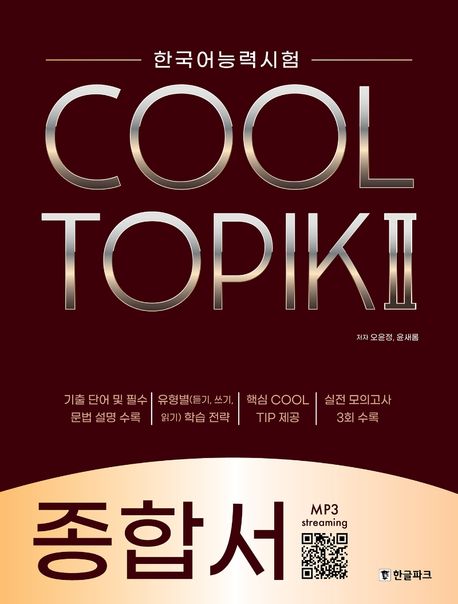
COOL TOPIK II 종합서’는 실전 문제와 모의고사 문제에 실제 시험에서 자주 활용되는 주제 영역이 반영되었고, TOPIK에 자주 나오는 단어와 문법 목록도 함께 제공하고 있어 시험 대비를 위한 효과적인 학습서라고 할 수 있습니다.〈단어 학습〉 기출 단어 목록 및 4개 국어 번역! 〈문법 학습〉 필수 문법 설명과 예문〈단어 학습〉은 기출 단어의 표현과 유의어, 반의어까지 정리하였고, 영어, 일본어, 중국어, 베트남어 4개국어로 정리하였습니다. 〈문법 학습〉은 필수 문법에 대한 설명과 예문을 통해서 의미를 이해하고 사용하도록 하였습니다. .〈유형 학습〉 전략으로 듣기, 쓰기, 읽기 파트를 세밀하게 분석! 다양한 연습 문제!〈유형 연습〉 부분에서는 문제 유형의 특성을 잘 드러내어 주는 기출문제를 선별하여 제시하고 기출문제와 유사한 형식의 실전 문제를 함께 제시함으로써 학습자들이 문제 유형에 익숙해질 수 있는 훈련 과정을 제공합니다.〈영역별 모의고사〉와 〈실전 모의고사〉로 시험을 대비!실전 문제와 모의고사 문제에 실제 시험에서 자주 활용되는 주제 영역이 반영되었고, TOPIK에 자주 나오는 단어와 문법 목록도 함께 제공하고 있어 시험 대비를 위한 효과적입니다.
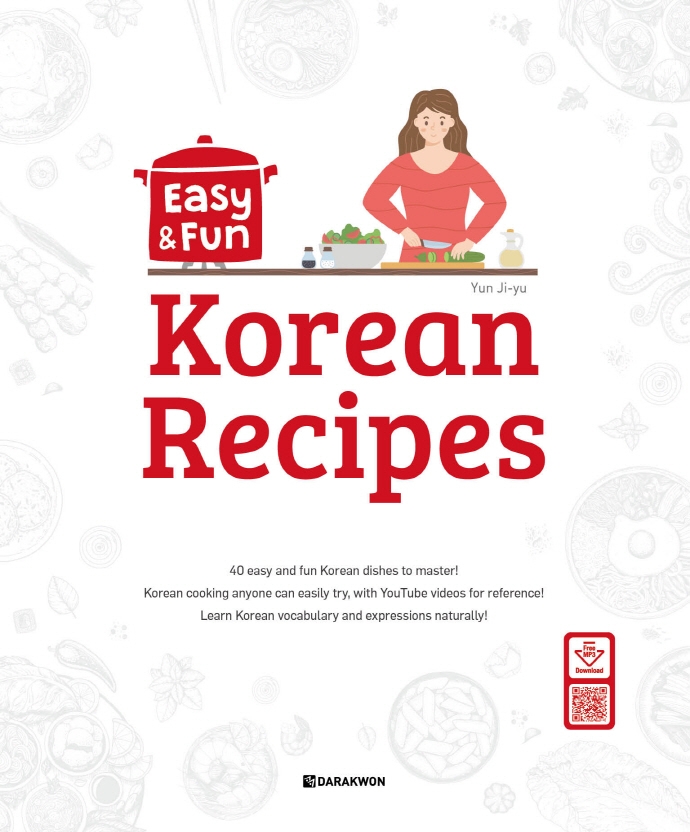
Easy and Fun Korean Recipes is a textbook that teaches Korean through cooking, created when the author considered how to make Korean learning more entertaining. It specially includes YouTube videos of the author personally cooking, to which readers can refer along with the textbook in order to make it easier to try cooking the 40 Korean dishes within. Dishes and snacks frequently eaten by Korean people are organized by 6 different ingredients (kimchi, rice, eggs/tofu, meat, seafood, etc.), and while learning how to cook Korean food, readers can also learn vocabulary related to simple ingredients and expressions, and even practice conversation. In addition, not only can readers instantly connect and refer to videos of each recipe via QR code, they can even hear each cooking terms and conversation sentences recorded by professional voice actors, provided via QR code as well.
Download Audiofiles here
Visit author's recipes on YouTubeIncludes 40 easy and fun recipes for Korean dishes that anyone can follow along withA textbook with 40 carefully selected Korean dishes organized by 6 main ingredients so that even foreigners can easily follow along and choose a dish to try cooking for themselves.Introduction of ingredients and the cooking process are provided together in Korean and English for easier understanding.Check the author’s cooking videos on YouTube via QR code for quick and easy understandingEach recipe includes a QR code so readers can instantly connect and refer to the author’s cooking videos on YouTube to understand the cooking process at a glance and follow along.Using videos that include step-by-step explanations of everything from the ingredients to the cooking process, readers can try cooking Korean dishes without difficulty.A Korean textbook you can use to study Korean cooking alongside Korean vocabulary and expressionsEach recipe includes relevant vocabulary for ingredients and cooking expressions, with simple explanations and example sentences, and readers can even learn Korean grammar.All vocabulary words and example sentences can be checked instantly by connecting via QR code to recordings from professional voice actors.
Contents
김치볶음밥 Kimchi-bokkeumbap 김치전 Kimchijeon 김치찜 Kimchijjim 배추김치 Baechukimchi 2. 쌀 Rice떡꼬치 Tteok-kkochi 떡볶이 Tteokbokki 궁중떡볶이 Gungjungtteokbokki 비빔밥 Bibimbap 김밥 Gimbap 3. 달걀 · 두부 Eggs · Tofu달걀말이 Dalgyalmari 계란찜 Gyeranjjim 두부부침 Dububuchim 두부김치 Dubukimchi 순두부찌개 Sundubujjigae 4. 고기 Meat불고기 Bulgogi 갈비탕 Galbitang 갈비구이 Galbigui 갈비찜 Galbijjim 장조림 Jangjorim 소고기뭇국 Sogogi-mutguk 고추장불고기 Gochujangbulgogi 동그랑땡 Donggeurangttaeng 삼계탕 Samgyetang찜닭 Jjimdak 닭갈비 Dakgalbi 5. 해산물 Seafood해물파전 Haemulpajeon 미역국 Miyeokguk 새우전 Saeujeon 어묵탕 Eomuktang 오징어볶음 Ojingeo-bokkeum 6. 기타 Other된장찌개 Doenjangjjigae 부대찌개 Budaejjigae 잡채 Japchae 김말이 Gimmari 호떡 Hotteok 감자전 Gamjajeon 호박죽 Hobakjuk 핫도그 Hot dog 짜파구리 Jjapaguri AppendixExplantions in Korean Index
세계적인 한국어 학습 열풍과 함께 중급 이상 학습자들의 수가 늘어나면서 한국어의 일부로서 한자어 학습의 필요성이 절실해지고
있습니다. 이 책은 사자성어를 통해 한국어에서 한자어의 쓰임을 효과적으로 학습할 수 있는 교재로서, ‘국제 통용 한국어 표준
교육과정’에서 선정한 사자성어들과 국립국어원의 ‘한국어교수학습샘터’에서 제시하는 관용 표현으로서의 사자성어들 중 공통된 사자성어를
우선 선별하여 총 176개의 필수 사자성어를 다루고 있습니다. 이들 사자성어는 양태와 주제에 따라 과별로 4개씩 묶어
제시됨으로써, 학습자들은 유사한 상황에서 사용되는 사자성어들을 연관지어 배울 수 있습니다. With the global surge
in Korean language learning and the increasing number of intermediate
and advanced learners, the importance of incorporating Sino-Korean words
into Korean language education has become crucial. Essential Korean
4-Character Idioms is an effective learning material for understanding
the usage of Sino-Korean words within the Korean language through
four-character idioms. It covers a total of 176 essential four-character
idioms, primarily selected from the common idioms listed by the
‘International Standard for Curriculum Korean Language’ and the ‘Center
for Teaching and Learning Korean’ of the National Institute of Korean
Language. These idioms are presented in groups of four per chapter,
categorized by modality and theme, allowing learners to associate
related expressions used in similar situations.
『속담을 알면 한국어가 쉬워진다』는 한국인들이 일상에서 흔히 사용하는 200개의 속담을 이해하기 쉽게 정리한 책이다. 속담의 실제
의미는 물론이고, 비슷한 영어 표현과 어떤 점에서 비슷하고 혹은 같은지를 알 수 있도록 체계적인 단계의 연습 문제도 마련했다.
또한 한국인들의 일상 대화를 지문으로 구성해 한국인들이 어떤 상황에서 속담을 사용하는지 자연스럽게 익힐 수 있게 했다.책에 실린
대화문은 음성 파일로 들을 수 있고 무료로 다운로드 받을 수 있다. 『Essential Korean Proverbs』 is a
book that summarizes 200 proverbs commonly used by Koreans in their
daily lives in an easy-to-understand way. We have prepared a systematic
level of practice tasks so that you can learn the actual meaning of the
proverb as well as how similar to a corresponding English expression it
is. Moreover, by adding examples of daily conversations in Korean, you
can naturally learn in which situations Koreans use certain
proverbs.*Scan the QR codes in the book to use accompanying audio files.
Click here to download the audio files
About This Book
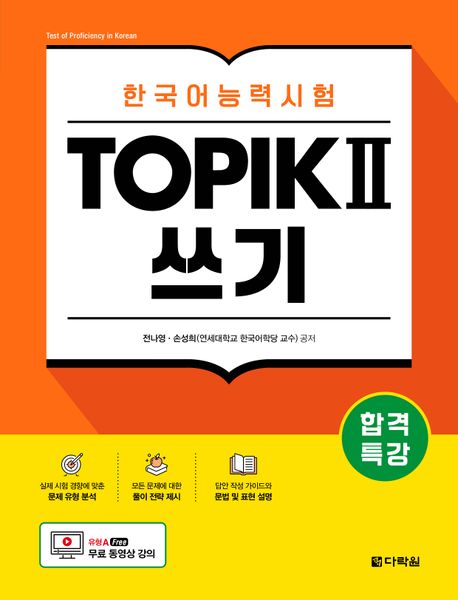
• Organizing Test of Proficiency in Korean TOPIK II 5 mock test questions according to the actual test type and difficulty level
• Offers extensive explanations and a variety of topics and difficulty levels to prepare for the actual exam!
• Thorough analysis of the Test of Proficiency in Korean (TOPIK) II
Listening, Reading and Writing exam questions, with problem composition
tailored to actual test trends.
• Provision of OMR answer sheets and two versions of Listening files: basic audio and audio heard in a place to take the exam.
Contents
머리말이 책의 특징 TOPIKⅡ 시험 안내 PART 1 듣기·쓰기·읽기 시험 분석듣기 학습 방법 및 유형 소개쓰기 학습 방법 및 유형 소개 읽기 학습 방법 및 유형 소개 PART 2 실전 모의고사제1회 실전 모의고사 제2회 실전 모의고사 제3회 실전 모의고사 제4회 실전 모의고사 제5회 실전 모의고사 [책 속의 책] 정답 및 풀이제1회 실전 모의고사 정답 및 풀이제2회 실전 모의고사 정답 및 풀이 제3회 실전 모의고사 정답 및 풀이 제4회 실전 모의고사 정답 및 풀이 제5회 실전 모의고사 정답 및 풀이 OMR 답안지
About This Book
•
Thorough analysis of the Test of Proficiency in Korean (TOPIK) II
Reading exam questions, with problem composition tailored to actual Test
trends.
• Providing analysis of question types and solution strategies for all problems.
• Selecting important vocabulary from the passages, organizing them into example sentences and expanded expressions.
• Offering free lectures for solving Type A problems to provide
effective learning assistance. Scan the QR code in the book to access
the video lessons.
Contents
머리말이 책의 특징 TOPIKⅡ 시험 안내 유형1 알맞은 표현 찾기유형1A 1. 알맞은 연결어미 찾기2. 알맞은 종결어미 찾기 3. 유사한 문법 표현 찾기 4. 유사한 종결어미 찾기 5. 문장성분 찾기 6. 관용 표현 찾기 7. 맥락에 맞는 표현 찾기 유형1B 1. 알맞은 연결어미 찾기 2. 알맞은 종결어미 찾기 3. 유사한 문법 표현 찾기 4. 유사한 종결어미 찾기 5. 문장성분 찾기 6. 관용 표현 찾기7. 맥락에 맞는 표현 찾기Reading Plus 유형2 글의 순서 파악하기유형2A 1. 각각의 문장을 순서에 맞게 배열하기 2. 주어진 문장이 들어갈 적당한 위치 찾기 유형2B 1. 각각의 문장을 순서에 맞게 배열하기2. 주어진 문장이 들어갈 적당한 위치 찾기 Reading Plus유형3 전체 내용 이해하기유형3A 1. 광고문의 의미 파악하기 2. 글의 주제 파악하기 3. 머리기사의 의미 파악하기유형3B 1. 광고문의 의미 파악하기 2. 글의 주제 파악하기 3. 머리기사의 의미 파악하기 Reading Plus 유형4 세부 내용 이해하기유형4A 1. 안내문의 내용 파악하기 2. 그래프의 내용 파악하기 3. 기사의 내용 이해하기 4. 수필의 내용 파악하기 5. 설명문의 내용 파악하기 6. 소설의 내용 파악하기 7. 칼럼의 내용 파악하기 유형4B 1. 안내문의 내용 파악하기 2. 그래프의 내용 파악하기3. 기사의 내용 이해하기 4. 수필의 내용 파악하기5. 설명문의 내용 파악하기 6. 소설의 내용 파악하기 7. 칼럼의 내용 파악하기 Reading Plus 정답 및 풀이
About This Book
•
Thorough analysis of the Test of Proficiency in Korean (TOPIK) II
Reading exam questions, with problem composition tailored to actual Test
trends.
• Providing analysis of question types and solution strategies for all problems.
• Selecting important vocabulary from the passages, organizing them into example sentences and expanded expressions.
• Offering free lectures for solving Type A problems to provide
effective learning assistance. Scan the QR code in the book to access
the video lessons.
Contents
머리말이 책의 특징 TOPIKⅡ 시험 안내 유형1 알맞은 표현 찾기유형1A 1. 알맞은 연결어미 찾기2. 알맞은 종결어미 찾기 3. 유사한 문법 표현 찾기 4. 유사한 종결어미 찾기 5. 문장성분 찾기 6. 관용 표현 찾기 7. 맥락에 맞는 표현 찾기 유형1B 1. 알맞은 연결어미 찾기 2. 알맞은 종결어미 찾기 3. 유사한 문법 표현 찾기 4. 유사한 종결어미 찾기 5. 문장성분 찾기 6. 관용 표현 찾기7. 맥락에 맞는 표현 찾기Reading Plus 유형2 글의 순서 파악하기유형2A 1. 각각의 문장을 순서에 맞게 배열하기 2. 주어진 문장이 들어갈 적당한 위치 찾기 유형2B 1. 각각의 문장을 순서에 맞게 배열하기2. 주어진 문장이 들어갈 적당한 위치 찾기 Reading Plus유형3 전체 내용 이해하기유형3A 1. 광고문의 의미 파악하기 2. 글의 주제 파악하기 3. 머리기사의 의미 파악하기유형3B 1. 광고문의 의미 파악하기 2. 글의 주제 파악하기 3. 머리기사의 의미 파악하기 Reading Plus 유형4 세부 내용 이해하기유형4A 1. 안내문의 내용 파악하기 2. 그래프의 내용 파악하기 3. 기사의 내용 이해하기 4. 수필의 내용 파악하기 5. 설명문의 내용 파악하기 6. 소설의 내용 파악하기 7. 칼럼의 내용 파악하기 유형4B 1. 안내문의 내용 파악하기 2. 그래프의 내용 파악하기3. 기사의 내용 이해하기 4. 수필의 내용 파악하기5. 설명문의 내용 파악하기 6. 소설의 내용 파악하기 7. 칼럼의 내용 파악하기 Reading Plus 정답 및 풀이
About This Book
•
Thorough analysis of the Test of Proficiency in Korean (TOPIK) II
Writing exam questions, with problem composition tailored to actual test
trends.
• Providing analysis of question types and solution strategies for writing problems.
• Organizing grammar expressions necessary for writing answers, along with example sentences for learning.
• Offering free lectures for solving Type A problems to provide
effective learning assistance. Scan the QR code in the book to access
the video lessons.
Contents
머리말이 책의 특징 TOPIKⅡ 시험 안내 쓰기51 실용문 완성하기51유형A 51유형B 유형 학습 1. 초대하기 2. 문의하기 3. 감사하기 4. 변경하기 5. 제안하기 6. 공지하기 7. 물건 판매하기8. 모집하기 9. 주의하기 10. 사과하기 11. 부탁하기 12. 거절하기 쓰기52 설명문 완성하기52유형A 52유형B 유형 학습 1. 자동사와 타동사 2. 간접화법 3. 부사어4. 관형어5. 접속어 6. 피동 표현 7. 사동 표현 8. 관용 표현 9. 격식체 10. 문형 쓰기53 그래프와 정보 설명하기53유형A 53유형B 유형 학습 1 유형 학습 2 1. 주제문 작성하기 2. 개요 작성하기 3. 단락 쓰기 쓰기54 논리적인 글쓰기54유형A 54유형B 유형 학습 1유형 학습 2 1. 제목 보고 주제 정하기 2. 주제 구체화하기 3. 내용 채우기 4. 논리적으로 전체 글 구성하기 5. 원고지 쓰기
About This Book
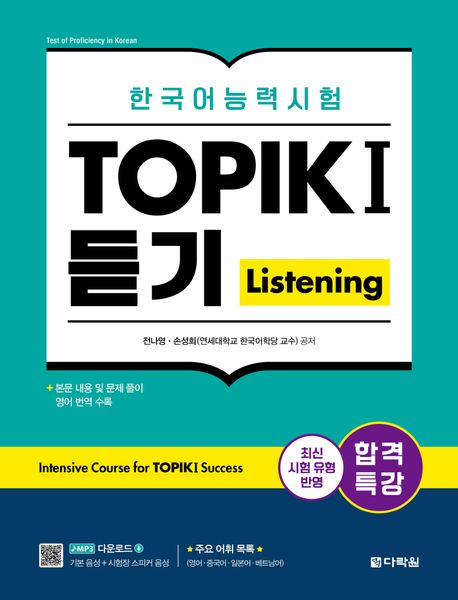
•
Thorough analysis of the Test of Proficiency in Korean (TOPIK) I
Listening exam questions, with problem composition tailored to actual
test trends.
• Each question presents problem-solving methods in the [Strategy]
section. Refer to the [Strategy] section to solve the problems.
• The questions are designed with similar types and difficulty levels as
the actual exam. Explanations of the correct answers are provided to
help grasp the core of the questions, and example sentences are included
to familiarize learners with sentences related to the answer choices.
• Essential vocabulary from each question and [Additional Learning] is
selected and translated into English, Japanese, Chinese, Vietnamese.
• [Listening Files] can be downloaded from the Darakwon website
(www.darakwon.co.kr). You can practice with both basic audio and audio
that simulates the actual test environment speakers.
Contents
머리말이 책의 특징 이 책의 활용법TOPIK I 시험 안내 유형 1 대답하기 1 ‘네/아니요’로 대답하기2 의문사 질문에 대답하기3 대화 완성하기유형1 표현 익히기 유형 2 전체 내용 이해하기 1 장소 찾기2 화제 찾기3 알맞은 그림 찾기4 중심 생각 찾기유형2 표현 익히기유형3 세부 내용 이해하기 1 대화의 내용 이해하기2 안내 방송의 내용 이해하기 유형3 표현 익히기부록 듣기 지문 번역표현 색인OMR 답안지 작성법
About This Book
When preparing for the listening and reading tests, it introduces
learning methods for each area, helping learners learn by focusing on
what to focus on.
• Exercises are composed according to the type and difficulty of the questions that appear in the actual TOPIK I test.
• Providing analysis of question types and solution strategies for writing problems.
• After [Exercise], [Additional learning] or [Key expressions] related
to each question are organized so that you can learn more broadly.
• By taking the [Practice Test], you can get a feel for the actual test.
It is a good idea to solve the problems according to the actual test
time, check the answers on the OMR card at the back of the textbook, and
practice writing the answers.
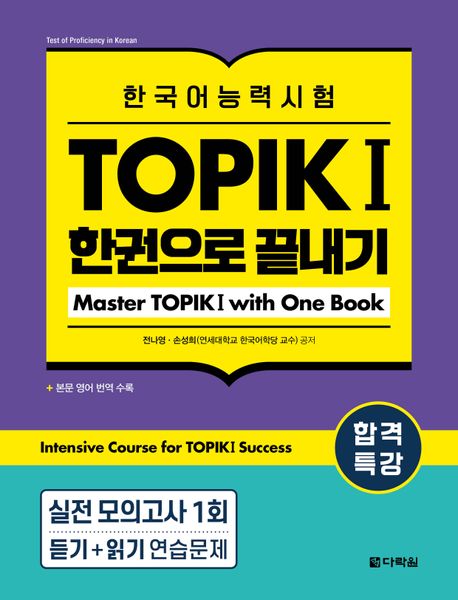
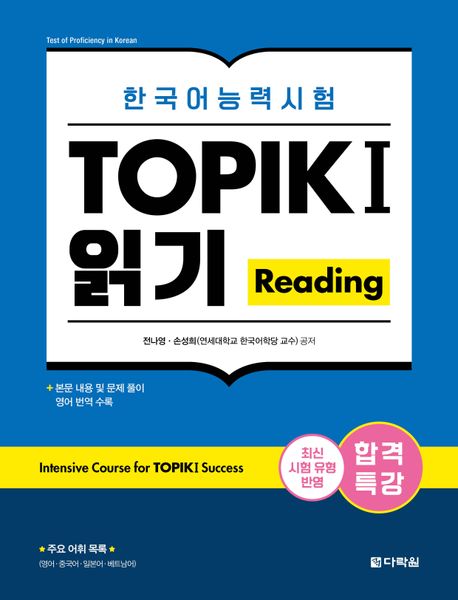
한국어능력시험 TOPIK I (토픽 1) 듣기, 읽기의 문제 풀이와 실전 모의고사 구성으로 한권으로 한국어능력시험 TOPIK I (토픽 1) 시험 준비 가능!한국어능력시험
TOPIK I (토픽 1) 시험을 준비하면서 가장 중요한 것은 실제 시험 문제의 경향에 대한 파악과 다양한 문제 풀이를 통한
충분한 연습이다. 이 책에서는 듣기, 읽기 문제를 분석하여 각 유형별로 정리하고 연습 문제를 구성하였다. 문제를 풀기
위해서 필요한 전략을 실었고 각 문제와 관련된 다양한 표현의 예문과 지문에 사용된 단어, 문형, 구 등의 의미 등을 폭넓게 학습할
수 있도록 수록하였다. 또한, 실제 시험과 유사한 난이도와 유형에 맞춘 실전 모의고사 1회분을 풀어 보면서 완벽하게 시험을
준비할 수 있다.
Contents
머리말이 책의 특징 TOPIK I 시험 안내 PART 1 듣기유형 1 대답하기유형 2 전체 내용 이해하기유형 3 세부 내용 이해하기 PART 2 읽기유형 1 알맞은 표현 찾기유형 2 전체 내용 이해하기유형 3 세부 내용 이해하기 PART 3 실전 모의고사정답 및 풀이 듣기 정답 및 풀이읽기 정답 및 풀이실전 모의고사 정답 및 풀이색인 - 주요 표현OMR 답안지
About This Book
•
This book is a textbook for learners who want to take the Test of
Proficiency in Korean TOPIK Ⅰ and consists of 5 practice tests.
• Learning methods for listening and reading tests are presented, and
the types of questions by area are summarized. In addition, example
questions and explanations are presented together so that the flow of
the test can be checked at once.
• Five practice tests are included in accordance with the difficulty and
composition similar to the actual TOPIK test so that learners can
improve their actual test sense.
• It provides explanation for each question so that you can grasp the
core of the question, so that learners can fully understand the
question.
• Practice filling out the OMR answer sheet you would in a real exam.
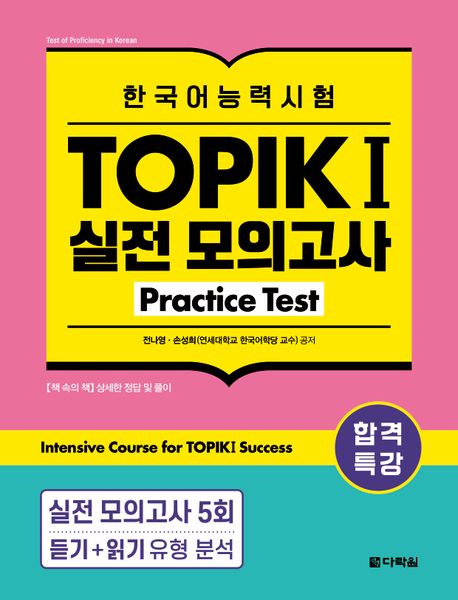
한국어능력시험 TOPIK I (토픽 1) 실전 모의고사 5회분과 모든 문제에 대한 상세한 풀이로 TOPIK I 시험 준비 완벽 가능!
한국어능력시험 TOPIK I (토픽 1) 시험을 최종 마무리할 수
있도록 실전 모의고사 5회분을 구성하였다. 실제 시험 문제의 유형과 난이도에 맞춘 모의고사 문제를 풀어 보면서 한국어능력시험
TOPIK I 실전 시험에 대한 충분한 대비가 가능하다. 이 책에서는 한국어능력시험 TOPIK I (토픽 1) 듣기, 읽기
유형에 대해 정리하여 각 영역별 문제 유형을 파악할 수 있게 구성하였다. 그리고 5회분 모의고사와 상세한 정답 및 풀이를
수록하여 효과적으로 시험 대비를 할 수 있도록 하였다. 또한 OMR 카드를 수록하여 실제 시험과 같이 OMR 카드에 답안을
체크하는 연습을 할 수 있다.
Contents
머리말이 책의 특징 TOPIK I 시험 안내 PART 1 듣기·읽기 시험 분석 듣기 시험 준비 읽기 시험 준비 PART 2 실전 모의고사 제1회 실전 모의고사 제2회 실전 모의고사 제3회 실전 모의고사 제4회 실전 모의고사 제5회 실전 모의고사[책 속의 책] 실전 모의고사 정답 및 풀이 제1회 실전 모의고사 정답 및 풀이 제2회 실전 모의고사 정답 및 풀이 제3회 실전 모의고사 정답 및 풀이 제4회 실전 모의고사 정답 및 풀이 제5회 실전 모의고사 정답 및 풀이 OMR 답안지
About This Book
•
Thorough analysis of the Test of Proficiency in Korean (TOPIK) I
Reading exam questions, with problem composition tailored to actual test
trends.
• Each question presents problem-solving methods in the [Strategy]
section. Refer to the [Strategy] section to solve the problems.
• The questions are designed with similar types and difficulty levels as
the actual exam. Explanations of the correct answers are provided to
help grasp the core of the questions, and example sentences are included
to familiarize learners with sentences related to the answer choices.
• Essential vocabulary from each question and [Additional Learning] is
selected and translated into English, Japanese, Chinese, Vietnamese.
한국어능력시험 TOPIK I (토픽 1) 읽기 시험의 경향 파악과 문제 풀이 전략을 통해 완벽하게 시험 준비 가능!한국어능력시험
TOPIK I (토픽 1) 시험을 준비하면서 가장 중요한 것은 실제 시험 문제의 경향에 대한 파악과 다양한 문제 풀이를 통한
충분한 연습이다. 이 책에서는 학습자가 문제를 풀 때 어떤 점에 중점을 두고 문제를 이해해야 하는지 전략적으로 파악할 수 있도록
한국어능력시험 TOPIK I (토픽 1) 읽기 40문제를 3개 유형으로 분류하여 유형별로 학습할 수 있도록 정리하였다. 문제마다
〈전략〉을 제시해서 문제를 풀기 위해서 필요한 내용을 실었고 각 문제와 관련된 다양한 표현의 예문과 지문에 사용된 단어, 문형, 구
등의 의미 등을 폭넓게 학습할 수 있도록 수록하였다.
Contents
머리말이 책의 특징 이 책의 활용법TOPIK I 시험 안내 유형 1 알맞은 표현 찾기1 알맞은 동사 찾기2 알맞은 명사 찾기3 알맞은 형용사 찾기 4 알맞은 부사 찾기 5 알맞은 조사 찾기6 알맞은 접속사 찾기7 알맞은 연결어미 찾기 8 알맞은 문형 찾기 유형1 표현 익히기 유형 2 전체 내용 이해하기 1 주제 찾기 2 중심 내용 찾기 유형2 표현 익히기유형3 세부 내용 이해하기 1 광고의 내용 이해하기 2 문자메시지의 내용 이해하기 3 글의 내용 이해하기 4 문맥에 맞는 내용 찾기5 글의 순서 파악하기유형3 표현 익히기 부록 읽기 지문 번역표현 색인OMR 답안지 작성법
Click here to download the audio files
About This Book
•
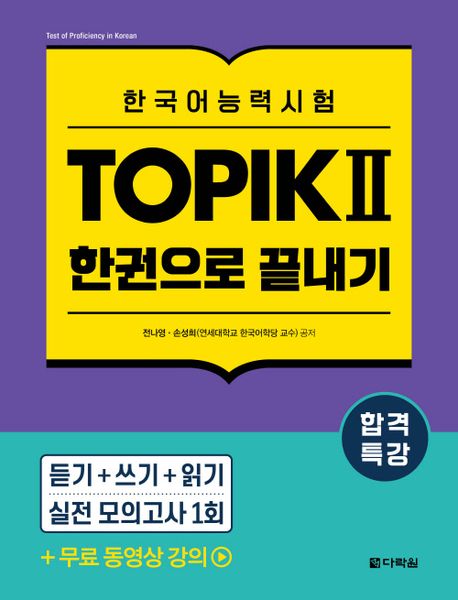
Thorough analysis of the Test of Proficiency in Korean (TOPIK) II
Listening, Reading and Writing exam questions, with problem composition
tailored to actual test trends.
• Providing analysis of question types and solution strategies for writing problems.
• Organizing a mock test according to the actual test type and difficulty level to experience actual examination.
• Offering free lectures for solving problems to provide effective
learning assistance. Scan the QR code in the book to access the video
lessons. And practice available with two versions of Listening files:
basic audio and audio heard in a place to take the exam.
Contents
머리말이 책의 특징 TOPIKⅡ 시험 안내 PART 1 듣기 유형 1 그림 또는 그래프 고르기 유형 2 이어지는 말이나 행동 고르기 유형 3 전체 내용 파악하기 유형 4 세부 내용 이해하기 PART 2 쓰기 유형 1 실용문 완성하기 유형 2 설명문 완성하기 유형 3 그래프와 정보 설명하기 유형 4 논리적인 글쓰기 PART 3 읽기 유형 1 알맞은 표현 찾기 유형 2 글의 순서 파악하기 유형 3 전체 내용 이해하기 유형 4 세부 내용 이해하기 실전 모의고사 정답 및 풀이듣기 정답 및 풀이 쓰기 정답 및 풀이 읽기 정답 및 풀이 실전 모의고사 정답 및 풀이 OMR 답안지
About This Book
•
In order to get a high score, the types of TOPIK speaking tests are
analyzed and appropriate learning strategies are presented from 1 to 6.
• Questions from basic to advanced are constructed reflecting ‘topics to
know’, ‘conversation situations that frequently appear in the exam’,
and ‘essential vocabulary and expressions’ in each type.
• Scan the QR code to listen to the audio, organize the keywords of the
question, and then write down your answer. Record the answer you wrote
and practice repeatedly until you can speak naturally.
• Three practice tests are included by analyzing and reflecting the
actual test. The author provides proofreading feedback for 1
question(1st practice test).
한국어능력시험 TOPIK (토픽) 말하기 시험의 최신 경향 파악과 예시 답안을 통해 완벽하게 시험 준비 가능! 저자의 첨삭 피드백까지! TOPIK
말하기 시험을 쉽고 효과적으로 준비할 수 있도록 6가지 문제를 유형별로 나누어 단계별로 연습 방법을 제시하였다. 유형마다 알아야
하는 주제나 시험에 자주 나오는 대화 상황을 제시하여 충분히 연습할 수 있다. 그리고 실제 시험 경향을 반영한 3회분의 실전
모의고사를 통해 실제 시험을 체감해 볼 수 있다. 또한 질문이나 예시 답안의 음성 파일을 반복적으로 들으면서 발음과 억양, 말하기
방식을 익힌다면 시험장에서 완벽하게 말하기 답변을 할 수 있을 것이다. 특히 이 책의 ‘제1회 실전 모의고사’ 문제를 풀고
원큐패스 게시판(1qpassacademy.com)에 한 문제의 답변을 쓰면 저자가 직접 피드백을 해준다.
Contents
머리말TOPIK 말하기 시험 소개일러두기유형 1 질문에 대답하기Training 질문에 대답하기 Speak up 실전 연습 유형 2 그림 보고 역할 수행하기 Training 역할에 맞게 말하기 Speak up 실전 연습 유형 3 그림 보고 이야기하기 Training1 그림 보고 이야기하기 Training2 연속된 그림 보고 이야기하기 Speak up 실전 연습 유형 4 대화 완성하기Training1 의견 말하기(찬성과 반대) Training2 의견 말하기(장점과 단점) Training3 의견 말하기 Speak up 실전 연습유형 5 자료 해석하기 Training1 자료 해석 표현 익히기 Training2 도표 파악하기 Training3 자료 해석하기 Speak up 실전 연습 유형 6 의견 제시하기 Training 의견 제시하기 Speak up 실전 연습 실전 모의고사제 1회 실전 모의고사 제 2회 실전 모의고사 제 3회 실전 모의고사 부록유형별 질문 스크립트 제 1회 실전 모의고사 답안 예시 제 2회 실전 모의고사 답안 예시 제 3회 실전 모의고사 답안 예시
About This Book
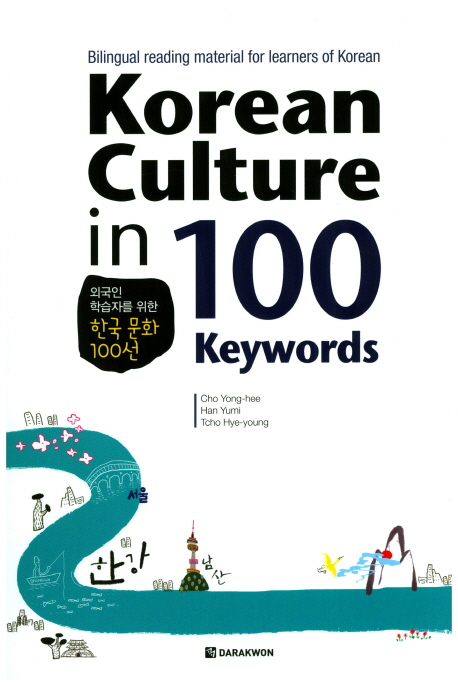
The 100 keywords for this book have been selected through several rounds of surveys with the students at the Korean Cultural Center in Paris, France. The 100 facts address extensive sectors. The facts have been selected because they not only help French and global learners have an overall understanding of the state of Korea, but also represent the background knowledge necessary to study essential words and grammar in learning Korean from various aspects including culture, history, tradition and society. The 100 keywords thus chosen serve as the topic of each subject. This book has a total of 100 subjects, largely divided in six themes so that learners can easily search the subject they would like to know. The six themes are: Theme 1: Symbolic Icons (10 Subjects) Theme 2: Food, Clothing and Shelter (12 Subjects) Theme 3: Geography and Tourism (21 Subjects) Theme 4: Society & Daily Life (19 Subjects) Theme 5: History and Religion (20 Subjects) Theme 6: Arts and Culture (18 Subjects) Each subject consists of two pages. On the upper left side is a photo that can explain the subject at a glance. Under the photo is a Korean text that introduces contents that must be learned regarding the subject. In order to help the learning, two questions are added to check the learner’s understanding of the text. The answers are provided in the appendices at the end of this book. In the upper right side is the English translation of the Korean text. The translation will serve for learners to measure their level of Korean proficiency in terms of understanding; in addition, it will satisfy the need for Korean learners who have long wanted to have a bilingual textbook. On the bottom is the English translation of each Words and Expressions section to help readers understand the Korean text. Small photos that are relevant to each subject are added to provide greater enjoyment.
Contents
서문 / 4 일러두기 / 6 차례 / 10 1장 상징물 Symbolic Icons 001 한글 Hangeul 14 002 태극기 Taegeukgi 16 003 애국가 Aegukga 18 004 무궁화 Mugunghwa 20 005 아리랑 Arirang 22 006 고려청자 Goryeo Celadon 24 007 김치 Kimchi 26 008 비빔밥 Bibimbap 28 009 태권도 Taekwondo 30 010 첨단 과학 기술 Advanced Science and Technology 32 2장 의식주 Food, Clothing and ShelterFood, Clothing and Shelter 001 한복 Hanbok 36 002 불고기 Bulgogi 38 003 인삼 Gingseng 40 004 한국의 술 Korean Liquor 42 005 젓갈/젓 Jeotgal/Jeot (Salted Fermented Seafood) 44 006 김장 Gimjang (Seasonal Preparation of Kimchi 46 007 장독대 Jangdokdae (Jar Stand) 48 008 다례 Tea Ceremony 50 009 한옥 Hanok 52 010 온돌 Ondol 54 011 마당 Madang (Courtyard) 56 012 전통 정원의 아름다움 Beauty of Traditional Garden 58 3장 지리와 관광 Geography and Tourism and Tourism 001 한반도 Korean Peninsula 62 002 극동 아시아 속의 한국 Korea in East Asia 64 003 계절과 날씨 Seasons and Weather 66 004 한강 Hangang River 68 005 서울의 고궁 Ancient Palaces in Seoul 70 006 서울 남산 Namsan Mountain, Seoul 72 007 남대문과 남대문시장 Namdaemun Gate and Namdaemun Market 74 008 동대문과 근처 시장들 Dongdaemun Gate and Nearby Markets 76 009 인사동 Insadong 78 010 북촌한옥마을 Bukchon Hanok Village 80 011 홍대 앞 거리 Hongdae (Hongik University) Streets 82 012 강남 Gangnam 84 013 서울 지하철 Seoul Metropolitan Subway 86 014 제주도와 한라산 Jejudo Island and Hallasan Mountain 88 015 경주와 경주 남산 Gyeongju and Gyeongju Namsan Mountain 90 016 하회마을 Hahoe Folk Village 92 017 부여와 백제 유적 Buyeo and Baekje Historic Sites 94 018 부산과 자갈치시장 Busan and Jagalchi Market 96 019 동해안과 설악산 국립 공원 Donghae Coast and Seoraksan National Park 98 020 다도해와 해상 국립 공원 Dadohae and Haesang (Marine Archipelago) National Park 100 021 보성 차밭 Boseong Tea Plantation 102 4장 사회와 일상생활 Society and Daily Life Daily Life 001 한국어 The Korean Language 106 002 인구 Population 108 003 성과 이름 Family Name and Surname 110 004 호칭 Titles Addressing People 112 005 숫자 Numbers 114 006 나이 Age 116 007 결혼식 Wedding Ceremony 118 008 교육 제도 Educational System 120 009 대학 입학 시험 University Entrance Exam 122 010 병역 의무 Duty of Military Service 124 011 설날 Seollal (New Year’s Day) 126 012 추석 Chuseok 128 013 한의학 Traditional Korean Medicine 130 014 노래방 Noraebang (Singing Room) 132 015 찜질방 Jjimjilbang (Korean Dry Sauna) 134 016 단풍놀이 Fall Foliage Picnic 136 017 등산 Hiking 138 018 집들이 Housewarming 140 019 비상 시 긴급 전화 Emergency Phone Numbers 142 5장 역사와 종교 History and Religion and Religion 001 단군 신화 The Dangun Myth 146 002 원효대사 Great Master Wonhyo 148 003 세종대왕 King Sejong the Great 150 004 이순신 장군과 거북선 Admiral Yi Sun-sin and the Geobukseon 152 005 신사임당 Shin Saimdang 154 006 이황 Yi Hwang 156 007 한국의 종교 Religions of Korea 158 008 고인돌 Dolmen 160 009 무속 신앙 Shamanism 162 010 점과 사주 Fortunetelling and Saju 164 011 선 Seon 166 012 절 Buddhist Temple 168 013 불국사와 석굴암 Bulguksa Temple and Seokguram Grotto 170 014 팔만대장경 Tripitaka Koreana (Palman Daejanggyeong) 172 015 템플 스테이 Temple Stay 174 016 서원 Seowon (Confucian Academy) 176 017 장례식, 제사, 차례 Funeral, Jesa and Charye Rituals 178 018 천주교와 개신교 Roman Catholicism and Protestantism 180 019 판문점 Panmunjeom 182 020 이산가족 Dispersed Families 184 6장 예술과 문화 Arts and Culture and Culture 001 한지 Hanji (Korean Paper) 188 002 택견 Taekkyon 190 003 인쇄술 Printing Technology 192 004 종묘 제례 Jongmyo Jerye (Royal Ancestral Memorial Rite of Joseon) 194 005 춘향전 The Chunhyangjeon (The Tale of Chunyhyang) 196 006 판소리 Pansori 198 007 시조 Sijo Poetry 200 008 탈춤 Talchum (Korean Mask Dance) 202 009 풍속화와 민화 Genre Painting and Folk Painting 204 010 전통 악기 Traditional Musical Instruments 206 011 민속촌 Korean Folk Village 208 012 벚꽃놀이 Cherry Blossom Picnic 210 013 부산 국제 영화제 Busan International Film Festival 212 014 전주와 전주 축제들 Jeonju and Its Festivals 214 015 세종문화회관, 국립 극장, 예술의 전당 Sejong Center for the Performing Arts, National Theater of Korea, Seoul Arts Center 216 016 한류 Hallyu (The Korean Wave) 218 017 K-드라마 K-Drama 220 018 K-팝 K-Pop 222 부록 정답 Answers / 226 색인 Index / 234 사진 출처 Sources of photos / 270
K-문화에 대한 관심이 전 세계적으로 증폭하면서 한국어 학습자 또한 급격히 증가하고 있습니다. 국내에서는 대학 내 국제한국어센터를
중심으로 외국인 유학생, 외국인 근로자 등의 유입이 늘어났고, 국외에서는 베트남에서 한국어를 제1외국어로, 터키와 인도, 홍콩,
러시아 등지에서는 한국어를 제2외국어로 채택했습니다. 이에 따라 한국어 교사에 대한 수요 역시 폭발적으로 늘어나고 있습니다.
한국어 관련 정책을 수립하는 국립국어원에서는 ‘국외 한국어교원(K-티처) 프로그램’을 운영하며 한국어 교사 양성에 주력하고 있고,
세종학당재단을 위시한 문체부 및 외교부와 법무부 산하 여러 기관 및 단체에서 이들 다양한 학습자 군을 위한 한국어 교사 교육
프로그램을 적극적으로 운영하고 있습니다. 이 책은 한국어교육 시장의 근래 변화에 주목하며, 한국어 교사로서 교실 수업에서 마주할
학습자들의 질문에 제대로 대응할 수 있도록, 한국어교육 경력 30여 년 이상인 한국어교육학자들과 한국어학자들이 최적의 교수법으로
답한 책입니다. 특히 필자들이 재외동포재단에서 ‘재외 한글학교 교사를 위한 온라인 연수 프로그램’을 운영하며 현장 교사들의
어려움을 설문으로 받아 기획한 내용이어서, 원활한 한국어 교실 수업을 운영할 효과적인 답을 제공한 현장 중심의 책입니다. 한국어
교사들은 이 책을 통해 한국어교육 현장에서의 수업 방식을 연구할 수 있을 뿐만 아니라, 한국어 학습자들이 정확한 이해에 도달할
모범 답안을 공유할 수 있습니다. "현재 한국어 교사로 일하고 있거나 한국어 교사가 되기 위해 준비하고 있는 예비 교사를 위해
마련한 책이다. 한국어 교사들이 교육 현장에서 자주 부딪히는 문제지만, 기존의 이론 문법서에서 쉽게 답을 찾기 어려운 문제들을
중심으로 내용을 구성하였다.”- 머리말 중에서
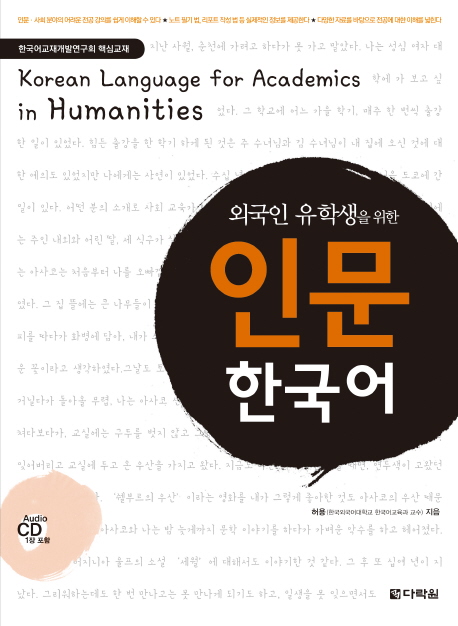
외국인 유학생을 위한 인문 한국어
CD1장포함
외국인 유학생의 성공적인 대학 생활의 길잡이! 어려운 한국어 전공 강의를 쉽게 이해할 수 있다! 노트 필기 법, 리포트 작성 법 등 실제적인 정보를 제공한다! 다양한 자료를 바탕으로 인문ㆍ사회 분야에 대한 이해를 넓힌다! 중ㆍ고급 한국어 학습 능력을 키울 수 있다!
About This Book
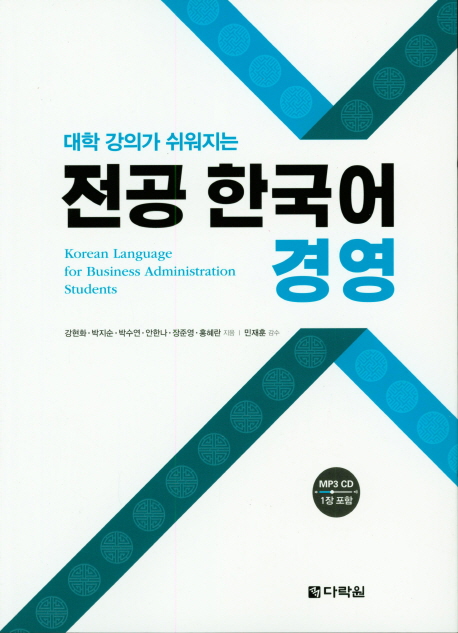
Advanced level Korean language textbook to help students ease into university major courses!
Previews and teaches themes and keywords of major core courses and detailed fields in business administration majors.
Conducts combined activity and projects for listening, reading, speaking and writing areas adequate for each field of study.
Nurtures high level Korean proficiency by providing various materials that could help students to broaden their knowledge of the major.
MP3 Files for Download
외국인을 위한 <한국어 문법> 제1권『체계』편. 한국어를 배우거나 가르칠 때 필요한 한국어 지식을 체계적으로 정리한 책이다. 꼭 필요한 문법 지식만을 골라 문답식으로 정리하였으며, 한국어로 의사소통하는 데 우선적으로 필요한 문법 요소를 체계화하였다.
빈도 높은 질문을 색인으로 제시하고, 한국어 학습자들이 자주 범하는 오류를 수록하였다. 한국어 문법 구조를 다른 언어와 대조해서 기술하였으며, 쉽게 익혀 쓸 수 있도록 풍부하게 사용 상황을 제시하였다. 또한 문법 사항과 예문을 쉽고 친절하게 설명하였다.
Volume 1 - Structure
- Covers essential grammar for foreigners to help them with communicating with Koreans
- Compares with other languages
- In-dept guides for practical usage in everyday life
Volume 2 - Usage
- Covers the usage of 900 main key words and 500 additional key words
- Explains situational variations of auxiliary words, particles, postpositions, etc.
- Corrects widely committed errors
외국인을 위한 <한국어 문법> 제1권『체계』편. 한국어를 배우거나 가르칠 때 필요한 한국어 지식을 체계적으로 정리한 책이다. 꼭 필요한 문법 지식만을 골라 문답식으로 정리하였으며, 한국어로 의사소통하는 데 우선적으로 필요한 문법 요소를 체계화하였다.
빈도 높은 질문을 색인으로 제시하고, 한국어 학습자들이 자주 범하는 오류를 수록하였다. 한국어 문법 구조를 다른 언어와 대조해서 기술하였으며, 쉽게 익혀 쓸 수 있도록 풍부하게 사용 상황을 제시하였다. 또한 문법 사항과 예문을 쉽고 친절하게 설명하였다.
Volume 1 - Structure - Covers essential grammar for foreigners to help them with communicating with Koreans - Compares with other languages - In-dept guides for practical usage in everyday life
Volume 2 - Usage - Covers the usage of 900 main key words and 500 additional key words - Explains situational variations of auxiliary words, particles, postpositions, etc. - Corrects widely committed errors