KOREANISCH LERNEN
- Active Korean
- Business Korean
- Darakwon
- Ewha Korean
- Get it Korean
- Grammatikbücher
- Hi Korean
- Hollym
- I Love Korean
- Integrated Korean
- Korean Made Easy
- Koryo University Fun
- Learn! Korean with BTS
- Master Korean
- Sejong Korean
- Seoul University Korean
- SNU Korean+
- Sogang Korean
- Sprachkalender
- Talk to me in Korean
- TOPIK
- Yonsei University
- Weitere
Sprachbücher von Hollym Publishers
Seit 1963 erscheinen bei Hollym englischsprachige Sprachwerke und Wörterbücher zur koreanischen Sprache,
Produkte filtern
This dictionary is a comprehensive yet practical guide packed with the words and expressions most commonly used in everyday conversation. It features: - Romanization as a guide to pronunciation - Over 6500 essential entries with clear and precise definitions - Over 12000 practical and useful examples - Hangeul-in-a-Hurry chart for a quick reference - And more...
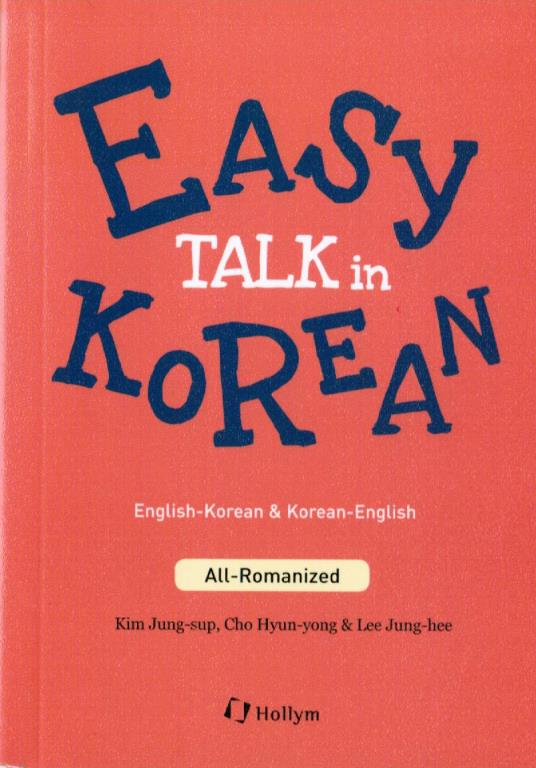
Portable & Alive Korean Conversational Book Useful in Everyday Life Easy Talk in Korean is intended to help Korean language learners to more easily speak, understand, and communicate with Korean people. If you are especially a beginner at learning the Korean language, this conversational book is right for you. This book contains essential Korean expressions ranging from basic to advanced and useful phrases that will be helpful in the various daily situations. In the book, there are 18 topics and situations on greetings, personal information, family, transportation, appointment, food & restaurants, shopping, health, on telephone, careers & employment, life at work, days off & vacations, travel, hobbies, weather & seasons, situations & occasions, Korean culture, and idioms. All the conversations cover culture tips, many jokes, and clever additions. The conversations for each topic or situation followed by information and explanations are aligned in one page with few exceptions that is in two pages. Along with situational Korean expressions, the book includes a pronunciation and a grammar section to help you grasp basic Korean sentence structure and grammar at the beginning of the book. Also all the Korean expressions are Romanized to best guide you to correct reading and pronunciation. Easy Talk in Korean is pocket-sized and yet well-informed. The book filled with both realist and interesting dialogues will be of much benefit to the learners of Korean language. Preface Introduction to Korean Pronunciation Guide Grammar Guide 1. GREETINGS 2. PERSONAL INFORMATION 3. FAMILY 4. TRANSPORTATION 5. APPOINTMENT 6. FOOD & RESTAURANTS 7. SHOPPING 8. HEALTH 9. ON TELEPHONE 10. CAREERS & EMPLOYMENT 11. LIFE AT WORK 12. DAYS OFF & VACATIONS 13. TRAVEL 14. HOBBIES 15. WEATHER & SEASONS 16. SITUATIONS & OCCASIONS 17. KOREAN CULTURE 18. IDIOMS Useful Expressions Vocabulary
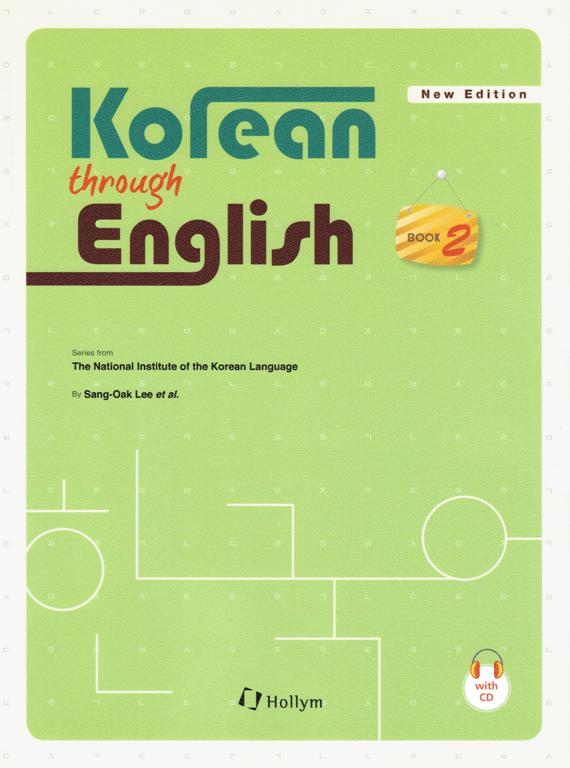
Download Audiofiles HERE - HIER Audiodateien herunterladen Description: The Easiest Korean Language Textbook Series by The National Institute of the Korean Language & Language Education Institute at Seoul National University The Korean through English series was first published in 1992 and has been widely used as an educational textbook series for foreign learners of Korean. In 2012, the new edition of volume 1 was published. It was designed for beginners who are starting to learn Korean as a foreign language for the first time. The textbook was intended to help learners understand the fundamental system of Korean letters (Hangeul) and acquire basic vocabulary and grammar. Now, the new edition of volume 2 has been published. It maintains the same major learning objectives as the previous version and meets new trends and learners needs. This textbook targets intermediate learners who want to advance their Korean language skills to the next level. It is intended to help learners become more confident in using Korean language with accuracy and fluency. The current revision was written by Sang-Oak Lee who wrote the original version and Youngmee Chung at the Language Education Institute of Seoul National University. Approachable and Organized! Korean through English 2 consists of 25 lessons. Lessons 1 through 25 are made up of Vocabulary, Conversation, Grammar & Expression, and Exercise. Most lessons include a "Let's Learn about Korea!" section at the end of the lesson. It is a supplement to help learners understand Korean culture more deeply. In the beginning of every lesson, new vocabulary is accompanied by a short glossary in English. These glossaries provide a general idea of the meaning of the words presented in the following dialogue. In the conversation section, every effort has been made to provide both realistic and interesting circumstances. The authors have chosen to focus more on the everyday-life and modern cultural features which the learners are more likely to encounter. Explanation of the grammatical items and expressions are covered in English. They are accompanied by examples in both Korean and English to illustrate how they are used in practice. Exercises give learners the opportunity to practice and use the new vocabulary and grammar presented in each lesson. Also, the cultural columns on Korea are supplements to help learners understand important aspects of Korean culture which might be unfamiliar to most foreigners. The information on Korea in the "Let's Learn about Korea" section picks up on the theme of the dialogue to enhance understanding of traditional culture and modern society of Korea.
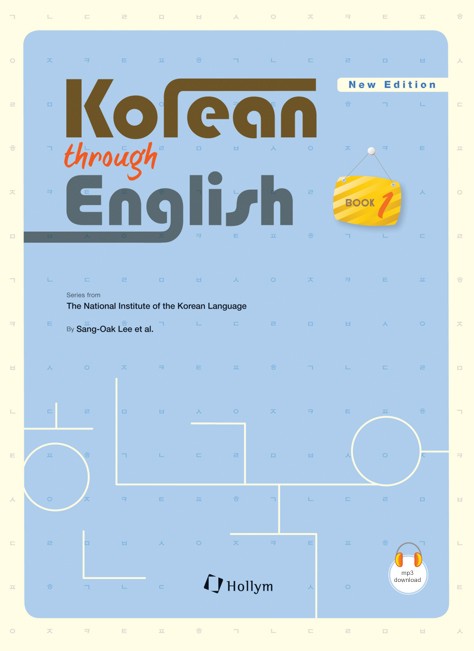
The Best Textbook Series for Learning the Korean Language by the Leading Experts in Korea Download Audiofiles HERE - HIER Audiodateien herunterladen -The National Institute of the Korean Language and Language Education Institute at Seoul National University Originally consisted of three volumes, Korean through English series was first published in 1992 and has widely been used as easy yet educational textbook series for foreign learners of Korean. In 2012, the new edition is published in two volumes, keeping the major learning objectives as the previous version and meeting new trends and learners' needs. Book One is designed for beginners who start to learn Korean as a foreign or second language for the first time. The textbook is to help the learners understand the fundamental system of Korean letters (hangeul) and acquire basic vocabulary and grammatical items. Book Two, which is forthcoming, targets intermediate learners who should advance their Korean language skills to the upper level. The textbook is to help them become more confident of using the Korean language with accuracy and fluency. The current revision has been made by Sang-Oak Lee who wrote the original version and Seungmie Lee at the Language Education Institute of Seoul National University. Systematical Organization to Fit for the Learners' Level and Needs Korean through English Book One, designed for beginners, consists of 25 lessons. Lessons 1 through 4 are devoted to introduction and practice of the Korean alphabet, hangeul, and also include writing and reading exercises with detailed stroke orders to help students familiarize themselves with hangeul. Lessons 5 through 25 are made up of Vocabulary, Pronunciation, Conversation, Grammar, and Exercise. Several lessons include Information at the end of the lesson and it is supplement to help learners understand Korean culture more deeply. In the beginning of every lesson, the new vocabularies of the lessons are accompanied by a short gloss in English. These glosses provide a general idea of the meaning of the words of following conversation part. A brief pronunciation guide to Korean words singles out vocabulary items which are unusual or which have proven particularly difficult for English speakers. In the Conversation section, every effort has been made to provide both realistic and interesting dialogues. They have chosen to focus more on the everyday-life and modern cultural features which the students are more likely to encounter. The authors have also included varied notes on Korean culture and language that are necessary in learning Korean. The Grammar items covered were also selected according to their high-frequency of occurrence in modern Korean and the explanations are presented in English. Copious Exercises give students opportunity to practice and use the new vocabulary and grammar presented in each lesson. Besides, the cultural columns on Korea are supplements to help students understand important aspects of Korean culture that would be unfamiliar to most foreigners. The "Information," when possible, picks up the theme of the main text and is designed to enhance the understanding of traditional culture and modern society of Korea. CONTENTS 머리말 Preface 단원 구성표 Lesson Details 01 한글(1) Basic Letters 02 한글(2) Tense and Aspirated Consonants 03 한글(3) Compound Vowels 04 한글(4) Consonants at the Bottom 05 안녕하세요? Hello? 06 저는 학생이에요. I am a student. 07 얼마예요? How much is it? 08 비빔밥을 좋아해요. I like (eating) bibimbap. 09 서울 지도 한 장 주세요. Please give me a map of Seoul. 10 어제 뭐 했어요? What did you do yesterday? 11 날씨가 더워요. The weather is hot. 12 오늘은 화요일이에요. Today is Tuesday. 13 1시에 만나요. Let’s meet at 1 o’clock. 14 가방을 어머니께 드릴 거예요. I am going to give the bag to my mother. 15 나중에 다시 올게요. I will come back later. 16 감기에 걸렸어요. I caught a cold. 17 한국어를 배우고 있어요. I am learning Korean. 18 박물관에 어떻게 가요? How do I go to the museum? 19 부모님은 부산에 사세요. My parents live in Busan. 20 전화번호를 몰라요. I don’t know the telephone number. 21 숙제가 어려워서 못했어요. I couldn’t do the homework because it was too difficult. 22 매운 음식을 좋아해요. I like spicy food. 23 커피는 차가운 거 드릴까요? Shall I get you a cold coffee? 24 여행 가방 좀 빌려주세요. Please lend me your travel bag. 25 걸어가면 한 시간쯤 걸려요. It will take about an hour if you walk. 부록 Appendices 영어권 학습자를 위한 한국어 소개 The Korean Language_An Informal Introduction for English speakers 해답 Answer Key 어휘 색인 Vocabulary Index 문법 색인 Grammar Index
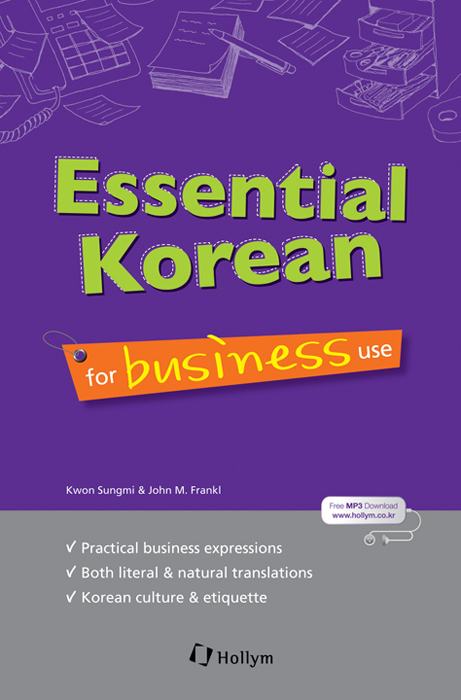
Essential Korean for Business Use is constructed around the various situations you may encounter while conducting business, and includes numerous expressions that can be used by learners of Korean at all levels. It contains those expressions necessary for foreigners who reside in Korea and work permanently at Korean companies, and it also deals with situations required for short term business trips. Especially, in order to do effective international business, you will have to first understand the culture of the country and people. In this context, this book will aid in bringing its readers a bit closer to Koreans by broadening their understanding of Korean culture. In a word, because it is composed of the actual Korean expressions most often used when doing business, it is apparent that all readers will find it useful. The volume is composed of 15 chapters, each of which contains expressions necessary for both business and daily living. All of the expressions contained in this book are provided with both a literal translation and an English equivalent. At the end of each chapter, there is a list of vocabulary related to the chapter¡¯s theme, and each chapter also contains short tips that introduce key elements of Korean culture. Even more, along with the witty illustrations that promote comprehension, MP3 files for the readings of Korean expressions are available for downloads on the website www.hollym.co.kr. *Contents Introduction The Composition and Usage of This Book Chapter 01. A Typical Day at the Office Chapter 02. Office Machines and Facilities Chapter 03. Reports Chapter 04. Meetings Chapter 05. Business Telephone Calls Chapter 06. Computers and the Internet Chapter 07. Negotiations and Contracts Chapter 08. Office Interactions Chapter 09. Customer Service Chapter 10. Business Trips Chapter 11. Entertaining Customers Chapter 12. Personal Relations Chapter 13. Money Matters Chapter 14. Local Transportation Chapter 15. Getting Hired and the First Day on the Job Appendix *Kwon Sungmi Visiting professor, University of Seoul, Institute of International Cooperation and Education Ph. D. Ewha Womans University Ed. M. Boston University, TESOL M. A. Ewha Womans University, Korean Language education *John M. Frankl Professor, Yonsei University, Underwood International College Ph. D. Harvard University, East Asian Languages and Civilizations A.M. Harvard University, Regional Studies: East Asia M.A. Yonsei University, Korean Language and Literature B.A. University of California, Berkeley, East Asian Languages
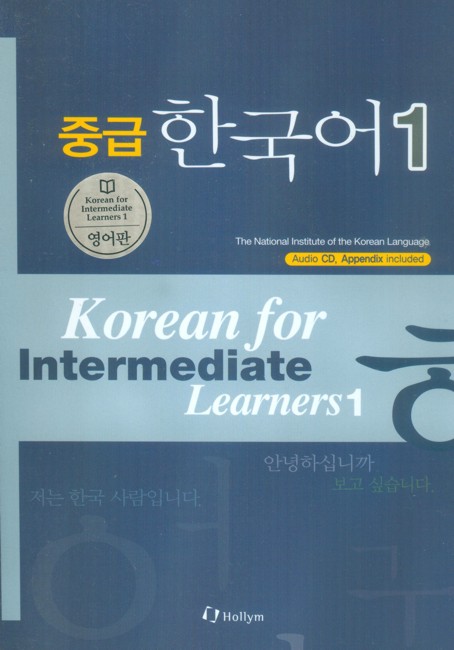
Korean for Intermediate Learners (volume 1) is developed for beginners who have just mastered a basic course to improve their communicative ability in Korean to intermediate level while expanding their understandng of the Korean language and culture. The textbook is structured to utilize Korean accurately and fluently in daily life by conducting various authentic tasks to imporve speaking, listening, reading and writing skills. Download the MP3 audiofiles here
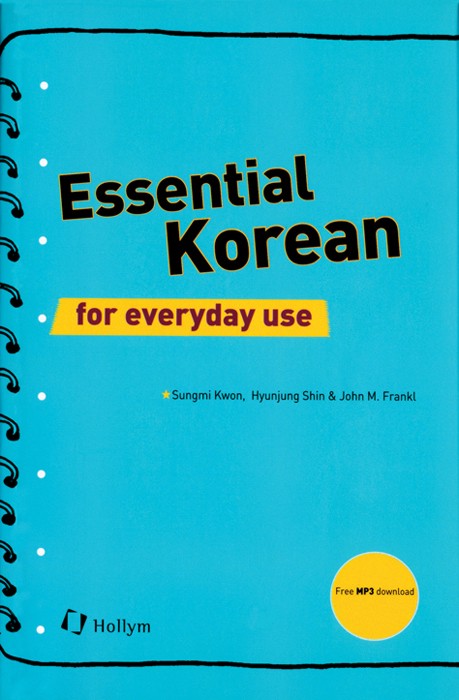
This book contains 15 chapters full of expressions necessary both for traveling and everyday life in Korea. Download Audiofiles HERE - HIER Audiodateien herunterladen Features of this book: * Useful expressions for travelling and everyday life in Korea * Each Korean expression is followed by (1) its pronunciation, (2) a word-by-word translation, and (3) the English translation * Introduction to and Do's and Don'ts of Korean culture and etiquette * MP3 files for proper pronunciation of Chapters 1. Greetings 2. Introduction 3. Food & Restaurants 4. Transportation 5. Tours & Entertainment 6. Shopping 7. Invitations & Visits 8. Business 9. Appointments 10. Everyday Places 11. Telephone 12. Feelings 13. Driving 14. Conversation Skills 15. Key Expressions
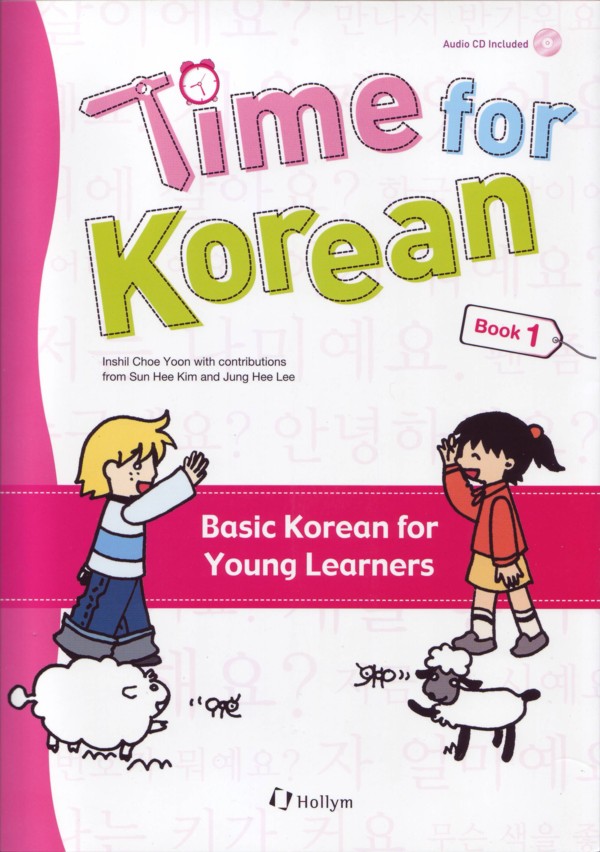
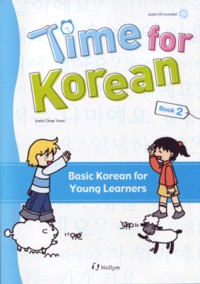
This two-volume textbook series aims at fostering young learners’ skill of listening to and speaking Korean through various stimulating activities as well as learning relevant aspects of Korean culture. The book has been set up in a fun and enjoyable way as every section comes complete with activities, songs and games for students to play, as well as pictures that help explain the lesson. The accompanying audio CD helps students acquire accurate pronunciation of Korean words. About the Author Dr. Inshil Choe Yoon teaches Korean courses, writing systems in East Asian Cultures and translation courses in the School of Asian Studies at the University of Auckland. Brought up in Seoul, she graduated Seoul National University and earned her Ph.D. from the University of Auckland. For over thirty years, as she raised her children in New Zealand, she committed herself to finding efficient ways for children living in an English-speaking environment to improve their Korean language proficiency. This led to her writing articles and books to assist teachers and children learning Korean as a mother tongue or a foreign language.
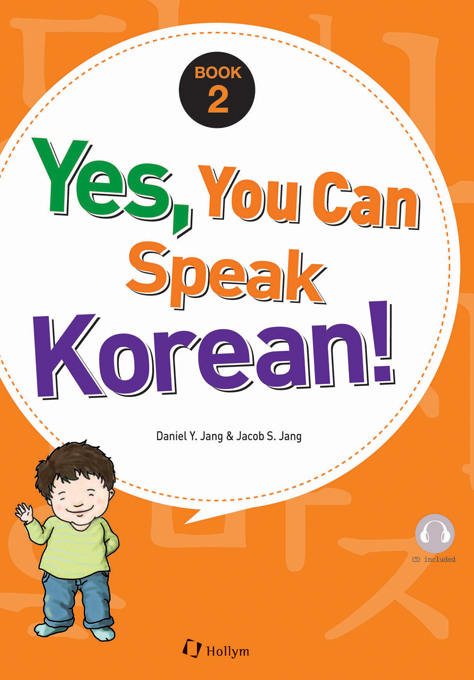
Based on the co-author's experience teaching Korean to his children who were born and raised in the United States, "Yes, You Can Speak Korean!" a two-volume textbook series, has been specially written for young learners who start to learn Korean as their first foreign language. This book is inspiring resource which will help young learners acquire basic vocabulary, grammar and expressions as they learn how to read proficiently. The main features include in this series: clear and concise explanation on how to read Korean, easy guide to pronounce Korean alphabet properly, class-work and homework activities, and audio CD with authentic pronunciation.
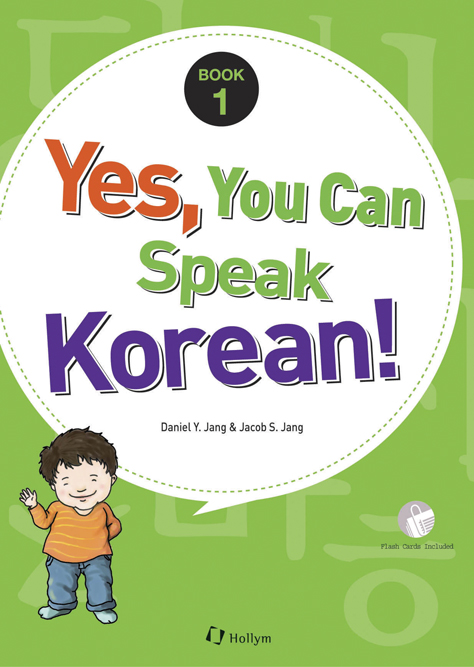
Based on the co-author's experience teaching Korean to his children who were born and raised in the United States, "Yes, You Can Speak Korean!" a two-volume textbook series, has been specially written for young learners who start to learn Korean as their first foreign language. This book is inspiring resource which will help young learners acquire basic vocabulary, grammar and expressions as they learn how to read proficiently. The main features include in this series: clear and concise explanation on how to read Korean, easy guide to pronounce Korean alphabet properly, class-work and homework activities, and flash cards with basic vocabulary.
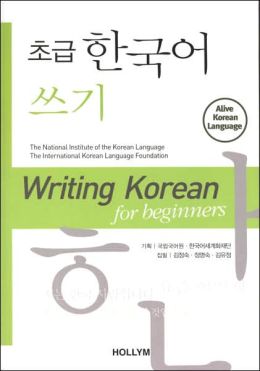
The 20 chapters in this book provide a wide range of practical, everyday solutions to help readers improve their written Korean, Hangeul. Every chapter has specific goals, tasks, sample texts, vocabulary and expressions, grammar and culture tips. Plus, with an answer key at the back of the book, readers can carry out a self-assessment at the end of each chapter.
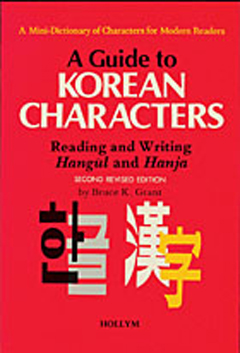
A practical 367 page handbook with all you need to read and write the written language of Korea. This invaluable mini-dictionary of Hanja characters for modern readers includes the following outstanding features: 1,800 Hanja characters arranged in a practical format. �all the Hanja characters required in Korean schools �models showing how to write each character �5,000 sample vocabulary words, three per character �sample words selected on the basis of frequency of use Hangul-in-a-hurry�a fast method to learn the indigenous Korean alphabet. �hangul-in-a-hurry chart for fast learning �models showing how to write each letter �models showing how to make syllables Stroke-count, radical and phonetic indices Charts of surnames, simplified hanja, look-alike characters, others.