
Books on Korea in English

ALL THAT TOPIK I Practice Tests ALL THAT TOPIK Ⅰ Practice Tests is the ultimate preparation guide designed specifically for beginner-level Korean learners aiming for success on the Test of Proficiency in Korean (TOPIK Ⅰ). 4 Full-Length Practice TestsIncludes 4 realistic practice exams tailored to match the actual TOPIK Ⅰ exam format, helping you get fully accustomed to the test structure and time limits. Section-by-Section Analysis & Answer StrategiesProvides detailed question-type analyses and practical test-taking strategies for both Listening and Reading sections. It seamlessly pairs with the companion textbook, ALL THAT TOPIK Ⅰ Complete Guide, for study synergy. Beginner-Friendly Explanations with Color-Coded Key PointsFeatures clear, easy-to-understand answer explanations tailored for beginner learners. Key concepts are highlighted in distinct colors, allowing you to review efficiently and grasp core concepts at a glance. Instructor Support & AudioStreaming Services For Teachers: Comes with question-type analysis PPT slides. For Students & Teachers: Easily access audios via online streaming.

Very mild damage on the cover This handy guide, complete with everything a traveler needs to know while staying in Korea, will make your trip more enjoyable, ease your communication woes, and gives you the knowledge to get around Korea with confidence! Free audio files are available HERE Traveling to another country where you are not familiar with the national language can sometimes lead to frustration and/or a poor experience. This handy guide, complete with everything a traveler needs to know while staying in Korea, will make your trip more enjoyable, ease your communication woes, and gives you the knowledge to get around Korea with confidence!This book is designed for those traveling to Korea who find themselves wanting or needing to speak Korean without taking an expensive language course, having to download an expensive computer program, or download hundreds upon hundreds of audio files.Divided into sections by location and situation, Korean Phrasebook For Travelers covers nearly every situation which a traveler may encounter.The romanizations in this particular book have been modified from the “official romanization” system to better suit English speakers. TalkToMeInKorean is a website and community where learning Korean may not be magically easy, but is fun and exciting. Language learning can be boring, challenging, and sometimes frustrating, especially when there are not enough motivating or fun factors. As a community that motivates and nurtures learners to develop their language skills in fun and innovative ways, the variety of content available at Talk To Me In Korean has drawn over 1.9 million people to the site to download over 50 million lessons. CONTENTSⅠ. BASIC PHRASES1. Greetings2. Talking to a stranger3. Shopping4. Introducing yourselfⅡ. AT THE AIRPORT1. Departures2. ArrivalsⅢ. GETTING AROUND1. Taking the subway2. Taking a bus3. On the street4. Taking a taxiⅣ. ACCOMMODATIONS1. At a hotel2. At a guesthouseⅤ. EATING1. At a typical Korean restaurant2. At a Korean barbecue restaurant3. At a Korean fast food restaurant4. At a food court5. At a family restaurant6. At a buffet7. At a bar/pub8. At a cafeⅥ. SHOPPING1. At a clothing store2. At a bag store3. At an accessory/jewelry store4. At a shoe store5. At a cosmetics store6. At a convenience store7. At a big supermarket8. At a traditional marketⅦ. FUN PLACES1. At a palace2. On a mountain3. At a theme park4. At a water park5. At a ski resortⅧ. FESTIVALS IN KOREAⅨ. BUSY AREAS IN SEOULⅩ. VISITING A LOCAL CITY1. At a bus terminal2. At a train stationⅩⅠ . EMERGENCIES1. At a hospital/pharmacy2. At a lost/found or police officeⅩⅡ . MORE ABOUT KOREAN LANGUAGE1. Quick guide to 한글 (Hangeul)2. Numbers3. Directions4. Subway station names

Mängelexemplar: Eine Kante leicht angestoßen100 Korean Speech Patterns - Discovering Ways of Speaking in K-Drama “Why do Koreans start their sentences with ‘아니’ when they speak?” “I want to understand the lines spoken by my favorite actor, Park Bo-gum, in dramas.” As a follow-up to the 100 Korean Idioms & Slang for Korean language learners interested in K-culture, 100 Korean Speech Patterns has been published to help learners acquire truly authentic Korean through expressions featured in K-dramas. ▪ Learn “Real” Korean Speech Patterns through K-Drama Dialogue All the expressions and sentence patterns in this book originate from scenes in Korean dramas. While dramas are fictional stories, the speech styles and conversational patterns within them closely reflect real-life communication. 100 Korean Speech Patterns helps learners naturally acquire the tone, timing, and nuance of spoken Korean—elements that cannot be fully captured through grammar explanations alone—by learning expressions within their contextualized scenes. The moment you understand why a certain expression is used in a given situation, Korean will begin to sound much clearer. ▪ Step-by-Step Learning through Illustrations, Quizzes, Explanations, and Dialogue Practice Each unit opens with an illustration and dialogue inspired by a drama scene. Learners first observe the situation and then use a short quiz to infer the meaning and usage of the expression. The following explanation highlights the key points of the expression or pattern, while sample dialogues demonstrate its application in various contexts. In addition, professional voice recordings provided via QR codes enable learners to practice conversation with natural intonation and tone. ▪ 50 Expressions + 50 grammar Patterns: 100 Speech Habits for Immediate Use in Conversation 100 Korean Speech Patterns consists of two parts. Part 1 introduces 50 commonly used expressions such as “있잖아,” “솔직히,” “장난 아니야,” and “Don’t worry about it,” which Koreans frequently use in everyday speech. Part 2 covers 50 commonly used grammar patterns in real conversations, such as “-고 말았어,” “-더라고요,” and “-(으)ㄹ 수밖에 없어.” The appendices include quiz answers, dialogue translations, and explanations of meaning, as well as a K-Drama index and expression/pattern index, making the book highly useful for both review and reference.

Essential vocabulary for K-pop fans beginning Korean who want to understand the lyrics Dive into K-POP Vocabulary teaches vocabulary through 20 popular K-pop songs. Frequently used words were identified through an analysis of song lyrics, then selected to suit beginner learners based on the International Standard Curriculum for Korean Language. The songs are grouped into five themes according to their lyrics: Love, Breakups, Friendship and Friends, Dreams and Growth, and Comfort and Healing. Each theme features four K-pop songs, with nine essential words per song presented through example sentences and illustrations. Tip boxes introduce related expressions, synonyms, and other useful information. Short exercises and dialogues help learners review the vocabulary, while cultural information related to K-pop lyrics at the end of each chapter helps them understand both the lyrics and their wider context.Key Features1. Learn basic Korean vocabulary through popular K-pop lyrics Each song introduces nine essential words, along with a wealth of additional expressions, synonyms, and related vocabulary supported by illustrations. Complete lyrics are also provided for every song, allowing learners to review the vocabulary while reading the lyrics and listening to the music. 2. Put what you learn to use with realistic examples and dialogues Audio recordings of all example sentences and dialogues are accessible via QR codes, allowing learners to listen to and imitate Korean pronunciation and intonation. The example sentences are simple yet natural, making them easy to use in everyday life after practice. Dialogues are presented in the style of messaging apps and social media, so learners can practice vocabulary as if they were chatting and interacting online. 3. Feel closer to Korea through contemporary K-pop and Korean culture Lively, engaging explanations cover current topics in K-pop and Korean culture, from “썸” (the stage before officially dating) and “갓생” (a productive, fulfilling lifestyle) to K-pop fan support and pilgrimages to places associated with favorite artists. Learners can build cultural knowledge while developing a greater sense of connection with Korea. 4. Start with confidence even if you are new to Korean All headwords, additional expressions, example sentences, and dialogues include English translations, helping beginners grasp their meanings and start learning Korean with confidence.Recommended forBeginner learners of Korean interested in K-pop and Korean culture Learners studying Korean for personal interest who want to learn through Korean culture Learners looking for an enjoyable way to study basic Korean vocabulary Beginner learners who want to speak naturally and interact on social media like KoreansTable of ContentsPreface ---------------------------------------------- 4 How to Use This Book ---------------------------------------------- 6 Contents ---------------------------------------------- 10 Chapter 1 사랑 #01 불장난 BLACKPINK ---------------------------------------------- 14 #02 LIKEY TWICE ---------------------------------------------- 22 #03 사랑한단 뜻이야 NCT DREAM ---------------------------------------------- 30 #04 Star 1117 ATEEZ ------------------------------------------------ 38 Culture corner ------------------------------------- 46 What is “썸”? / K-Pop Fan Support Culture Chapter 2 이별 #05 Universe EXO ---------------------------------------------- 50 #06 니가 하면 GOT7 ---------------------------------------------- 58 #07 첫눈 EXO ---------------------------------------------- 66 #08 Stay BLACKPINK ---------------------------------------------- 74 Culture corner -------- 82 Korean Breakup Phrases / How Koreans React to K-Pop Stages Online Chapter 3 우정/친구 #09 믿지 ITZY ---------------------------------------------- 86 #10 친구 ATEEZ ---------------------------------------------- 94 #11 Best friend NCT DREAM ---------------------------------------------- 102 #12 우리의 계절 NCT DREAM ---------------------------------------------- 110 Culture corner ----------------------------- 118 What Do You Call Someone in Korean? / What's in an official fandom name? Chapter 4 꿈/성장 #13 My pace Stray Kids ---------------------------------------------- 122 #14 야간비행 ATEEZ ---------------------------------------------- 130 #15 지나갈 테니 EXO ---------------------------------------------- 138 #16 청사진 Stray Kids ---------------------------------------------- 146 Culture corner ---------------------------------- 154 What is “갓생”? / Let's Go to a K-pop Concert Chapter 5 위로/힐링 #17 잘하고 있어 Stray Kids ------- 158 #18 Forever aespa ---------------------------------------------- 166 #19 Fly GOT7 ---------------------------------------------- 174 #20 Miracle GOT7 ---------------------------------------------- 182 Culture corner ----------------------------------- 190 Korean Sauna, 찜질방(Jimjilbang) / 성지순례 Fan Pilgrimage Culture Appendix Answer Key ----------- 194 Glossary ---------------------------------------------- 199 Conversation Translation -------------------------------------- 206 Index ---------------------------------------------- 212 Credits ---------------------------------------------- 218

An outstanding new Korean language textbook series from the Ewha Language Center, designed to develop communicative competence New Ewha Korean is a newly developed, communication-focused Korean language textbook series from the Ewha Language Center at Ewha Womans University, a leader in Korean language education. Building on the Center’s distinctive emphasis on communicative learning and the integration of speaking, listening, reading, and writing, the series offers more effective and varied teaching approaches and learning content. Level 5 consists of ten units, with Units 1–5 included in New Ewha Korean 5-1 and Units 6–10 in New Ewha Korean 5-2. Each unit is divided into four lessons, providing ample opportunities to practice a range of communicative functions related to a single theme. A “Vocabulary and Expressions Review” section at the end of each unit allows learners to check their understanding of the vocabulary and expressions they have learned. QR codes placed alongside the relevant listening activities provide immediate access to audio materials, which are also available as MP3 downloads from the Ewha Womans University Press website. The Level 5 textbooks are written entirely in Korean, with no translations of the instructions into other languages. A defining feature of the New Ewha Korean series is its emphasis on strengthening speaking proficiency while promoting balanced development across all four language skills: listening, speaking, reading, and writing. Speaking tasks use a variety of formats and group sizes, including dialogues, role-plays, and group activities. Vocabulary and grammar practice goes beyond building linguistic knowledge, offering meaningful opportunities to apply what learners have learned through listening, speaking, reading, and writing. At the advanced level, Level 5 places particular emphasis on integrated tasks that combine skills—such as listening and speaking, reading and writing, and reading and speaking—to create close connections between spoken and written language learning. The fourth lesson of each unit also includes an “Additional Vocabulary and Expressions” section, introducing proverbs and idiomatic expressions to help learners develop a more advanced command of Korean. About the Author Ewha Language Center, Ewha Womans University Established in 1962 as an affiliated language education institution of Ewha Womans University, the Ewha Language Center has supported the University’s foreign language education and has played a pioneering role in teaching Korean as a foreign language since 1988. Renowned for its outstanding faculty, excellent teaching materials, and thorough, attentive student support, the Center serves approximately 6,000 students each year through its foreign language courses, Korean language courses, and Korean language teacher training programs. Contents 머리말 교재 구성표 교재 구성과 사용법 등장인물 1단원 심리와 행동 2단원 개인과 사회 3단원 역사와 문화유산 4단원 방송과 매체 5단원 기후와 지형 부록 듣기 지문 및 정답 찾아보기

An outstanding new Korean language textbook series from the Ewha Language Center, designed to develop communicative competence New Ewha Korean is a newly developed, communication-focused Korean language textbook series from the Ewha Language Center at Ewha Womans University, a leader in Korean language education. Building on the Center’s distinctive emphasis on communicative learning and the integration of speaking, listening, reading, and writing, the series offers more effective and varied teaching approaches and learning content. Level 5 consists of ten units, with Units 1–5 included in New Ewha Korean 5-1 and Units 6–10 in New Ewha Korean 5-2. Each unit is divided into four lessons, providing ample opportunities to practice a range of communicative functions related to a single theme. A “Vocabulary and Expressions Review” section at the end of each unit allows learners to check their understanding of the vocabulary and expressions they have learned. QR codes placed alongside the relevant listening activities provide immediate access to audio materials, which are also available as MP3 downloads from the Ewha Womans University Press website. The Level 5 textbooks are written entirely in Korean, with no translations of the instructions into other languages. A defining feature of the New Ewha Korean series is its emphasis on strengthening speaking proficiency while promoting balanced development across all four language skills: listening, speaking, reading, and writing. Speaking tasks use a variety of formats and group sizes, including dialogues, role-plays, and group activities. Vocabulary and grammar practice goes beyond building linguistic knowledge, offering meaningful opportunities to apply what learners have learned through listening, speaking, reading, and writing. At the advanced level, Level 5 places particular emphasis on integrated tasks that combine skills—such as listening and speaking, reading and writing, and reading and speaking—to create close connections between spoken and written language learning. The fourth lesson of each unit also includes an “Additional Vocabulary and Expressions” section, introducing proverbs and idiomatic expressions to help learners develop a more advanced command of Korean. About the Author Ewha Language Center, Ewha Womans University Established in 1962 as an affiliated language education institution of Ewha Womans University, the Ewha Language Center has supported the University’s foreign language education and has played a pioneering role in teaching Korean as a foreign language since 1988. Renowned for its outstanding faculty, excellent teaching materials, and thorough, attentive student support, the Center serves approximately 6,000 students each year through its foreign language courses, Korean language courses, and Korean language teacher training programs. Contents 머리말 교재 구성표 교재 구성과 사용법 등장인물 1단원 심리와 행동 2단원 개인과 사회 3단원 역사와 문화유산 4단원 방송과 매체 5단원 기후와 지형 부록 듣기 지문 및 정답 찾아보기

Korean Made Easy–Grammar II (Intermediate to Advanced) — from core grammar points to real-world usage, all in one book! Korean Made Easy–Grammar II (Intermediate to Advanced) is the grammar textbook from the long-loved Korean Made Easy series. As the second book in the grammar series aligned with TOPIK and the ISCK curriculum, it covers 100 intermediate and advanced grammar points, organized into four parts according to function and meaning. Each unit is divided into Grammar Essentials, which explains core concepts and usage restrictions, and Grammar in Action, which illustrates how the grammar is used in real situations. An appendix at the end of the book includes 100 supplementary grammar points, allowing learners to cover the full range of intermediate–advanced grammar related to the target items. As in Volume 1, QR codes provide Korean-language explanations, usage charts, and practice exercises, making this book an optimized resource for learners who want to fully master Korean grammar. Key Features 1. A structure that allows learners to study freely according to their goals Korean Made Easy–Grammar II (Intermediate to Advanced) organizes grammar points corresponding to TOPIK II and ISCK intermediate–advanced levels into four parts, enabling learners to independently find and study the grammar items they need. 2. Master grammar from core concepts to real-life usage Each unit consists of Grammar Essentials, which explains the core concepts and usage constraints, and Grammar in Action, which presents real-world usage by situation. This helps learners move beyond simply “knowing” grammar to actually “using” it. 3. A complete collection of 200 intermediate–advanced grammar points The book includes 100 essential grammar points and 100 related supplementary grammar points, allowing learners to compare meanings and usage across similar grammar forms. 4. Practice exercises and Korean-language explanations available via QR code Learners can review grammar thoroughly using the practice exercises accessible through QR codes at the end of each unit. Korean-language explanations are also provided for learners and instructors who wish to check the original Korean descriptions. Recommended for Learners who have completed beginner-level Korean grammar and wish to study intermediate–advanced grammar Intermediate–advanced learners preparing for TOPIK II Learners who have studied intermediate–advanced grammar but want a more systematic understanding and clearer distinctions Learners who want to use Korean accurately and preciselyContents Part I: 절의 연결 (연결 어미 표현)1. 나열과 추가1과 –(으)며2과 –(으)ㄹ뿐 아니라3과 –은/는 데다가2. 대조4과 –기는 하지만 5과 –(으)나6과 –은/는 반면에7과 –지8과 –든지9과 –은/는 대신에10과 –느니11과 –기는커녕3. 원인과 이유 12과 –아/어서인지13과 –느라고14과 –는 바람에15과 –기에16과 –길래17과 –(으)므로18과 –(으)ㄹ까 봐19과 –(으)ㄹ 테니20과 –다고4. 계기와 결과21과 –(으)니22과 –은/는 것을 보니23과 –더니24과 –자25과 –고서26과 –아/어다가5. 동시성27과 –자마자28과 –는 대로29과 –는 사이에30과 –은/는 가운데31과 –은/는 채로6. 의도와 목적32과 –기 위해(서)33과 –도록34과 –고자35과 –(으)려다가36과 –(으)려면37과 –(으)ㄹ 겸38과 –은/는 김에7. 조건39과 –아/어야40과 –거든41과 –다면42과 –았/었더라면43과 –다가는44과 –은/는 한8. 배경45과 –(으)ㄹ 텐데46과 –은/는지9. 양보47과 –은/는데도48과 –고도49과 –더라도50과 –(으)ㄹ지라도51과 -다고 해도52과 –아/어 봤자53과 –(으)ㄹ 정도10. 정도54과 –은/는/을 만큼55과 –(으)ㄹ수록11. 비유56과 –듯이57과 –은/는 듯이Part 2: 태도와 판단 표현1. 행동과 상태58과 –는 중이다59과 –곤 하다60과 –(으)ㄹ 참이다61과 –(으)ㄹ 뻔하다2. 경향와 인지62과 –은/는 편이다63과 –(으)ㄹ 만하다64과 –은/는/을 줄 알다3. 의도와 태도65과 –아/어야겠다66과 –은/는 척하다4. 추론과 가정67과 –나 보다68과 -은/는/을 모양이다69과 –은/는/을 듯하다70과 –(으)ㄹ지도 모르다71과 –(으)ㄹ 리 없다72과 –은/는/을 셈이다Part 3: 구어체 표현(종결 어미)1. 설명과 이유 73과 –거든(요)74과 –은/는걸(요)75과 –은/는데(요)2. 동의와 응답76과 –지(요)77과 –기는(요)78과 –잖아(요)79과 –고말고(요)3. 감탄과 놀람80과 -네(요)81과 –(군)요82과 –다니(요)4. 인용과 보고83과 –대(요)84과 –다고(요)85과 –다면서(요)5. 의무와 추측86과 –아/어야지(요)87과 –(으)ㄹ걸(요)6. 과거의 경험88과 –더라고(요)89과 –던데(요)7. 질문과 문의 90과 –고(요)91과 –게(요)Part 4: 심화 문법 (형태, 의미, 화법)1. 한정사92과 회상 한정사 –던93과 인용 한정사 –다는2. 피동과 사동94과 피동95과 사동3. 어휘와 구 표현96과 조사97과 보조 용언98과 부사구 표현4. 화법과 문어체99과 화법100과 문어체

ALL THAT TOPIK I is a textbook that systematically introduces the most frequently tested question types on the TOPIK I (Test of Proficiency in Korean) for beginner learners, along with step-by-step solving strategies. It presents both the key clues for finding the correct answer and the reasons why the other choices are incorrect, helping learners understand the logic behind each question and develop their own problem-solving skills. Each unit includes "Question Type Overview" and "Step-by-Step Problem Solving" sections, allowing learners to first understand the characteristics of each question type and then follow a structured approach to solving it. The book also provides QR codes linking to English explanations, enabling learners to study the commentary in both Korean and English for better comprehension. In addition, the "Study Plus" and "Remember This!" sections summarize the essential vocabulary, grammar, and expressions needed for each question type through clear illustrations and tables. These sections also highlight effective test-taking strategies and key points to remember, making them ideal for reviewing important concepts before the exam. Contents듣기 Listening Part 1 '네/아니요'로 대답하는 문제 Unit 1 명사 + 이에요/예요 Unit 2 반대 표현 Part 2 자세히 대답하는 문제 Unit 3 질문과 대답 1 (누구, 언제, 어디, 무엇) Unit 4 질문과 대답 2 (어떻게, 어때요, 얼마나, 무슨, 왜) Part 3 이어지는 말을 찾는 문제 Unit 5 인사 표현 Unit 6 전화와 부탁 표현 Unit 7 축하와 감사 표현 Unit 8 사과 표현 Part 4 대화 주제와 상황을 이해하는 문제 Unit 9 장소 이해 Unit 10 대화 주제 이해 Unit 11 그림 이해 Part 5 같은 내용을 찾는 문제 Unit 12 짧은 대화를 듣고 같은 내용 고르기 Part 6 중심 생각을 찾는 문제 Unit 13 짧은 대화를 듣고 중심 생각 고르기 Part 7 긴 내용을 듣고 이해하는 문제 Unit 14 긴 대화 Unit 15 안내 방송과 인터뷰 Part 8 듣기 모의고사 (OMR 답안지)
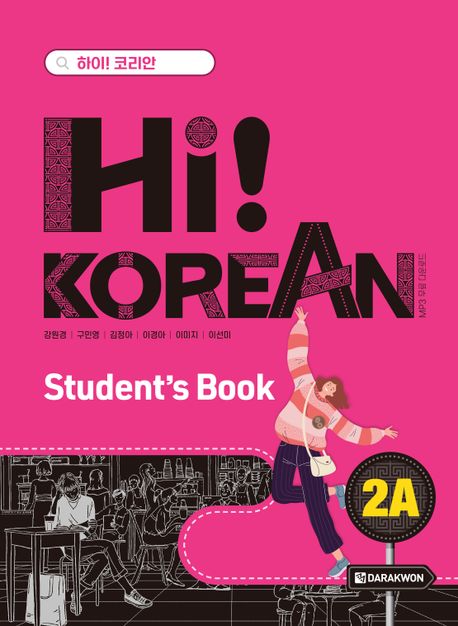
Mängelexemplar: Buch an einem Eck angestossen, sonst neu und einwandfrei Damaged Copy: Bock corner dented, otherwise new copy "Hi! Korean 2A" is the first book in the second level of the series, which begins the study of Korean in earnest after completing the first level, and introduces the grammar and vocabulary expressions of the second level within the theme of Korean society and culture. In particular, it introduces expressions for public affairs that you may encounter in your school life, so that you can use them in real life. The Hi! Korean series is an integrated Korean coursebook designed for foreign learners who love Korean culture and want to learn Korean. The textbooks incorporate the latest trends in Korean culture and provide a variety of activities to help learners master the four skills of speaking, listening, reading, and writing. While maintaining a consistent organization from beginner to advanced, it organically presents the areas of speaking, listening, reading, and writing, and separates listening and reading by section to enhance learning by section. In particular, in the step-up course, students are encouraged to develop their communication skills by expanding their learning through speaking and writing activities. The overall composition of includes 10 student books (4 for beginners, 4 for intermediate, and 2 for advanced), which include 'Grammar and Vocabulary Book' as a separate book, and 10 workbooks (4 for beginners, 4 for intermediate, and 2 for advanced) sold separately. Contents 머리말 02 일러두기 04 목차 16 교재 구성표 18 Chapter 1 첫날 1-1 저는 마크라고 합니다 26 1-2 이 사람은 제 룸메이트인데 한국 사람이에요 38 1-3 한 단계 오르기 50 Chapter 2 약속과 취미 2-1 제가 지금 연락할게요 60 2-2 저는 시간이 있을 때 친구를 만나거나 쇼핑을 해요 72 2-3 한 단계 오르기 84 Chapter 3 옷차림 3-1 옷이 좀 커 보여요 94 3-2 이 치마를 까만색으로 교환해 주세요 106 3-3 한 단계 오르기 118 Chapter 4 시설 이용 4-1 통장을 만들려면 뭐가 필요한가요? 128 4-2 미술관이 시청역 근처에 있다고 했어요 140 4-3 한 단계 오르기 152 Chapter 5 한국 음식과 명절 5-1 지금 몇 시예요? 162 5-2 이번 주말에 청소할 거예요 174 5-3 한 단계 오르기 186 Chapter 6 학교생활 6-1 등록금을 하무실에 내도 돼요? 196 6-2 한국어 문법이 조금 어려워졌어요 208 6-3 한 단계 오르기 220 부록 정답 230 듣기 대본·읽기 지문 번역 244 대화 번역 251 문법 및 발음 설명 번역 255 색인 261

“The Lives and Stories of the Nameless People Behind the Splendor of the Palace” A Hidden World Behind the SplendorBehind the grand halls, elegant rooftops, and royal magnificence of the palace lay another world-one largely unknown. This book explores the palace as a place sustained by countless invisible hands: organizing documents, preparing food, and crafting garments. It reveals the roles of these individuals and the intricate system they built and refined over generations.The King’s Day and Those Who Moved ItThe king’s daily routine was more than a personal schedule-it symbolized the order of the nation. From the moment he awoke, through study, court assemblies, and rituals, every aspect of his day followed Confucian principles. His daily life embodied the values and governing philosophy of Joseon society. Following the king from dawn, this book presents a vivid portrait of palace life while illuminating how court ladies, eunuchs, and officials worked in coordination to sustain both the royal household and the state.A Refined System and Hidden TensionsThe palaces of Joseon were not merely royal residences, but living systems where politics, ritual, and daily life coexisted. From the king’s meals and attire to the delivery of royal commands, everything was governed by strict rules and procedures. Beneath the elegance lay constant tension and responsibility, where even the smallest mistake was unacceptable, and the palace operated on unwavering order.The Stories of Those Hidden in HistoryBehind the palace stood countless individuals-court ladies, eunuchs, royal secretaries, cooks, and artisans-each playing a vital role in sustaining the king’s life and the workings of the state. Their expertise and dedication, from preparing meals and safeguarding the king’s health to delivering commands and keeping records, kept the palace running. Through this book, the lives of those often absent from official records are brought vividly to life. Their devotion, sacrifice, and humanity transform the palace into a living space rather than a mere structure.A New Way to See the PalaceFollowing the king’s daily routine, this book shines a light on the people who brought the palace to life. Through the stories and presence of those who existed beyond its splendid architecture, it reveals how the palace functioned as a living entity. Readers will come to see that the palace is not simply a historic structure, but a world shaped and sustained by people. About the Author Kim Hyunjung graduated from Ewha Womans University with a degree in Korean Language and Literature and completed a master’s program in Korean language education at Sungkyunkwan University’s Graduate School of Education. She has worked as a broadcast writer, producing current-affairs and cultural programs centered on history, everyday life, and human stories, including KBS 1TV’s Documentary Insight – The Big Team and the TVING original documentary series Food Chronicle and Human Chronicle. In her first book, Living Palaces, she draws on a narrative sensibility cultivated through her experience as a middle and high school Korean language teacher, as well as her work in publishing, writing, and magazine editing, to vividly portray the lives and roles of the people who sustained Korea’s royal palaces, offering a compelling glimpse into the richness of Korean royal culture.

“The cultural code behind the global phenomenon of K-pop.”The Secret Behind a Global PhenomenonK-pop has captivated the world with its infectious energy, powerful performances, and devoted global fandom. But what lies beneath its success? The Korean Groove traces the roots of K-pop beyond modern pop culture, revealing the deep cultural foundations that have shaped its distinctive sound, rhythm, and spirit. By looking beyond the surface, the book invites readers to see K-pop not as a sudden trend, but as the result of a long cultural evolution.Emotions That Shape a NationAt the heart of Korean culture are powerful emotional currents—han (deep sorrow), heung (joyous excitement), jeong (affection), and uiri (loyalty). These emotions, formed through Korea’s complex history, are not abstract ideas but lived experiences that continue to shape artistic expression. The book explores how these sentiments are embedded in music, performance, and communal life, revealing how emotional depth and contrast create Korea’s unique cultural energy.From Tradition to Global StageFrom pansori and arirang to mask dance dramas, folk games, and festivals, Korea’s traditional arts have long combined music, movement, and storytelling into immersive communal experiences. These traditions, rich with rhythm and participation, form the cultural DNA that continues to resonate in today’s K-pop performances, concerts, and fan culture. By drawing these connections, the book shows how tradition is not separate from modern culture, but actively lives within it.The Power of Participation and ConnectionOne of the defining features of Korean culture is participation—the blurring of boundaries between performer and audience. Whether through collective singing, street cheering, or traditional performances, people come together to share emotion and energy. This spirit of unity is a key force behind the global appeal of K-pop, transforming audiences into active participants rather than passive spectators.A New Way to Understand K-PopMore than a music genre, K-pop is the culmination of centuries of cultural expression and emotional heritage. By uncovering the connections between tradition and modernity, The Korean Groove offers readers a deeper understanding of why Korean culture resonates so powerfully around the world—and why its influence continues to grow. It ultimately reframes K-pop as a cultural language that speaks across borders.About the AuthorKim Kwanghee received his Ph.D. in Literature from Korea University. He currently serves as the Head of the Korea Heritage Agency, Royal Palaces and Tombs Project Department and, as a Cultural Heritage Specialist at the Korea Heritage Service, participates in human heritage research. He also teaches intangible cultural heritage and traditional performing arts at the Korea National University of Cultural Heritage, Sungkyunkwan University, and Dongguk University, and works as a Baltal (Foot Mask Theater) educator, continuing the tradition of traditional arts.He seamlessly navigates the traditional and contemporary world, conveying the essence of Korean culture and its divine energy. Through his writings and lectures, he explores the diverse and accessible aspects of the Korean Wave, from the exploration of traditional folk songs in K-pop to the exploration of traditional Korean music, offering readers a fresh and engaging experience. Contents Prologue10 Old Emotions, a New Stage12 Glossary of Korean Sentiments12 Definitions13 The Repressed Sorrow of Han, the Fiery Anger of No14 The Unwavering Loyalty of Uiri, the Deep Affinity of Jeong16 The Lively Cheer of Heung, the Joyous Exhilaration of SinmyeongSecret Code 1 | Songs20 Washing Away Sorrow with Exhilaration20 Songs that Heal Me and Comfort You: The Traditional Korean Epic Chant of Pansori26 The Song of a Nation, Blooming Across the Land of Korea: Arirang33 As Slowly as Possible, as Quickly as Possible: Gayageum Sanjo and Byeongchang38 A Magic Spell to Make Even Farming Feel Joyful: NongyoSecret Code 2 | Dance42 Reconciling Han Through Sinmyeong42 A Dance of Liberation Underneath the Full Moon: Ganggangsullae48 Delicate Hand Gestures that Comfort Our Hearts: Salpurichum53 The Solemn Dance of Cheoyong, the Son of the Dragon King: Cheoyongmu59 Beauty Blooming in Self-Restraint: Seungmu65 A Royal Dance to Pray for Peace: TaepyyeongmuSecret Code 3 | Theater70 Wiping Off Tears with Laughter70 Satire and Humor in the Thousand Faces of Korean Traditional Masks: Andong Hahoe Byeolsingut Talnori79 The Wish of a Lion, the King of Animals: Bukcheong Saja Noreum83 Laughter and Satire Unfolding from the Tip of the Foot: BaltalSecret Code 4 | Folk Games and Performances90 To Overcome Hardship with Joyous Energy90 A Performance to Forget the Rigors of Hard Labor and Stir Sinmyeong Within the Spirit: Nongak98 A Performance of the Common People, by the Common People, and for the Common People: Namsadang Nori106 Tug of War, a Game of Togetherness: Gijisi Juldarigi111 A Game of Dynamic Harmony: Andong Chajeon NoriSecret Code 5 | Festivals118 Festivals Inspiring Joyous Exhilaration118 A Millennium-Old Agricultural Festival: Gangneung Danoje124 A Festival of Healing that Embraces Life and Death: Jindo Ssitgimgut129 A Festival that Lights Up Hearts and the World: YeondeunghoeSecret Code 6 | Performance134 To Find a Release Against Repression Through Mingling134 The Reason Why World-Renowned Musicians Come to Korea: The Culture of Ttechang141 The Fervor Inside and Outside of a Sports Complex: K-Supporters and Street Cheering145 The Razor-Sharp Choreography and Rhythm of K-PopEpilogue152 The Korean Emotions of Han and Heung Pierce Through the World152 The Driving Force of Cultural Evolution154 The Most Dynamic Emotion: Han156 The Most Creative Emotion: Heung

“Where sorrow is released and hope begins.”A World Beyond Life and DeathKorean shamanism unfolds in a mysterious realm where the boundaries between life and death, the visible and invisible, are constantly crossed. At the heart of this world lies gut, a ritual that is at once religion, performance, and communal experience. Though it may seem incomprehensible through logic, it resonates deeply with human emotion, offering a powerful and immersive entry into Korea’s spiritual imagination and cultural identity.Gods, Myths, and the Korean SubconsciousThis book introduces the rich pantheon of Korean shamanistic deities—from household gods that protect everyday life to legendary figures such as Princess Bari and Danggeumaegi, who embody the cycles of birth, death, and rebirth. These myths are not distant relics of the past, but living narratives that continue to shape Korean consciousness, reflecting enduring questions about fate, suffering, and human existence.Mudang: Bridging Two WorldsAt the center of these rituals stand the mudang, the shamans who serve as intermediaries between humans and the spirit world. Acting simultaneously as priests, prophets, and healers, they deliver divine messages, guide the living through uncertainty, and comfort the dead. Through music, dance, and states of possession, mudang transform ritual into a powerful act of communication, creating a space where human emotion and divine presence intersect.Ritual as Performance, Healing, and ExperienceGut rituals are dynamic and multisensory events that combine sound, movement, costume, and symbolic objects into a compelling performance. From the rhythmic beating of drums and gongs to dramatic acts such as spirit possession and walking on blades, these rituals vividly manifest the presence of the unseen. At the same time, they serve as spaces of emotional release, healing, and communal bonding, where participants confront grief, hope, and the uncertainties of life.A Living Tradition in a Modern WorldDespite modernization and historical suppression, Korean shamanism continues to thrive as a living and evolving tradition. Today, it is reinterpreted through film, music, and global cultural content, while still offering comfort and meaning in times of crisis. More than a belief system, shamanism is a human story—one that confronts suffering, embraces hope, and continually asks the timeless questions: Why do we live, and how should we live?About the AuthorPark WeonmoAn international expert who has supported the safeguarding of intangible cultural heritage (ICH) in the Asia-Pacific region for the implementation of the UNESCO 2003 Convention over the past two decades. He developed an interest in Korean shamanism while studying at Yonsei University and later studied at Rikkyo University in Japan as a Japanese Ministry of Education scholarship student, conducting fieldwork in Korea and Japan and carrying out comparative research on the two countries’ folk performing arts, particularly ritual performances including shamanistic practices.After returning to Korea, he worked on documentation projects for National Intangible Cultural Heritage at the National Research Institute of Cultural Heritage and later works at UNESCO-ICHCAP, promoting regional cooperation and information capacity for safeguarding intangible cultural heritage, and serves as an adjunct professor at the Korea National University of Cultural Heritage.PhotographerKim Sangsoo worked for 30 years as a photographer and editor-in-chief of Monthly Our Sea.He currently works as a photographer at the Institute of Korea Maritime Culture Studies, where he documents domestic and international folklore and shamanism through photography.

Korean anthropology holds a unique position in the field of anthropology, having first developed with native scholars studying native culture under the prevalent influence of cultural and social anthropology, rather than with the past western practice of studying the Other. Since the 1980s, several attempts have been made to examine Korean culture from different points of view, such as political economy and area studies. This trend is visible in the articles contributed to the Korea Journal over the past forty years. While the early articles focus mainly on Korean shamanism and folklore, the emphasis shifts in the latter half to more diverse subjects such as Koreans abroad and changes in Korean communities under the social, economic, and political influences of the modern times. This volume, Korean Anthropology: Contemporary Korean Culture in Flux, presents 30 original articles carefully selected from the Korea Journal covering all aspects of Korean culture seen through the distinct viewpoints of anthropologists, sociologists, psychologists, geographers, architects, folklorists, and psychiatrists. The articles, chosen under the guidance of Professor Han Kyung-Koo, are arranged along five major themes. Articles in Part I discuss different ways of understanding Korean culture including traditional conceptualization and utilization of nature and living space, and representations abroad. Part II looks at the changes and continuities in Korean communities and beliefs under the social and political influences of modern Korea, ranging from Saemaeul Movement, religious conflicts, and marriage customs. Part III focuses on Korean women in ""patriarchal"" Korean society and the male-female relationship in contemporary Korea. Among featured subjects are women on Jeju-do island, female workers in multinational corporations, and family relations. Shamanistic rituals and fortunetelling, the main theme of Part IV, are still prevalent in Korea alongside modern medicine and cutting-edge technology despite the conflicts and confusion brought on by the rapid industrialization and westernization of Korean society. While some traditions have been discarded, other have been retained in a diff! erent or compromised form, This brings us to the final Part V which explores how various social relationships are formed and maintained within modern Korean society: men and women continue to rely on kinship and social ties to survive in a highly competitive and centralized society. Intended to be an introductory yet comprehensive collection of readings on Korean culture, we hope this volume will stimulate further debates and discussions on Korean culture and society. " Table of Contents I. How to Understand Korean Culture · Lim, Jae-Hae. Tradition in Korean Society: Continuity and Change · Sasse, Werner. Teaching Korean Culture through Korean Studies: Creating Myths to Live by · Choi, Hyup. Representing Korean Culture in America: A Case Study of the Korean Ethnological Collections at the Smithsonian Institution · Choi, Chang-jo. Study of How Koreans View and Utilize Nature · Shin, Young-Hoon. Living Space in the Traditional Korean House II. Changing Tradition · Kirn, Kwnag-Ok. The Communal Ideology and Its Reality · Kirn, Song-Chul. Kinship in Contemporary Korea · Oh, Myung-Seok. Peasant Culture and Modernization in Korea: Cultural Implications of Saemaul Movement in the 1970s · Moon, Okpyo. Ancestors Becoming Children of God: Ritual Clashes between Confucian Tradition and Christianity in Contemporary Korea · Cho, Myung-Rae. Flexible Sociality and the Postmodernity of Seoul · Kendall, Laurel. A Noisy and Bothersome New Custom': Delivering a Gift Box to a Korean Bride III. The World of Women · Yoon, Soon Young. Occupation, Male Housekeeper: Male-Female Roles on Cheju Island · Park, Boojin. The Utilization of Residential Space and Family Relations: The Case of the Korean Rural Farnily · Yi, Eunhee Kirn. 'Horne is a Place to Rest': Constructing the Meaning of Work' Family, and Gender in the Korean Middle Class · Kim, Hyun Mee. Gender/Sexuality System as a Labor Control Mechanisrn: Gender ldentity of Korean Female Workers at a US. Multinational Corporation · Kim, Eun-Shil. Wornan and the Culture Surrounding Childbirth · Sarah, Chunghee Soh. Compartmentalized Gender Schema: A Model of Changing Male-Female Relations in Korean Society IV. Magic, Science and Religion in Modern Korea · Laurel, Kendall. Caught Between Ancestors and Spirits: Field Report of a Korean Mansin's Healing Kut · Canda, Edward R. Korean Shamanic Initiation as Therapeutic Transformation: A Transcultural View · Rhi, Bou-Yong. Psychological Aspects of Korean Shamanism · Kim, Kwang-Iel. Shamanist Healing Ceremonies in Korea · Yoon, Soon Young. Magic, Science and Religion on Cheju Island · Rhie, Sang-lt. Dramatic Aspects of Shamanistic Rituals · Janelli, Dawnhee Yim. The Strategies of a Korean Fortuneteller · Kim, Jin-Pil. Fortunetelling Goes Modern V. Too Modern Too Soon? · Yee, Jaeyeol. The Social Networks of Koreans · Na, Eun-Yeong. Changes in Values and the Generation Gap Between the 1970s and the 1990s in Korea · Han, Kyung-Koo. The Politics of Network and Social Trust · Lee, Jaehyuck. Society in a Vortex? · Dredge, C. Faul. Srnoking in Korea · Kim, Yong-Hak and Son Jaesok. Trust, Cooperation and Social Risk: A Cross-Cultural Comparison

Korean anthropology holds a unique position in the field of anthropology, having first developed with native scholars studying native culture under the prevalent influence of cultural and social anthropology, rather than with the past western practice of studying the Other. Since the 1980s, several attempts have been made to examine Korean culture from different points of view, such as political economy and area studies. This trend is visible in the articles contributed to the Korea Journal over the past forty years. While the early articles focus mainly on Korean shamanism and folklore, the emphasis shifts in the latter half to more diverse subjects such as Koreans abroad and changes in Korean communities under the social, economic, and political influences of the modern times. This volume, Korean Anthropology: Contemporary Korean Culture in Flux, presents 30 original articles carefully selected from the Korea Journal covering all aspects of Korean culture seen through the distinct viewpoints of anthropologists, sociologists, psychologists, geographers, architects, folklorists, and psychiatrists. The articles, chosen under the guidance of Professor Han Kyung-Koo, are arranged along five major themes. Articles in Part I discuss different ways of understanding Korean culture including traditional conceptualization and utilization of nature and living space, and representations abroad. Part II looks at the changes and continuities in Korean communities and beliefs under the social and political influences of modern Korea, ranging from Saemaeul Movement, religious conflicts, and marriage customs. Part III focuses on Korean women in ""patriarchal"" Korean society and the male-female relationship in contemporary Korea. Among featured subjects are women on Jeju-do island, female workers in multinational corporations, and family relations. Shamanistic rituals and fortunetelling, the main theme of Part IV, are still prevalent in Korea alongside modern medicine and cutting-edge technology despite the conflicts and confusion brought on by the rapid industrialization and westernization of Korean society. While some traditions have been discarded, other have been retained in a diff! erent or compromised form, This brings us to the final Part V which explores how various social relationships are formed and maintained within modern Korean society: men and women continue to rely on kinship and social ties to survive in a highly competitive and centralized society. Intended to be an introductory yet comprehensive collection of readings on Korean culture, we hope this volume will stimulate further debates and discussions on Korean culture and society. " Table of Contents I. How to Understand Korean Culture · Lim, Jae-Hae. Tradition in Korean Society: Continuity and Change · Sasse, Werner. Teaching Korean Culture through Korean Studies: Creating Myths to Live by · Choi, Hyup. Representing Korean Culture in America: A Case Study of the Korean Ethnological Collections at the Smithsonian Institution · Choi, Chang-jo. Study of How Koreans View and Utilize Nature · Shin, Young-Hoon. Living Space in the Traditional Korean House II. Changing Tradition · Kirn, Kwnag-Ok. The Communal Ideology and Its Reality · Kirn, Song-Chul. Kinship in Contemporary Korea · Oh, Myung-Seok. Peasant Culture and Modernization in Korea: Cultural Implications of Saemaul Movement in the 1970s · Moon, Okpyo. Ancestors Becoming Children of God: Ritual Clashes between Confucian Tradition and Christianity in Contemporary Korea · Cho, Myung-Rae. Flexible Sociality and the Postmodernity of Seoul · Kendall, Laurel. A Noisy and Bothersome New Custom': Delivering a Gift Box to a Korean Bride III. The World of Women · Yoon, Soon Young. Occupation, Male Housekeeper: Male-Female Roles on Cheju Island · Park, Boojin. The Utilization of Residential Space and Family Relations: The Case of the Korean Rural Farnily · Yi, Eunhee Kirn. 'Horne is a Place to Rest': Constructing the Meaning of Work' Family, and Gender in the Korean Middle Class · Kim, Hyun Mee. Gender/Sexuality System as a Labor Control Mechanisrn: Gender ldentity of Korean Female Workers at a US. Multinational Corporation · Kim, Eun-Shil. Wornan and the Culture Surrounding Childbirth · Sarah, Chunghee Soh. Compartmentalized Gender Schema: A Model of Changing Male-Female Relations in Korean Society IV. Magic, Science and Religion in Modern Korea · Laurel, Kendall. Caught Between Ancestors and Spirits: Field Report of a Korean Mansin's Healing Kut · Canda, Edward R. Korean Shamanic Initiation as Therapeutic Transformation: A Transcultural View · Rhi, Bou-Yong. Psychological Aspects of Korean Shamanism · Kim, Kwang-Iel. Shamanist Healing Ceremonies in Korea · Yoon, Soon Young. Magic, Science and Religion on Cheju Island · Rhie, Sang-lt. Dramatic Aspects of Shamanistic Rituals · Janelli, Dawnhee Yim. The Strategies of a Korean Fortuneteller · Kim, Jin-Pil. Fortunetelling Goes Modern V. Too Modern Too Soon? · Yee, Jaeyeol. The Social Networks of Koreans · Na, Eun-Yeong. Changes in Values and the Generation Gap Between the 1970s and the 1990s in Korea · Han, Kyung-Koo. The Politics of Network and Social Trust · Lee, Jaehyuck. Society in a Vortex? · Dredge, C. Faul. Srnoking in Korea · Kim, Yong-Hak and Son Jaesok. Trust, Cooperation and Social Risk: A Cross-Cultural Comparison

EXCLUSIVE EUROPEAN SALEThe reduced presale price is valid until the end of September- best price for European fans!Only while stocks last!--- What is it?ENHYPEN LYRICS GUIDE BINDER BOOK provides an in-depth analysis of “Bite Me” and “Sweet Venom,” the two title tracks from the BLOOD album series that carry a uniquely powerful narrative within ENHYPEN’s musical history. The Inside the Music section offers detailed commentary on the albums, songs, and music videos, while the Sing Along section features full lyrics, Romanization for pronunciation, official translations, and personal comments from ENHYPEN about the tracks. In the Behind the Scenes section, you can explore various episodes from the song production and recording process to promotional activities. Finally, the Write Out the Lyrics section provides a dedicated space to personally transcribe, record, and decorate the lyrics. In addition to the rich reading material, the set includes keyword cards, 3-pocket card sleeves, stickers, a cellophane sheet, and a wine glass-shaped mini keyring, allowing you to customize the binder to your personal taste. We invite you to complete your very own ENHYPEN binder by personally documenting the narrative of “connection” between ENHYPEN and ENGENE. Watch our unboxing video on InstagramBinder / RINGBUCH 180×235×30mm A 6-Ring binder with a design that perfectly captures ENHYPENS's Vampire Concept.1. Inner Pages (Readings) 156×194mm, 96 pages Inner pages featureing ENHYPEN's Story and a Variety of Content to helt you perfectly understand and sing along to "Bite me" and "Sweet Venom"Inside the Music Essential commentary on the albums, tracks, and music videos that every fan should knowSing Along Everything from official lyrics and Romanization for Hangeul pronunciation to official translations and hidden commentary from ENHYPENBehind the Scenes Behind-the-scenes stories capturing every moment of ENHYPEN,from the production and recording process to album promotions and music video shootsWrite Out the Lyrics A creative space to transcribe and decorate the lyrics, completing your very own personalized lyric book2. Keyword Card Set & 3-Pocket Card Sleeves Keyword Cards: 52×82mm, 30ea Card Sleeves: 127×191mm, 10ea Keyword Cards featureing core Korean Keywords from "Bite Me" and "Sweet Venom" alongside member Concept photos with 3-pocket sleeves to store them. 3. Sticker 156×194mm, 1 sheet Stickers to freely decorate your binder and Keyword Cards 4. Cellophane Sheet 156×194mm, 1ea A cellophane sheet to practice reading Hangeul on the Song Along pages. * Covering the lyrics with a cellophane sheet hides the Romanization, aloowing you to slide it on or off depending on whether you want to reference it. 5. Keyring 20×40mm, 1ea A wine glass mini-Keyring symbolizing ENHYPEN's Vampire concept

Contents: INTRODUCTIONCAFE MUSIQUENOUVEAU CASINOICONE HOUSEMR HOUSECHATEAURIZZOCANAL + HEADQUARTERSKANDINSKY LIBRARY AND GRAPHIC ART STUDIO OF THE CENTRE POMPIDOUPINK GHOSTTSUMARI ART TRIENNAL 2003LA PIROTTERIEDELAVILLE CAFETREE TOWERSPARIS DAUPHINE UNIVERSITY RESTAURANTVILLA TORPEDOLA DYNAMO DE BANLIEUES BLEUESJUSSIEU UNIVERSITYKREMLIN BICETRE CULTURAL CENTERGO HOUSERG HOUSENURSERY, MEDIA LIBRARY AND HOUSING IN CLAMARTTHE LAFAYETTE TERRACESREGIONAL CENTER FOR CONTEMPORARY MUSICSKALEIDOSCOPIC GARDENFAYOLLECERGY-PONTOISE THEATERSMAC BOULOGNESMAC TROYESROUEN THEATERCURRICULUM VITAE

This book, briefly examining the history, people, culture, customs, economy, sports and other aspects of Korea, attempts to present a concise overview of Korea's time-honored legacy, modern achievements and the current direction of the Republic's nation-building. Because of its up-to-date information, wide coverage and general practicality, visitors to Korea will find it very helpful. Korean Overseas Information Service is an organization of the Republic of Korea. 70 color photos with map.

BTS Group Photo - Postcard2021 BTS FESTA Opening Ceremony Family Portrait HYBE Das Foto wurde zum achten Jahrestag der Gruppe im Jahr 2021 veröffentlicht.The photo was published for the 8th anniversary of the group in 2021.Format: 10x15 cm *This postcard comes free with your purchase ofLearn! Korean with Tiny TanTalk! Korean with BTS BTS Lyrics Inside 2BTS Recipe Book 2 365 BTS DAYS BTS Travel BookEASY KOREAN with BTS

The "Sogang Korean Revised 3rd Edition" has been designed to help learners efficiently acquire language and culture, based on the extensive teaching experience of the instructors at Sogang University’s Korean Language Education Center. This edition reflects the latest trends to keep up with the changing times and incorporates feedback from those who cherish Sogang, enhancing convenience for both educators and learners. The "Sogang Korean Revised 3rd Edition" is structured around a 200-hour curriculum, consisting of: 100 hours of speaking, 25 hours of reading and speaking, 25 hours of listening and speaking, 50 hours of writing. 서강한국어 개정 3판〉은 서강대학교 한국어교육원 선생님들이 오랜 기간 수업 현장에서 쌓은 노하우를 바탕으로 언어와 문화를 효율적으로 배우고 익힐 수 있도록 설계하였습니다. 변화하는 시대에 맞춰 최신 경향을 반영하였으며, 서강을 아껴 주시는 여러 분들의 조언을 받아들여 교수자와 학습자 모두의 편의성을 강화하였습니다. 〈서강한국어 개정 3판〉은 정규 과정이 200시간으로 구성되어 있는 점을 고려하여 말하기 100시간, 읽고 말하기 25시간, 듣고 말하기 25시간, 말하고 쓰기 50시간으로 편성하였습니다.2024년 8월에 〈서강한국어 Student’s Book 1A·1B〉, 〈서강한국어 Workbook 1A·1B〉, 〈서강한국어 한글〉, 〈서강한국어 Writing Book 1A·1B〉를 출간하였고 2025년 2월에 〈서강한국어 Student’s Book 2A·2B〉, 〈서강한국어 Writing Book+ 2A·2B〉를 출간하였습니다. 이어서 2026년 3월에 〈서강한국어 Student’s Book 3A·3B〉, 〈서강한국어 Writing Book+ 3A·3B〉를 출간하게 되었습니다. 〈서강한국어 Writing Book+ 3A·3B〉는 2급과 동일하게 〈Writing Book〉과 〈Workbook〉을 합본 형태로 구성하였습니다. 〈서강한국어 Student’s Book〉의 모든 내용은 그림을 보면 직관적으로 맥락을 파악할 수 있도록 하였습니다. 아울러 어휘와 문법 학습은 대화와 활동을 통해 유창성과 정확성을 키울 수 있게 하였습니다.QR코드를 스캔하면 대화문 녹음 파일이 연결되도록 하였고, 다양하고 재미있는 서강 고유의 대화 활동을 할 수 있도록 확장 질문과 자료를 실었습니다. 단어와 표현은 주어진 맥락에서의 의미를 번역하여 별책 〈문법·단어 참고서〉에 담았습니다. 문화 영역은 상호문화주의에 바탕을 두고 외국인 학습자가 한국 생활에서 겪는 언어·문화적 질문에 답하는 형식으로 구성하여 학습자의 이해를 돕습니다. 그리고 추가 질문을 통해 학습자가 가진 문화적 맥락과 한국어의 문화적 맥락을 비교하며 이해할 수 있도록 하였습니다.〈서강한국어 개정 3판〉이 한국 문화에 관심을 가지고 한국어 공부에 도전하는 한국어 학습자와 효율적인 수업을 준비하는 교수자에게 유용한 교재가 되기를 바랍니다.

The "Sogang Korean Revised 3rd Edition" has been designed to help learners efficiently acquire language and culture, based on the extensive teaching experience of the instructors at Sogang University’s Korean Language Education Center. This edition reflects the latest trends to keep up with the changing times and incorporates feedback from those who cherish Sogang, enhancing convenience for both educators and learners. The "Sogang Korean Revised 3rd Edition" is structured around a 200-hour curriculum, consisting of: 100 hours of speaking, 25 hours of reading and speaking, 25 hours of listening and speaking, 50 hours of writing. 서강한국어 Writing Book+ 3A3B〉는 〈서강한국어 Student’s Book 3A3B〉의 부교재로, 학습자가 교실에서 배운 내용을 스스로 복습할 수 있는 Workbook(워크북), 수업에서 다양하게 활용할 수 있는 Review(복습), 중급 수준의 글 쓰기가 가능하도록 단계별로 구성된 Writing(쓰기), 그리고 부록 자료를 합본 형태로 구성하였습니다. 〈서강한국어 Writing Book+ 3A3B〉는 모든 학습과정에서 학습자 간 상호작용을 중요시하는 서강 교수법의 가치관을 바탕으로 하였습니다. 또한, 기존 〈서강한국어〉를 사용하시는 선생님들과 학생들의 요구를 반영하여 다음과 같이 개편하였습니다. I. Workbook(워크북)학습자들이 교실에서 배우는 내용을 체계적으로 학습하며 자기주도적 학습을 할 수 있는 교재로 구성하였습니다.1. 〈서강한국어 Student’s Book〉의 학습목표, 문법, 어휘와 표현을 표로 정리하여 수록하였습니다.2. 문법은 해당 문법을 충분히 익힐 수 있도록 의미 확인-연습-활용의 3단계 구성을 통해 여러 유형으로 문법을 연습할 수 있도록 하였습니다. 또한 문법을 체계적으로 연습할 수 있게 단순 교체 연습-문장 연습-대화 연습의 순으로 확장하여 수록하였습니다.3. 학습자가 놓칠 수 있는 어려운 항목에 대해서는 Tip을 제공하였습니다.4. 〈서강한국어 Student’s Book〉 듣고 말하기의 녹음 파일을 들으면서 스크립트 빈칸을 채워 볼 수 있는 연습 활동을 수록하였습니다. 학습자의 편의를 위해서 빈칸 정답을 하단에 함께 수록하였습니다.II. Review(복습)두 과마다 말하기, 듣고 말하기읽고 말하기 복습 자료를 수록하였습니다. 다양한 활동을 통하여 배운 것을 다시 한 번 학습할 수 있도록 구성하였습니다.1. 어휘 문제, 문법 활용 문제, 대화 연습 문제, 듣고 말하기·읽고 말하기 연습 문제 등 다양한 형태의 복습 활동을 추가하였습니다.2. 대화 연습 후에는 선행 학습한 문법과 단어, 표현이 포함된 자유 대화 질문을 통해 자연스럽게 말하기 복습을 할 수 있습니다. III. Writing(쓰기) 학습자 간 상호작용을 바탕으로 하여 글 쓰기의 부담을 덜고 중급 수준의 구조화된 쓰기를 수행할 수 있도록 구성하였습니다.1. 쓰기 교재는 〈서강한국어 Student’s Book〉에서 학습한 문법과 어휘를 활용할 수 있는 다양한 텍스트와 활동으로 구성하였습니다.2. 중급 쓰기를 위한 기본적인 쓰기 전략을 제공하고 단락을 구성하여 긴 글을 쓸 수 있도록 단계별로 구성하였습니다.3. 한 과를 2일에 걸쳐 쓸 수 있게 구성하였습니다.첫날에는 주제와 관련된 내용이나 단어를 복습하거나 스키마를 활성화하고 문장 쓰기 연습으로 글의 ‘중간’ 부분을 작성할 수 있게 구성하였습니다. 둘째 날에는 전날 학습한 내용을 바탕으로 개요표를 작성하고 단락이 있는 글을 쓰도록 구성하였습니다.부록에는 인터뷰 질문 목록을 제공하고 워크북 정답, 복습 정답, 쓰기 정답을 수록하였습니다. 다양한 정답이 나올 수 있는 경우에는 예시 문장이나 예시 글을 수록하였습니다. 이 책이 학습자들에게 쓰기를 체계적으로 배우고, 자기주도적 학습을 할 수 있는 재미있는 쓰기 교재가 되었으면 합니다. 또한 한국어 교수자들에게는 효율적으로 피드백을 할 수 있는 유용한 교재가 되기를 바랍니다.

The "Sogang Korean Revised 3rd Edition" has been designed to help learners efficiently acquire language and culture, based on the extensive teaching experience of the instructors at Sogang University’s Korean Language Education Center. This edition reflects the latest trends to keep up with the changing times and incorporates feedback from those who cherish Sogang, enhancing convenience for both educators and learners. The "Sogang Korean Revised 3rd Edition" is structured around a 200-hour curriculum, consisting of: 100 hours of speaking, 25 hours of reading and speaking, 25 hours of listening and speaking, 50 hours of writing. 〈서강한국어 Writing Book+ 3A3B〉는 〈서강한국어 Student’s Book 3A3B〉의 부교재로, 학습자가 교실에서 배운 내용을 스스로 복습할 수 있는 Workbook(워크북), 수업에서 다양하게 활용할 수 있는 Review(복습), 중급 수준의 글 쓰기가 가능하도록 단계별로 구성된 Writing(쓰기), 그리고 부록 자료를 합본 형태로 구성하였습니다. 〈서강한국어 Writing Book+ 3A3B〉는 모든 학습과정에서 학습자 간 상호작용을 중요시하는 서강 교수법의 가치관을 바탕으로 하였습니다. 또한, 기존 〈서강한국어〉를 사용하시는 선생님들과 학생들의 요구를 반영하여 다음과 같이 개편하였습니다. I. Workbook(워크북)학습자들이 교실에서 배우는 내용을 체계적으로 학습하며 자기주도적 학습을 할 수 있는 교재로 구성하였습니다.1. 〈서강한국어 Student’s Book〉의 학습목표, 문법, 어휘와 표현을 표로 정리하여 수록하였습니다.2. 문법은 해당 문법을 충분히 익힐 수 있도록 의미 확인-연습-활용의 3단계 구성을 통해 여러 유형으로 문법을 연습할 수 있도록 하였습니다. 또한 문법을 체계적으로 연습할 수 있게 단순 교체 연습-문장 연습-대화 연습의 순으로 확장하여 수록하였습니다.3. 학습자가 놓칠 수 있는 어려운 항목에 대해서는 Tip을 제공하였습니다.4. 〈서강한국어 Student’s Book〉 듣고 말하기의 녹음 파일을 들으면서 스크립트 빈칸을 채워 볼 수 있는 연습 활동을 수록하였습니다. 학습자의 편의를 위해서 빈칸 정답을 하단에 함께 수록하였습니다.II. Review(복습)두 과마다 말하기, 듣고 말하기읽고 말하기 복습 자료를 수록하였습니다. 다양한 활동을 통하여 배운 것을 다시 한 번 학습할 수 있도록 구성하였습니다.1. 어휘 문제, 문법 활용 문제, 대화 연습 문제, 듣고 말하기·읽고 말하기 연습 문제 등 다양한 형태의 복습 활동을 추가하였습니다.2. 대화 연습 후에는 선행 학습한 문법과 단어, 표현이 포함된 자유 대화 질문을 통해 자연스럽게 말하기 복습을 할 수 있습니다. III. Writing(쓰기) 학습자 간 상호작용을 바탕으로 하여 글 쓰기의 부담을 덜고 중급 수준의 구조화된 쓰기를 수행할 수 있도록 구성하였습니다.1. 쓰기 교재는 〈서강한국어 Student’s Book〉에서 학습한 문법과 어휘를 활용할 수 있는 다양한 텍스트와 활동으로 구성하였습니다.2. 중급 쓰기를 위한 기본적인 쓰기 전략을 제공하고 단락을 구성하여 긴 글을 쓸 수 있도록 단계별로 구성하였습니다.3. 한 과를 2일에 걸쳐 쓸 수 있게 구성하였습니다.첫날에는 주제와 관련된 내용이나 단어를 복습하거나 스키마를 활성화하고 문장 쓰기 연습으로 글의 ‘중간’ 부분을 작성할 수 있게 구성하였습니다. 둘째 날에는 전날 학습한 내용을 바탕으로 개요표를 작성하고 단락이 있는 글을 쓰도록 구성하였습니다.부록에는 인터뷰 질문 목록을 제공하고 워크북 정답, 복습 정답, 쓰기 정답을 수록하였습니다. 다양한 정답이 나올 수 있는 경우에는 예시 문장이나 예시 글을 수록하였습니다. 이 책이 학습자들에게 쓰기를 체계적으로 배우고, 자기주도적 학습을 할 수 있는 재미있는 쓰기 교재가 되었으면 합니다. 또한 한국어 교수자들에게는 효율적으로 피드백을 할 수 있는 유용한 교재가 되기를 바랍니다.

The "Sogang Korean Revised 3rd Edition" has been designed to help learners efficiently acquire language and culture, based on the extensive teaching experience of the instructors at Sogang University’s Korean Language Education Center. This edition reflects the latest trends to keep up with the changing times and incorporates feedback from those who cherish Sogang, enhancing convenience for both educators and learners. The "Sogang Korean Revised 3rd Edition" is structured around a 200-hour curriculum, consisting of: 100 hours of speaking, 25 hours of reading and speaking, 25 hours of listening and speaking, 50 hours of writing.〈서강한국어 개정 3판〉은 서강대학교 한국어교육원 선생님들이 오랜 기간 수업 현장에서 쌓은 노하우를 바탕으로 언어와 문화를 효율적으로 배우고 익힐 수 있도록 설계하였습니다. 변화하는 시대에 맞춰 최신 경향을 반영하였으며, 서강을 아껴 주시는 여러 분들의 조언을 받아들여 교수자와 학습자 모두의 편의성을 강화하였습니다. 〈서강한국어 개정 3판〉은 정규 과정이 200시간으로 구성되어 있는 점을 고려하여 말하기 100시간, 읽고 말하기 25시간, 듣고 말하기 25시간, 말하고 쓰기 50시간으로 편성하였습니다.2024년 8월에 〈서강한국어 Student’s Book 1A·1B〉, 〈서강한국어 Workbook 1A·1B〉, 〈서강한국어 한글〉, 〈서강한국어 Writing Book 1A·1B〉를 출간하였고 2025년 2월에 〈서강한국어 Student’s Book 2A·2B〉, 〈서강한국어 Writing Book+ 2A·2B〉를 출간하였습니다. 이어서 2026년 3월에 〈서강한국어 Student’s Book 3A·3B〉, 〈서강한국어 Writing Book+ 3A·3B〉를 출간하게 되었습니다. 〈서강한국어 Writing Book+ 3A·3B〉는 2급과 동일하게 〈Writing Book〉과 〈Workbook〉을 합본 형태로 구성하였습니다. 〈서강한국어 Student’s Book〉의 모든 내용은 그림을 보면 직관적으로 맥락을 파악할 수 있도록 하였습니다. 아울러 어휘와 문법 학습은 대화와 활동을 통해 유창성과 정확성을 키울 수 있게 하였습니다.QR코드를 스캔하면 대화문 녹음 파일이 연결되도록 하였고, 다양하고 재미있는 서강 고유의 대화 활동을 할 수 있도록 확장 질문과 자료를 실었습니다. 단어와 표현은 주어진 맥락에서의 의미를 번역하여 별책 〈문법·단어 참고서〉에 담았습니다. 문화 영역은 상호문화주의에 바탕을 두고 외국인 학습자가 한국 생활에서 겪는 언어·문화적 질문에 답하는 형식으로 구성하여 학습자의 이해를 돕습니다. 그리고 추가 질문을 통해 학습자가 가진 문화적 맥락과 한국어의 문화적 맥락을 비교하며 이해할 수 있도록 하였습니다.〈서강한국어 개정 3판〉이 한국 문화에 관심을 가지고 한국어 공부에 도전하는 한국어 학습자와 효율적인 수업을 준비하는 교수자에게 유용한 교재가 되기를 바랍니다.
100 Korean Speech Patterns - Discovering Ways of Speaking in K-Drama “Why do Koreans start their sentences with ‘아니’ when they speak?” “I want to understand the lines spoken by my favorite actor, Park Bo-gum, in dramas.” As a follow-up to the 100 Korean Idioms & Slang for Korean language learners interested in K-culture, 100 Korean Speech Patterns has been published to help learners acquire truly authentic Korean through expressions featured in K-dramas. ▪ Learn “Real” Korean Speech Patterns through K-Drama Dialogue All the expressions and sentence patterns in this book originate from scenes in Korean dramas. While dramas are fictional stories, the speech styles and conversational patterns within them closely reflect real-life communication. 100 Korean Speech Patterns helps learners naturally acquire the tone, timing, and nuance of spoken Korean—elements that cannot be fully captured through grammar explanations alone—by learning expressions within their contextualized scenes. The moment you understand why a certain expression is used in a given situation, Korean will begin to sound much clearer. ▪ Step-by-Step Learning through Illustrations, Quizzes, Explanations, and Dialogue Practice Each unit opens with an illustration and dialogue inspired by a drama scene. Learners first observe the situation and then use a short quiz to infer the meaning and usage of the expression. The following explanation highlights the key points of the expression or pattern, while sample dialogues demonstrate its application in various contexts. In addition, professional voice recordings provided via QR codes enable learners to practice conversation with natural intonation and tone. ▪ 50 Expressions + 50 grammar Patterns: 100 Speech Habits for Immediate Use in Conversation 100 Korean Speech Patterns consists of two parts. Part 1 introduces 50 commonly used expressions such as “있잖아,” “솔직히,” “장난 아니야,” and “Don’t worry about it,” which Koreans frequently use in everyday speech. Part 2 covers 50 commonly used grammar patterns in real conversations, such as “-고 말았어,” “-더라고요,” and “-(으)ㄹ 수밖에 없어.” The appendices include quiz answers, dialogue translations, and explanations of meaning, as well as a K-Drama index and expression/pattern index, making the book highly useful for both review and reference.

『속담을 알면 한국어가 쉬워진다』는 한국인들이 일상에서 흔히 사용하는 200개의 속담을 이해하기 쉽게 정리한 책이다. 속담의 실제 의미는 물론이고, 비슷한 영어 표현과 어떤 점에서 비슷하고 혹은 같은지를 알 수 있도록 체계적인 단계의 연습 문제도 마련했다. 또한 한국인들의 일상 대화를 지문으로 구성해 한국인들이 어떤 상황에서 속담을 사용하는지 자연스럽게 익힐 수 있게 했다.책에 실린 대화문은 음성 파일로 들을 수 있고 무료로 다운로드 받을 수 있다. 『Essential Korean Proverbs』 is a book that summarizes 200 proverbs commonly used by Koreans in their daily lives in an easy-to-understand way. We have prepared a systematic level of practice tasks so that you can learn the actual meaning of the proverb as well as how similar to a corresponding English expression it is. Moreover, by adding examples of daily conversations in Korean, you can naturally learn in which situations Koreans use certain proverbs.*Scan the QR codes in the book to use accompanying audio files.