- Korean with K-Pop
- Han Kang
- Books in German
-
Books in English
- LEARN KOREAN
- Architecture
- Photobooks
- Nature & Wildlife
- History
- Society
- Children's Books
- Cooking
- Koreanisches Kino
- Arts and Culture
- K-Pop & Music
- Maps & Atlases
- Literature
- Handbooks & Reference
- North Korea
- Politics & Economy
- Travel Literature
- Religion & Philosophy
- Taekwondo
- Bilingual: Korean / English
- Books in Korean
- Dictionaries
- SPECIAL SALE
- Gifts for Readers & Writers
English Books on Korean History
Filter products
This book, briefly examining the history, people, culture, customs, economy, sports and other aspects of Korea, attempts to present a concise overview of Korea's time-honored legacy, modern achievements and the current direction of the Republic's nation-building. Because of its up-to-date information, wide coverage and general practicality, visitors to Korea will find it very helpful. Korean Overseas Information Service is an organization of the Republic of Korea. 70 color photos with map.
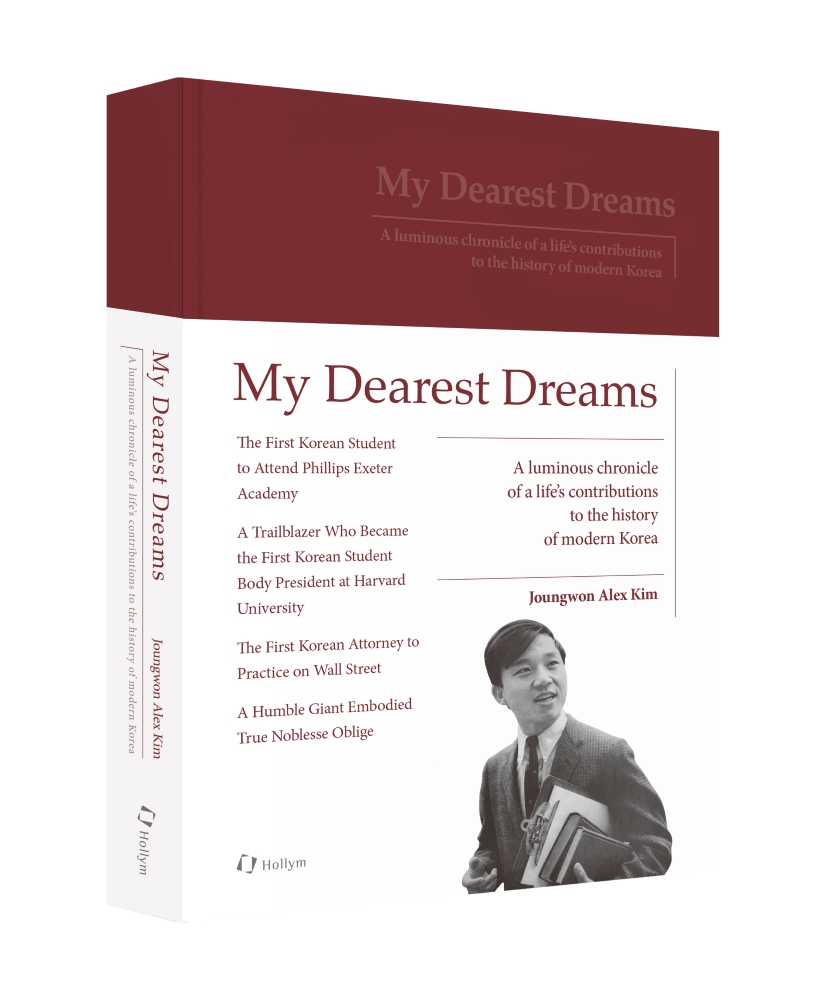
On the occasion of the 75th anniversary of the Korean War, another inspiring story that sprouted in the midst of the war was published as a book. Joungwon Kim’s journey began when he encountered war correspondent Bill Boss from Canada, who opened his eyes to the world beyond Korea. With just $300, he embarked on his studies in the United States, ultimately earning degrees from Columbia University, Johns Hopkins SAIS, and Harvard Law School. This book vividly chronicles his encounters with key figures in academia, diplomacy, and law, painting a compelling picture of the times. Compiled posthumously by Memorial Association for Dr. Joungwon Kim in collaboration with the Aging Communication Center, this book is available in both Korean and English, with the English translation undertaken by his former student, Professor Timothy Atkinson of Seoul Foreign Language Graduate School, and reviewed by Charles Olmsted, former professor at Gimcheon University.A Trailblazing Life of “Firsts”Joungwon Kim’s life was marked by a series of historic firsts: the first Korean student at Phillips Exeter Academy (p.40), the first Korean student body president at Harvard University (p.64), the first Korean author published in the world-renowned journal Foreign Affairs (p.109), the key figure behind the introduction of Korean politicians Kim Young-sam and Kim Dae-jung to Washington’s political circles (pp.29, 115), and the first Korean lawyer to join a major Wall Street law firm (p.129). His journey across academia, diplomacy, and law offers a gripping narrative of ambition and service.A True Noblesse Oblige: A Legacy of GivingInspired by his grandfather, who donated his entire fortune to local schools, Joungwon Kim lived a life of generosity. While at Harvard, he refused financial support from his parents, arguing that his tuition-over 20 times Korea’s per capita GDP-should instead be used to fund scholarships for 50 to 100 other Korean students (p.62). Despite earning two doctorate degrees from the most prestigious U.S. institutions, he relied primarily on scholarships and considered it his duty to repay this debt to society. Without seeking publicity, he quietly dedicated himself to philanthropy throughout his life.What We Leave Behind and How We Are RememberedJoungwon Kim’s final chapter was guided by the Aging Communication Center’s Legacy Project, which preserves personal histories as cultural heritage. This initiative donates significant life artifacts to museums and libraries, ensuring that individual legacies contribute to the collective good. His personal belongings-90 boxes of household items-were donated to seven charitable organizations, while 682 books and historical records were gifted to institutions including the War Memorial of Korea, the National Museum of Korean Contemporary History, the Presidential Archives, the Yongsan History Museum, the National Assembly Library, the Korea National Diplomatic Academy Library, and the National Library of Korea. Proceeds from book sales will be allocated to scholarship funds.A Life Devoted to Korea and DemocracyThroughout his student years, Joungwon Kim displayed unwavering patriotism, hanging a large Korean flag (Taegeukgi) in his dormitory to remind himself of his homeland and family (p.48). Representing the United States at the World Festival of Youth and Students in Helsinki, he carried the Taegeukgi to promote Korea on the international stage (p.93). During Korea’s pro-democracy movement of the 1980s, his book Divided Korea became essential reading for social science students (p.164). Upon returning to Korea in 1987, he played a pivotal role in communicating the realities of Korean politics to the international community, effectively serving as the foreign press spokesperson for the United Democratic Movement (p.140). About Joungwon Alex Kim (1936-2023) Ph.D., J.D.Born in Seoul in 1936, Joungwon Kim graduated from Kyunggi High School before embarking on a journey to the United States, becoming the first Korean student admitted to Phillips Exeter Academy. While at Harvard University, he made history as the first Korean student body president and garnered national recognition when he penned a rebuttal to a Boston Globe article titled “Korea a Costly Den of Thieves,” instilling pride in post-war Koreans during a time of national uncertainty.He later earned a Ph.D. in Political Science from the Johns Hopkins School of Advanced International Studies (SAIS) and conducted research at prestigious institutions such as the Brookings Institution, the Washington Center of Foreign Policy Research, Columbia University’s Research Institute on Communist Affairs and Harvard Law School’s East Asian Legal Studies program. Transitioning into academia, he served as a professor at Rutgers University before pursuing a J.D. at Harvard Law School. As a lawyer at Mudge, Rose, Guthrie & Alexander, he earned the distinction of being the first Korean attorney on Wall Street.In 1987, he returned to the Republic of Korea to contribute to its democratization. He served as Deputy Director for International Affairs at the National Security Planning Agency (now the National Intelligence Service), Ambassador-at-Large at the Ministry of Foreign Affairs, and President of the Korea Foundation. After retiring from public service, he continued his career as a university professor and international arbitrator at the International Court of Arbitration of the ICC. He passed away on January 25, 2023, and in accordance with his wishes, Memorial Association for Dr. Joungwon Kim was established. Table of Contents ForewordAcknowledgments Remembering My Dear Friend/ A True Gentleman of This Era/ More Remarkable Than Any Movie/ A Life Shining Like the Stars/ Letters to My Father Part 1: A Youth Full of Challenges and Dreams (1936-1953)The Child with Two NamesThe First Steps of Passion and Challenge Sparked by SportsLiving like a Refugee for the Second Time and Becoming a Fiery Orator/ Kim Young-sam: From Acquaintance to Family by MarriageStudy in the U.S. Made Possible by Canadian War Correspondent, Bill Boss Part 2: Spreading Wings of Passion in the Unknown (1954-1957)Leaping Towards a Dream: Phillips Exeter AcademyInsights from Living Between Two NationsChoosing My Own Middle Name: AlexThe First Korean Student Representative at Harvard UniversityDefending Korea's Honor with the PenPart 3: Cherished Connections That Became the Compass of Life (1958-1970)Meeting Carolyn and the Birth of My Daughter in New YorkA Korean Representing the U.S. at the World Festival of Youth and Students in Helsinki From Banker to Student: Pursuing Academia at Johns Hopkins UniversityDeepening the Study of International Politics with Professor Paul LinebargerPart 4: Bridging Korea and the World as a Scholar and Lawyer (1968-1986)Returning to Korea After 13 YearsProfessor Jerome Cohen at Harvard Law SchoolKim Dae-jung’s Washington DebutPresident Park Chung-hee’s Astounding FocusMy Book, Divided Korea, Rejected in My HomelandThe First Korean Attorney on Wall StreetPart 5: Crossing the Gates of Knowledge, Striving for Justice (1987-2017)Returning to Korea again for the Korean DemocratizationRenouncing U.S. Citizenship… Sincere support from Korean Americans in the U.S.Establishing Diplomatic Relations Between Korea and Palau“Ambassador Joungwon Kim Day” Proclaimed by the Mayor of PhiladelphiaMeeting President Roh Moo-hyun, a Visionary ThinkerServing as an Arbitrator at the International Court of ArbitrationLeading the Harvard Club of KoreaPart 6: Reflecting on Family at Life’s Twilight (2014-2023)Lessons Left by President Kim Young-samMy Grandfather’s Deep Dedication to EducationMy Father, Like the Sea; My Mother, Like SunshineCarolyn: The Mother of Modern Georgian LawMy Daughter and GrandchildrenEpilogue: My Dearest Dreams
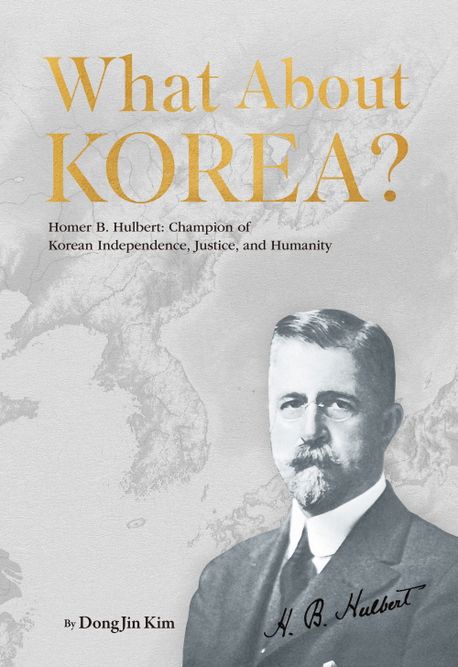
What About KOREA?, a new book highlighting Homer B. Hurlburt, an unsung hero of the Korean independence movement The new book What About KOREA?, which explores the life and contributions of Homer B. Hulbert, a hidden hero of Korea’s independence movement and a pioneer of modern education in Korea, has been published after more than three years of work. This book is the culmination of decades of research by DongJin Kim, Chairman of The Hulbert Memorial Society, and offers readers in Korea, the United States, and around the world a chance to rediscover Hulbert’s dedicated efforts and legacy. Hulbert arrived in Korea in 1886 as an instructor at Royal College (Yukyeonggongwon), the first state-run modern school. He quickly became a key advocate for Korean sovereignty, opposing Japanese imperialism and promoting the use of Hangeul. He authored the first modern Korean textbook (Saminpilji, 1891) and actively supported Korean independence efforts, including serving as a secret envoy to the U.S. in 1905 to protest Japan’s forced protectorate over Korea. Even after his expulsion from Korea in 1907, Hulbert continued advocating for Korea’s independence in the United States. In 1919, after Korea’s March First Manse Uprising, he submitted a statement titled “What About Korea?” to the U.S. Senate, urging support for Korea’s independence. In 1949, Hulbert was invited back to Korea but passed away shortly after his arrival. He was buried in Yanghwajin, Seoul, fulfilling his wish: “I would rather be buried in Korea than in Westminster Abbey.” Recognized posthumously, Hulbert received the Order of Merit for National Foundation (1950) and the Order of Merit for Culture and Art-Gold (2014) from the Korean government. His legacy continues to inspire both Koreans and readers worldwide. This book will provide deep insights for readers interested in Korean modern history and international relations, while also serving as an important document that sheds new light on the contributions of foreigners to the Korea’s modernization and independence movement. About Homer Bezaleel Hulbert (1863–1949) Hulbert was born in 1863 in Vermont, USA, during the height of the American Civil War. He was the second son among three sons and three daughters, born to a father who was a college president and pastor and a mother who was a descendant of the founder of Dartmouth College. After graduating from Dartmouth College and while attending a theological seminary, Hulbert answered King Gojong’s call and set foot in Jemulpo in the summer of 1886 to become Joseon’s first modern teacher. Upon arriving in Joseon, Hulbert became fascinated by the Korean alphabet, Hangeul, and worked to revive Hunminjeongeum. He deeply appreciated the history and culture of the Korean people, even more so than many Koreans themselves, and laid the foundation for modern education under the belief that “education is the only way to survive.” Additionally, as a civil rights activist and the emperor’s secret envoy, he fought against Japan’s imperialist aggression. However, in 1907, he was forced to return to the United States due to Japanese persecution. Even in the U.S., he spent 38 years giving lectures, interviews, and writing articles to expose Japan’s illegal actions and appeal for Korea’s independence. In 1949, after 40 years, Hulbert returned to Korea as a state guest, but he passed away just a week after his arrival. He now rests in Yanghwajin Cemetery, along the banks of the Hangang River. About the Author DongJin Kim Chairman of The Hulbert Memorial Society Former Managing Director at JPMorganChase In 1999, during his tenure as Managing Director and Country Manager of Chase Manhattan Bank, Korea—a predecessor of JPMorganChase—DongJin Kim, along with esteemed colleagues, founded The Hulbert Memorial Society. Under his visionary leadership, the Society has spearheaded numerous initiatives to preserve and promote Homer B. Hulbert’s legacy. Kim’s dedication was instrumental in securing Hulbert’s posthumous honors, including the Order of Merit for Culture and Art-Gold from the Korean government. Table of Contents Advancing Hulbert’s Legacy into the Future! ㆍ xiiAcknowledgments ㆍ xviHulbert’s Works, Letters, and Newspaper Articles ㆍ xviiiNotes for Readers ㆍ xxChapter 1 Hulbert’s Fateful Karma with Joseon Ahn Junggeun: “Koreans must not forget Hulbert even for a single day” ㆍ 3Hulbert’s Heart Stirs at the Word “Korea” ㆍ 6The Hulbert Family Motto: “Character is more fundamental than victory” ㆍ 14Affection for Korea Sprouts at Yukyeonggongwon (Royal College) ㆍ 19Korea’s First Literary Diplomat ㆍ 40A Pioneer in Advocating for the Use of Hangeul (Korean Alphabet) ㆍ 48Saminpilji (사민필지): A World Gazetteer and the First Textbook Written in Hangeul ㆍ 58Chapter 2 Missionary, Educator, and JournalistThe Ideal Christian ㆍ 71A Central Figure in the Founding of the YMCA in Korea ㆍ 80Hulbert’s Fury: The Japanese Assassination of the Joseon Queen ㆍ 83Pioneering Korea’s Modern Education ㆍ 93Education: The Only Means for Survival ㆍ 104A Dedicated Journalist ㆍ 113Combating Japanese Abuses to Curb Social Decay ㆍ 119Appealing to the Powers, Not for Intervention ㆍ 123Chapter 3 A Pioneer of Korean StudiesAn Extraordinary Writer ㆍ 131A True Icon of Hangeul Devotion ㆍ 134A Pioneer in the Study of Spoken Korean ㆍ 149Illuminating Korean Literature through Nature ㆍ 162The First Western Notation of “Arirang” ㆍ 172Introducing Korea’s Cultural Heritage to the World ㆍ 181An Unparalleled Historian ㆍ 194The History of Korea: An Immortal Work on Korean History ㆍ 202The Passing of Korea: A Labor of Love for Korea ㆍ 214Chapter 4 Hulbert’s Destiny: A 50-Year Journey in the Korean Independence MovementHulbert: The Conscience of History beyond Race and Borders ㆍ 225The Revival of Toyotomi’s “Occupy Joseon Project” after 300 Years ㆍ 229The Emperor’s Special Envoy to Washington: Preventing the Japanese Protectorate in 1905 ㆍ 237Hulbert’s Frustrations with the Roosevelt Administration ㆍ 247Civil Rights Activist ㆍ 263Efforts to Reclaim a Korean Treasure Stolen by a Japanese Minister ㆍ 270The Emperor’s Special Envoy to the 1907 Hague Peace Conference ㆍ 276Chapter 5 38 Years of a Korean Independence Movement in the United StatesHulbert’s Solitary Fight for Korean Independence in America ㆍ 299A Lonely Voice for Korea among Pro-Japanese Intellectuals ㆍ 305Return to Korea in 1909: Leaving Behind a Last Will and Testament ㆍ 312“I Stand for Korean People, Now and Always … Until I Die” ㆍ 318Roosevelt Acknowledges His Complicity in Japan’s Occupation of Korea ㆍ 327The March First Manse (만세) Uprising: A God-Given Right for Koreans ㆍ 336“What About Korea?” A Resolute Appeal to the U.S. Senate ㆍ 344The Love of Korean People: My Most Precious Possession ㆍ 355Hulbert’s Views on Japan and Gojong ㆍ 366Chapter 6 The Emperor’s Deposit-Stolen by the Japanese-Must Be Returned to KoreaThe Third Calling from Emperor Gojong ㆍ 373Hulbert’s Struggle to Recover the Stolen Deposit ㆍ 387Rectify a Past Injustice by Recovering the Stolen Deposit ㆍ 392Chapter 7 “I would rather be buried in Korea than in Westminster Abbey”Returned to Korea after 40 Years ㆍ 397Hulbert: Who Loved Korea More Than Koreans Themselves ㆍ 414Homer Hulbert’s Spirit Lives On ㆍ 422Hulbert’s Works ㆍ 431The Life of Homer Bezaleel Hulbert ㆍ 433Chronicle of Korea’s Enlightenment Period (1864-1910) ㆍ 438References ㆍ 444Index ㆍ 449About the Author ㆍ 460The Hulbert Memorial Society ㆍ 462
This is an English edition of the bestseller comic book Far Countries, Neighboring Countries 9 - Korea (Sae Mon Nara Iun Nara 9 - Uri Nara). The book is to introduce real aspects of Korea that are sometimes misunderstood and unknown to foreigners. Through skillfully chosen subjects - e.g., spicy food, education fever, conglomerates, the tension between North and South Korea - Won-bok Rhie explores the unique manifestations of Korean attitudes that are often misunderstood by foreigners. It is a fascinating exploration of the Korean mindset that weaves together history, sociology and cultural anthropology. The insightful discussions on Korea's place between China and Japan, its more well-known neighbors, also clear the fog away as to who the Korean people are.About the authorWon-bok Rhie is one of Korea's most famous cartoonists. After obtaining a bachelor's degree in architecture at Seoul National University, he studied graphic design at Müster University in Germany, where he obtained the degree of Dipl. Designer. He is the author of numerous comic books that focus on introducing historical, cultural and economic issues to the layman. He also has run many comic strip series in Korea's most prestigious daily newspapers and magazines. Korea Unmasked is part of a 9-volume series of comic books on several European countries and Japan and Korea, all of which became bestsellers in Korea. Rhie is also a professor of graphic design at Duksung Women's University in Seoul, Korea. In 1993, he was awarded the prestigious Noonsol Award in recognition of his contributions to the development of the Korean cartoon industry. From 1998 to 2000, he also served as the president of the Korean Society of Cartoon and Animation Studies.Table of contentsForewordIntroduction1 Neighbors but Strangers : Korea, China and Japan2 The Korean People3 The Successes and Tribulations of the Koreans4 The Long and Treacherous Road to ReunificationTranslators' Notes : Jung Un, Louis Choi
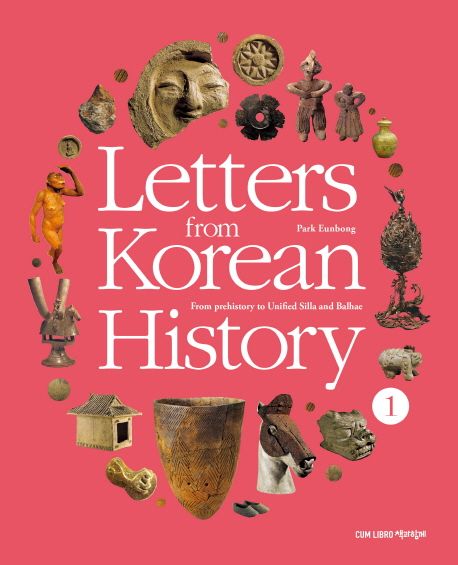
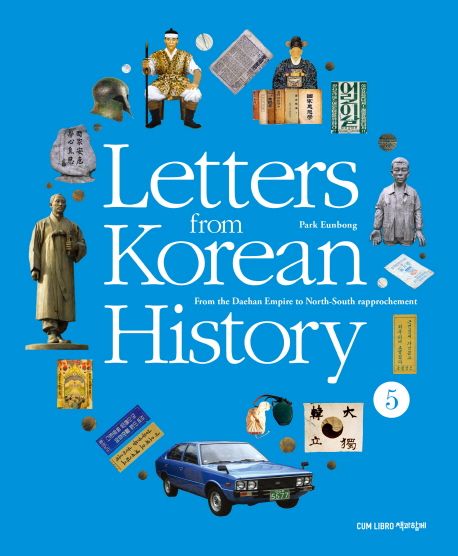
The English version of Letters from Korean History is published for young readers overseas who are curious about Korea and its people, and for young Korean readers keen to learn more about their own history while improving their language skills as global citizens. I hope that readers will not feel obliged to start at the beginning of Volume I and plow all the way through; rather, each letter contains a historical episode in its own right, and can be chosen and read according to the reader’s particular area of interest. The text is complemented by plenty of photos and illustrations, giving a more vivid sense of history - reading the captions that accompany these should enhance the sense of historical exploration. -Park Eunbong Progressing from the stones and bones of prehistory all the way to the turbulent twentieth century in the course of five volumes, Letters from Korean History can be browsed as a reference text or plowed through from beginning to end. As with most histories that cover such a long period, the density of information increases as the narrative approaches the present. The relatively recent Joseon period, for example, accounts for two of the five volumes (III and IV), rich as it is in events and meticulously recorded historical data. Letters from Korean History has been a great success in its native country among Korean readers. I hope that this translation will now be of help to ethnic Koreans overseas, others interested in Korea or history in general, Koreans looking to study history and English at the same time, and anybody else who believes that exploring the past is a good way to try and make sense of the confusing, flawed and wonderful present. -Ben JacksonContents Vol. 1When did the first humans settle in Korea?What did Paleolithic Koreans look like?How did Neolithic Koreans live?Stone toolsThe Bronze Age and Gojoseon, the first state in Korean historyKorea, a land of dolmensHow was life in Gojoseon?Gojoseon: originally just ‘Joseon’What came after Gojoseon?What was the purpose of ‘jecheon haengsa?’The founding of the Three Kingdoms and GayaGaya cultureGoguryeo: a Northeast Asian superpowerThe riddle of the Gwanggaeto SteleBaekje, land of cultural refinementKing Mu and Princess SeonhwaBuddhism, key to the culture of the Three Kingdoms Influence of the Buddhist culture of the Three Kingdoms on Asuka Life in the Three Kingdoms periodFridges and drinksHow did Silla achieve unification?Hwarang: boys as beautiful as flowersSilla, land of the bone-rank systemHyangga: songs of SillaBalhae, land of mysteryBalhae’s road network ㆍIndexㆍImage credits and sources
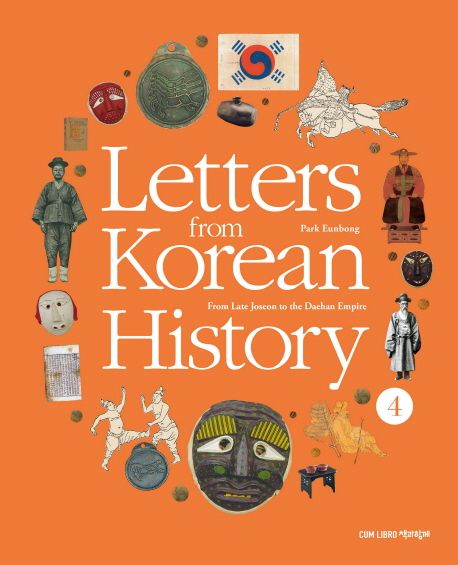
The English version of Letters from Korean History is published for young readers overseas who are curious about Korea and its people, and for young Korean readers keen to learn more about their own history while improving their language skills as global citizens. I hope that readers will not feel obliged to start at the beginning of Volume I and plow all the way through; rather, each letter contains a historical episode in its own right, and can be chosen and read according to the reader’s particular area of interest. The text is complemented by plenty of photos and illustrations, giving a more vivid sense of history - reading the captions that accompany these should enhance the sense of historical exploration. -Park Eunbong Progressing from the stones and bones of prehistory all the way to the turbulent twentieth century in the course of five volumes, Letters from Korean History can be browsed as a reference text or plowed through from beginning to end. As with most histories that cover such a long period, the density of information increases as the narrative approaches the present. The relatively recent Joseon period, for example, accounts for two of the five volumes (III and IV), rich as it is in events and meticulously recorded historical data. Letters from Korean History has been a great success in its native country among Korean readers. I hope that this translation will now be of help to ethnic Koreans overseas, others interested in Korea or history in general, Koreans looking to study history and English at the same time, and anybody else who believes that exploring the past is a good way to try and make sense of the confusing, flawed and wonderful present. -Ben JacksonContents Vol. 4 Hwaseong: King Jeongjo’s new city New martial arts for Joseon The Silhak vision ‘Wealth is created by the people’ Evolving farms and markets ‘Sanga yorok’: A royal physician’s cookbook Popular culture flourishes Yi Danjeon, the ‘nobi’ poet Love and marriage in Joseon Gang Jeongildang and Yun Gwangyeon in love Kim Jeongho and ‘Daedong yeojido’ Korean maps of the past The peasants rise up Hong Gyeongnae and the battle of Jeongju Fortress Seohak and Donghak Protestantism gains royal backing Isolation or enlightenment? Korea at the crossroads ‘Uigwe’: Joseon texts seized by France Opening the doors A ‘Treaty of Peace, Amity, Commerce and Navigation’ ‘A new world, for three days’: the Gapsin Coup A military uprising: The Imo Incident Jeon Bongjun and the Donghak Peasant Revolution The attack on Gyeongbokgung and the Gabo Reforms The death of Empress Myeongseong The Daehan Empire is born Treaty ports usher in the winds of change When did Korea start using the solar calendar? ㆍ Index ㆍ Image credits and sources
The English version of Letters from Korean History is published for young readers overseas who are curious about Korea and its people, and for young Korean readers keen to learn more about their own history while improving their language skills as global citizens. I hope that readers will not feel obliged to start at the beginning of Volume I and plow all the way through; rather, each letter contains a historical episode in its own right, and can be chosen and read according to the reader’s particular area of interest. The text is complemented by plenty of photos and illustrations, giving a more vivid sense of history - reading the captions that accompany these should enhance the sense of historical exploration. -Park Eunbong Progressing from the stones and bones of prehistory all the way to the turbulent twentieth century in the course of five volumes, Letters from Korean History can be browsed as a reference text or plowed through from beginning to end. As with most histories that cover such a long period, the density of information increases as the narrative approaches the present. The relatively recent Joseon period, for example, accounts for two of the five volumes (III and IV), rich as it is in events and meticulously recorded historical data. Letters from Korean History has been a great success in its native country among Korean readers. I hope that this translation will now be of help to ethnic Koreans overseas, others interested in Korea or history in general, Koreans looking to study history and English at the same time, and anybody else who believes that exploring the past is a good way to try and make sense of the confusing, flawed and wonderful present. -Ben JacksonContents Vol. 5 Lost sovereignty Secret mission to The HagueThe struggle to save the country Yun Huisun and the Ansaram Righteous Army Gunfire echoes across ManchuriaA learned man’s burden The nation rises up‘Gisaeng’ fight for independence Hong Beomdo and Kim Jwajin, ndependence army heroesYi Hwarim, the female general Bang Jeonghwan and Children’s DayKim Sowol’s ‘Azaleas’ The Kanto Massacre and forced relocationThe photo brides of Hawaii Sin Chaeho, the father of modern historyA history of pain and blood Yi Bongchang and Yun Bonggil The Liberation Army OSSKoreans who amazed the worldKim Yeom, Film Emperor of ShanghaiStolen youth, rotten mindsInvestigating Korea’s collaborators Liberation and national division What is socialism? Kim Gu crosses the thirty-eighth parallelThe Jeju UprisingWar divides a nationThe SOFA and the death of two schoolgirls Rapid growth: a time of miracles and tragediesMulticultural families, our new neighborsThe struggle for democracyDemocracy and the World Cup Encounters for reunificationToward reunification Index Image credits and sources
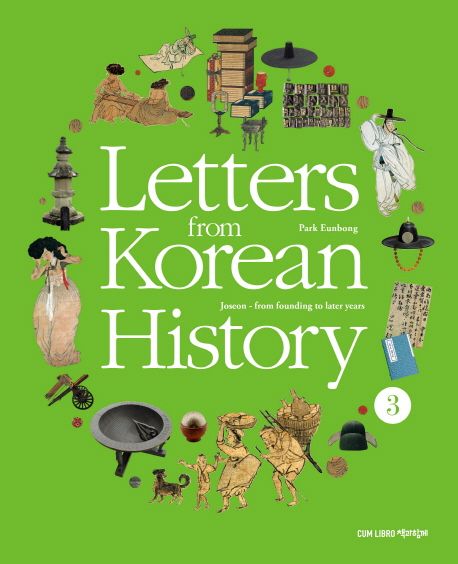
The English version of Letters from Korean History is published for young readers overseas who are curious about Korea and its people, and for young Korean readers keen to learn more about their own history while improving their language skills as global citizens. I hope that readers will not feel obliged to start at the beginning of Volume I and plow all the way through; rather, each letter contains a historical episode in its own right, and can be chosen and read according to the reader’s particular area of interest. The text is complemented by plenty of photos and illustrations, giving a more vivid sense of history - reading the captions that accompany these should enhance the sense of historical exploration. -Park Eunbong Progressing from the stones and bones of prehistory all the way to the turbulent twentieth century in the course of five volumes, Letters from Korean History can be browsed as a reference text or plowed through from beginning to end. As with most histories that cover such a long period, the density of information increases as the narrative approaches the present. The relatively recent Joseon period, for example, accounts for two of the five volumes (III and IV), rich as it is in events and meticulously recorded historical data. Letters from Korean History has been a great success in its native country among Korean readers. I hope that this translation will now be of help to ethnic Koreans overseas, others interested in Korea or history in general, Koreans looking to study history and English at the same time, and anybody else who believes that exploring the past is a good way to try and make sense of the confusing, flawed and wonderful present. -Ben JacksonContents Vol. 3 How was Joseon founded?A new name for a new state: ‘Joseon’ or ‘Hwaryeong?’Hanyang, Joseon’s new capital Why the king kept moving palace The real reason Sejong created Hangeul Jang Yeongsil, Joseon’s greatest scientist How were government officials appointed?Men of integrityHow did the people of Joseon live?Joseon’s children Joseon, land of ConfucianismYi Hwang and Gi Daeseung exchange lettersNeo-Confucians: a new breed of literati sparks purgesSeong Sammun and Sin SukjuClothes, food and housing in Joseon Children’s gamesNewspapers and books in Joseon Royal annals: definitive national histories The Three Great Bandits of Joseon The mysterious tale of Hong Gildong A time of crisis: Japan invades Were turtle ships really clad in iron? Fighting off the Manchus Kim Sangheon and Choe Myeonggil What caused factional strife? Death in a rice chest: Crown Prince SadoAn Yongbok defends Ulleung-do and Dok-do Hendrik Hamel and Park Yeon: Joseon’s two Dutchmen ㆍ Index ㆍ Image credits and sources
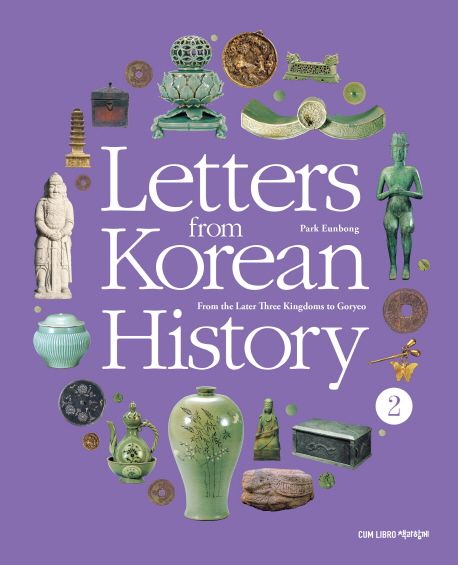
The English version of Letters from Korean History is published for young readers overseas who are curious about Korea and its people, and for young Korean readers keen to learn more about their own history while improving their language skills as global citizens. I hope that readers will not feel obliged to start at the beginning of Volume I and plow all the way through; rather, each letter contains a historical episode in its own right, and can be chosen and read according to the reader’s particular area of interest. The text is complemented by plenty of photos and illustrations, giving a more vivid sense of history - reading the captions that accompany these should enhance the sense of historical exploration. -Park Eunbong Progressing from the stones and bones of prehistory all the way to the turbulent twentieth century in the course of five volumes, Letters from Korean History can be browsed as a reference text or plowed through from beginning to end. As with most histories that cover such a long period, the density of information increases as the narrative approaches the present. The relatively recent Joseon period, for example, accounts for two of the five volumes (III and IV), rich as it is in events and meticulously recorded historical data. Letters from Korean History has been a great success in its native country among Korean readers. I hope that this translation will now be of help to ethnic Koreans overseas, others interested in Korea or history in general, Koreans looking to study history and English at the same time, and anybody else who believes that exploring the past is a good way to try and make sense of the confusing, flawed and wonderful present. -Ben JacksonContents Vol. 2Faltering Silla and the Later Three KingdomsJang Bogo, the Great Commander of CheonghaejinWang Geon unifies the Later Three KingdomsDoseon and ‘pungsujiri’Goryeo: land of ‘munbeol’ aristocratsKing Seongjong, Choe Seungno and Confucian politicsThirty years of war with the KhitansYun Gwan and the Nine Fortresses of the North-EastByeongnando: international port of ‘Korea’Around GaegyeongGoryeo, land of BuddhismVillage guardian deitiesHow did the people of Goryeo live?Was ‘goryeojang’ really a Goryeo custom?The military takes overMyocheong’s bid to relocate the capitalThe struggle for a true meritocracyPyeongnyang, the ‘nobi’ who dreamt of freedomPeasants and ‘cheonin’ take on the MongolsGoryeo’s temporary capitalThe ‘Tripitaka Koreana’ and inlaid celadon: embodiments of the spirit of GoryeoPrinting in the old days‘Samguk sagi’ and ‘Samguk yusa’: two history books, two agendas‘Dongmyeong Wang pyeon’ and ‘Jewang ungi’King Gongmin’s reforms‘Gwonmun sejok’ and ‘nongjang’: land grabbing at club-pointCotton and gunpowder‘Cheongsan byeolgok’ and the decline of Goryeoㆍ Indexㆍ Image credits and sources
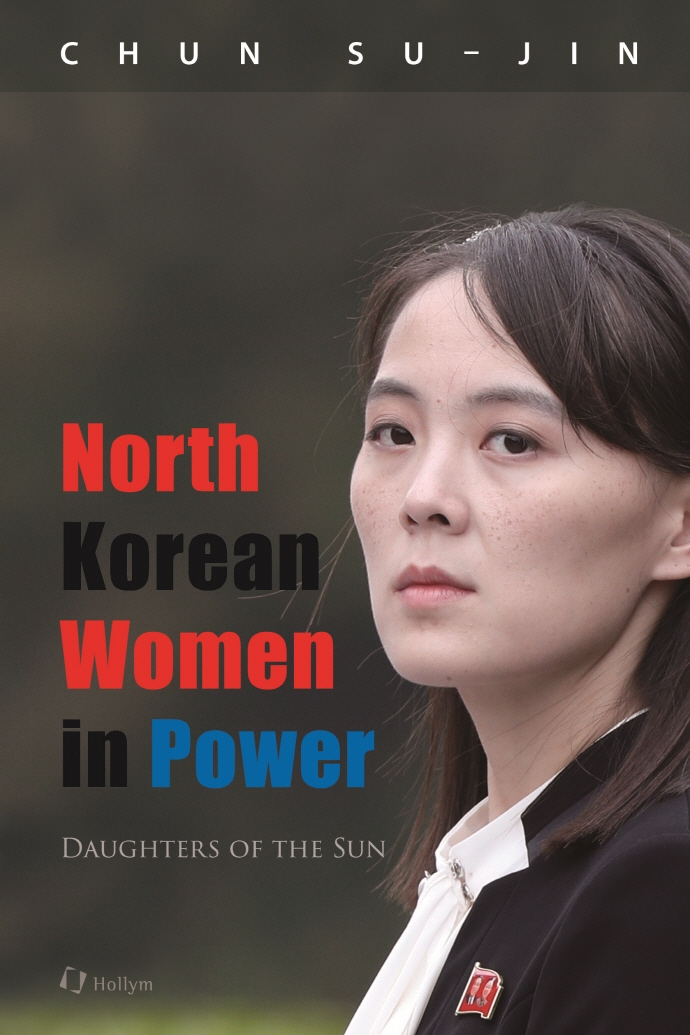
The North Korean Women in Power is the first field report on North Korea written by a South Korean woman reporter in English. Chun Su-jin, who refers to herself as a “Korean-Korean (South Korean nationality with a North Korean heritage),” introduces four North Korean women who make Chairman Kim Jong-un complete—the one and only blood to Chairman Kim, Kim Yo-jong; the First Lady with pride and dignity, Ri Sol-ju; a seasoned career diplomat, Choe Son-hui; and a de facto protocol officer, Hyun Song-wol.North Korea is a small, isolated country ruled by the authoritarian leader Kim Jong-un. They have locked the door and claim that they have nuclear weapons. Then they keep sending signals to the world—mainly to the United States and South Korea—by making statements and shooting missiles. So it may be inevitable for North Korea to be considered an incomprehensible strange country. But Chun tells us that they need to be properly understood for the safety and security of the world and the key to understand this hermit kingdom is the people who move the regime: the leader Kim Jong-un and his female entourage.There are quite a few books on North Korea, but not from a Korean-Korean. This book is the first of its kind from South Korean point of view targeting English-speaking readership. This is the product of the author’s nearly 20 years of experience meeting and writing about North Korea. She has talked to tens of dozens of sources for this book alone, not to mention many others she met while working as a news reporter. This book will allow readers develop more interest and understanding the enigmatic country and its people. Table of Contents PrefaceChapter 1 Why You Should CareChapter 2 The Birth of "New Women": In Revolution We TrustChapter 3 Hail the Giggly PrincessChapter 4 Meet the First Lady ? la PyongyangChapter 5 The Third Dear Leader's Self-made Female EntourageChapter 6 When a South Korean Female Reporter Met a North Korean OfficialEpilogueAcknowledgments About the AuthorChun Su-jin is a South Korean writer, who is proud of her North Korean heritage. Born and raised in Seoul, Chun dreams of living in Pyongyang in the unified Korea. She writes in both Korean and English, and has covered the Presidential Office, the Foreign Ministry, and the Unification Ministry.
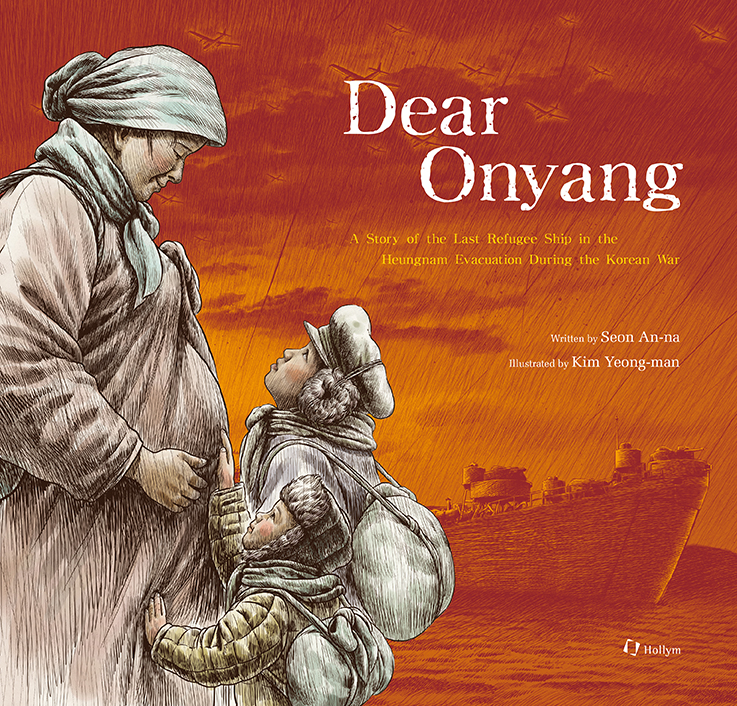
More than ten years after SAMTOH’s publication of the heartfelt Korean picture book <온양이> comes its English version Dear Onyang, translated by the granddaughter of North Korean refugees who were rescued during the Heungnam evacuation. Dear Onyang is a historical fiction story that takes place in the Heungnam evacuation of December 1950 during the Korean War. From December 15 to 24, the U.S.-led UN troops carried out an evacuation by sea for tens of thousands of North Korean refugees. These refugees traveled from the North Korean port of Heungnam to South Korea. The story follows 9-year-old Myeong-ho, his pregnant mother, and younger brother Myeong-nam as they make the difficult journey from their village to the port. When Myeong-ho’s family finally manages to board the last ship, the Onyang, Myeong-ho’s mother gives birth to their younger sister, who they name after the ship. A poignant story of life and hope, Dear Onyang encourages readers to shine a light on the dark memories of war to brighten the future before us. About the Author Seon An-na was born and raised in Ulju County of Ulsan City. She became a writer in 1990 after receiving the Saebeot Literary Award. In 1991, she won an annual spring literary contest held by the Korean newspaper, Dong-a Ilbo. Since then, she has published several other children’s books, picture books, and essays in criticism. Seon is the recipient of the Korean Children’s Book Award, the Sejong Children’s Literature Award, and the Korean Children’s Literature Award.
A moving and distressing first-hand account of the terrible massacre that occurred over several days in May 1980 that was to signal the birth of democracy in South Korea and the end of successive military-backed authoritarian governments. After returning to Korea in 2019 for the first time since the 1980 Uprising, the author was shocked to discover that many people he talked to were not aware of the truth of these horrendous events. Some thought it was a Communist insurrection fomented by North Korea; to others it was a student riot; others doubted it ever happened Paul Courtright was there. He saw what happened. He felt duty-bound to reveal the truth. This book is his account. Young Peace Corps volunteer, Paul Courtright was helping leprosy patients in the countryside of South Korea 1980. He enjoyed cooking eggs and listening to music. On his way back home from his medical checkup, he got caught in the middle of Gwangju massacre. Between Peace Corps policy and frustration, he decided to act. He escaped Gwangju to tell the US embassy what was going on there. He couldn't stop writing notes about what he was witnessing. It was the only way he could process what he was seeing. is based on his massive amount of notes. This memoir is not only the record of Gwangju uprising but also a great story of how the incident changed a young man's life in a very short period of time. "We have no voice. You have to be our voice. You have to tell people outside what they’re doing to us.” She glanced around the street, then returned her fearless gaze to me. I was rooted to the spot. I was to be the “witness” and she had given me a clear task. I failed the halmeoni. I was given a responsibility that now, forty years later, I can finally face. I hope I’m not too late. -From the Prologue- About the Author Paul Courtright was a US Peace Corps Volunteer in Jeonnam Province of Korea from 1979-81. He completed his Masters and Doctorate in Public Health focusing on eye diseases and neglected tropical diseases. For 20 years he lived and worked in Egypt, Ethiopia, South Africa, and Tanzania establishing, with his wife, the Kilimanjaro Centre for Community Ophthalmology in Moshi, Tanzania. He has published over 250 scientific articles and has received awards from the American Academy of Ophthalmology, the Premio Vision Mundi de Lucha Contra la Cuguera, and the Antonio Champalimaud Vision Award. He is a professor (adjunct) at the University of Cape Town and currently he is the Trachoma Technical Lead, consulting for Sightsavers, a UK based non-governmental organization. He is married with two sons and currently lives in San Diego. Since 1981 he had continued his relationship with Korea conducting research there with Korean colleagues and a summer epidemiology course at Yonsei University with his wife. His work in Africa has been recognized by the Queen and got invited to England. Contents Dedication 2 Author’s note 3 Prologue 4 Day 1 (Wednesday, May 14): Demonstration curiosity for the uninitiated 6 Day 2 (Thursday, May 15): Demos are neither won nor lost 12 Day 3 (Friday, May 16): Good to be heading home 19 Day 4 (Saturday, May 17): Getting back to normal 27 Day 5 (Sunday, May 18): Disturbing rumors streak across the sky 33 Day 6 (Monday, May 19): Something awful happened here 38 Day 7 (Tuesday, May 20): Getting marching orders and the last bus home 47 Day 8 (Wednesday, May 21): You can push people only so far 54 Day 9 (Thursday, May 22): The mundane and the crazy can easily coexist in the middle of an uprising 67 Day 10 (Friday, May 23): We are all “impure elements” 82 Day 11 (Saturday, May 24): Translating in a mortuary 100 Day 12 (Sunday, May 25): Is there peace to be found heading over the mountain? 119 Day 13 (Monday, May 26): Losing my temper and heading to Seoul 129 Epilogue 139 Acknowledgments 142
Learn about the US from the Korean point of view in this extensive comic strip history book! Ever since the founding of the Republic of Korea, our nation has adopted the U.S.-style presidency. For the first time in history, the United States adopted a system by which the people elected the nation’s leaders. Korea, which has emulated the United States, has also adopted such a presidential system. Thus, regarding the U.S. Presidents, it is important for Koreans to know what kinds of persons have become President, which Presidents have succeeded and what were the reasons of their successes. 1st George Washington : America’s Founding Father who Laid the Foundation of Democracy 2nd John Adams : Man of Self-sacrifice who Put Country before Ambition 3rd Thomas Jefferson : Author of the Declaration of American Independence, of the Statute of Virginia for Religious Freedom and Father of the University of Virginia 4th James Madison : Father of the Constitution that Established Separation of Powers and Checks and Balances 5th James Monroe : Defender of the New World from European Interference 6th John Quincy Adams : Intellectual Leader with Top Educational Background 7th Andrew Jackson : Pioneer of the Era of Mass Democracy 8th Martin Van Buren : First Career Politician to Become President 9th William Henry Harrison : First ‘Image Politician’ 10th John Tyler : First Vice President to Ascend to the Presidency via Succession 11th James K. Polk : Fierce Leader of the Era of Territorial Expansion 12th Zachary Taylor : Career Soldier who Went Straight to the White House 13th Millard Fillmore : From Tailor to the White House 14th Franklin Pierce : Northern Traitor, Southern Sympathizer 15th James Buchanan : Another Sacrificial Lamb of the North-South Conflict 16th Abraham Lincoln : Hero, Saint and Martyr: A Giant in U.S. History 17th Andrew Johnson : First President to be Impeached by Congress 18th Ulysses S. Grant : Politically Inept War Hero 19th Rutherford B. Hayes : Morality Politician Out of Touch with Reality 20th James A. Garfield : Corrupt Politician Assassinated while Fighting Corruption 21st Chester A. Arthur : Defender of Presidential Dignity 22nd/24th Grover Cleveland : Foe of Organized Labor 23rd Benjamin Harrison : Gifted Public Speaker, Not So Gifted President 25th William McKinley : Architect of American Imperialism 26th Theodore Roosevelt : The Trustbuster 27th William Howard Taft : Overweight President Overshadowed by His Predecessor 28th Woodrow Wilson : Messenger of World Peace, the American Way 29th Warren G. Harding : Ordinary Leader during Ordinary Times 30th Calvin Coolidge : Laissez-fairist who Narrowly Escaped the Great Depression 31st Herbert C. Hoover : Competent Leader Swamped by the Great Depression 32nd Franklin Delano Roosevelt : Creator of the New Deal 33rd Harry S. Truman : Little Big Man who Took America to Center Stage 34th Dwight D. Eisenhower : Preserver of World Peace amid the Intensifying Cold War 35th John F. Kennedy : The Camelot Myth: Image More than Achievements 36th Lyndon B. Johnson : Man of Contradictions-Leader of the Great Society, Commander of the Dirty War 37th Richard M. Nixon : Diplomatic Genius Overshadowed by Watergate 38th Gerald R. Ford : Restorer of Ethics to the Presidency 39th James Earl (Jimmy) Carter : Unsuccessful Morality Politician, Reborn as the Apostle of Peace 40th Ronald W. Reagan : Conqueror of Communism 41st George H. W. Bush : Pioneer of New World Order 42nd William Jefferson (Bill) Clinton : Leader of Times of Unprecedented Economic Prosperity 43rd George W. Bush : Self-righteous Warrior against Terror