Korean Dictionaries
Topseller
Filter products
100 Korean Speech Patterns - Discovering Ways of Speaking in K-Drama “Why do Koreans start their sentences with ‘아니’ when they speak?” “I want to understand the lines spoken by my favorite actor, Park Bo-gum, in dramas.” As a follow-up to the 100 Korean Idioms & Slang for Korean language learners interested in K-culture, 100 Korean Speech Patterns has been published to help learners acquire truly authentic Korean through expressions featured in K-dramas. ▪ Learn “Real” Korean Speech Patterns through K-Drama Dialogue All the expressions and sentence patterns in this book originate from scenes in Korean dramas. While dramas are fictional stories, the speech styles and conversational patterns within them closely reflect real-life communication. 100 Korean Speech Patterns helps learners naturally acquire the tone, timing, and nuance of spoken Korean—elements that cannot be fully captured through grammar explanations alone—by learning expressions within their contextualized scenes. The moment you understand why a certain expression is used in a given situation, Korean will begin to sound much clearer. ▪ Step-by-Step Learning through Illustrations, Quizzes, Explanations, and Dialogue Practice Each unit opens with an illustration and dialogue inspired by a drama scene. Learners first observe the situation and then use a short quiz to infer the meaning and usage of the expression. The following explanation highlights the key points of the expression or pattern, while sample dialogues demonstrate its application in various contexts. In addition, professional voice recordings provided via QR codes enable learners to practice conversation with natural intonation and tone. ▪ 50 Expressions + 50 grammar Patterns: 100 Speech Habits for Immediate Use in Conversation 100 Korean Speech Patterns consists of two parts. Part 1 introduces 50 commonly used expressions such as “있잖아,” “솔직히,” “장난 아니야,” and “Don’t worry about it,” which Koreans frequently use in everyday speech. Part 2 covers 50 commonly used grammar patterns in real conversations, such as “-고 말았어,” “-더라고요,” and “-(으)ㄹ 수밖에 없어.” The appendices include quiz answers, dialogue translations, and explanations of meaning, as well as a K-Drama index and expression/pattern index, making the book highly useful for both review and reference.
Copia restante: Caja ligeramente abollada, por lo demás ejemplar nuevo. Mängelexemplar: Box leicht angestossen, sonst neu und einwandfrei Remainder Copy: Box slightly dented, otherwise new copy Aprende Coreano En Español Stock limitado disponible. Limited Stock. Solange Vorrat reicht. Tenemos para ti el Learn! Korean With BTS es un set de libros para aprender coreano de la mano de los miembros de BTS!El conjunto de libros está diseñado para estudiantes extranjeros que quieren aprender coreano a través de contenido real de la Ola Coreana, lejos de los libros de texto escolares formalizados. En la mayoría de los casos, un libro se crea para incorporar la Ola Coreana en la educación del idioma coreano, pero este libro fue hecho pensando en cómo utilizar eficazmente los diversos contenidos de BTS en la enseñanza del coreano. Por eso no es aburrido, sino divertido. Además, el lápiz de sonido convierte lo que ves con los ojos en lo que escuchas con los oídos, haciendo que el coreano cobre vida como sonido real. Y además, ¿no es BTS el grupo que realmente queremos conocer? ¡Sí, aprendamos coreano con BTS! ¡Escribe en coreano! ¡Aprende las consonantes y vocales coreanas escribiendo los nombres de los miembros de BTS y de sus canciones! ¡Aprende usando videos! Escanea los códigos con tu smartphone y mira los videos de BTS. Responde las preguntas y demuestra tu conocimiento de coreano como ARMY. ¡Aprende con MotiPen! El MotiPen está equipado con una cámara óptica y puede capturar el nCode, los diminutos puntos impresos en los libros. Toca la palabra deseada con el MotiPen y será leída en voz alta. El altavoz de alta calidad garantiza un sonido claro y el volumen puede ajustarse según sea necesario. Su manejo es tan sencillo que cualquiera puede usar el MotiPen sin problemas. Toca el libro con el MotiPen Gracias al MotiPen, no solo en coreano, sino también en inglés, japonés y español. ¡Encuentra las voces de BTS! Busca las voces ocultas de BTS que están repartidas por todos los libros. Este conjunto de libros incluye 4 libros de texto (6 capítulos por libro, 24 en total) 1 Purple Motipen Speechpen (coreano, inglés, japonés, español) 1 cable USB 1 hoja de pegatinas Motipen 1 mini diccionario K-Pop 1 juego de Gonggi: piedras del juego tradicional coreano 1 cupón de suscripción de 3 meses a Cake Plus: tu oportunidad de ampliar digitalmente tu experiencia de aprendizaje 1 cupón para la clase Learn Korean with BTS 2 hojas de pegatinas para teclado Hangeul Fotocard exclusiva de BTS Update your Motipen Hinweise zur Batterieentsorgung Im Zusammenhang mit dem Vertrieb von Batterien und Akkus sind wir als Händler gemäß Batterieverordnung verpflichtet, Sie als Verbraucher auf folgendes hinzuweisen: Sie sind gesetzlich verpflichtet, Batterien und Akkus zurückzugeben. Sie können diese nach Gebrauch, ausreichen Frankiert, an uns zurück schicken, in einer kommunalen Sammelstelle oder auch im Handel vor Ort zurückgeben. Schadstoffhaltige Batterien sind mit einem Zeichen, bestehend aus einer durchgestrichenen Mülltonne und dem chemischen Symbol (Cd, Hg oder Pb) des für die Einstufung als schadstoffhaltig ausschlaggebenden Schwermetalls versehen. Die auf den Batterien abgebildeten Symbole haben folgende Bedeutung: Das Symbol der durchgekreuzten Mülltonne bedeutet, dass die Batterie nicht in den Hausmüll gegeben werden darf. Pb = Batterie enthält mehr als 0,004 Masseprozent Blei Cd = Batterie enthält mehr als 0,002 Masseprozent Cadmium Hg = Batterie enthält mehr als 0,0005 Masseprozent Quecksilber.
Deutsch-Koreanisches Bildwörterbuch für Kinder Das Bildwörterbuch Korea bietet kleinen und großen Entdeckerinnen und Entdeckern einen ersten Einstieg in die koreanische Sprache und Kultur.Es zeigt in vielen farbenfrohen Illustrationen, wie Menschen in Korea leben und arbeiten, wo sie einkaufen, was an ihren Wohnungen besonders ist und welche Feste sie feiern.Insgesamt werden über 200 landestypische Begriffe auf den Themenseiten wie Das Restaurant , Im Supermarkt , Die Feiertage , In der Stadt abgebildet. Kindgerechte Fragen laden die kleinen und großen Leserinnen und Leser ein, in das koreanische Leben einzutauchen. Das koreanische Alphabet (Hangeul) wird erklärt, und ein praktisches Wortregister am Ende hilft beim Nachschlagen und Wiederholen der einzelnen Wörter. Für Einsteigerinnen und Einsteiger.Fördert Sprachinteresse und interkulturelles Verständnis Vermittelt Wissen über Korea auf spielerische Weise Zum ersten gemeinsamen Entdecken und Lernen der koreanischen SpracheIdeal ür Familien mit zweisprachig aufwachsenden KindernAls Vorbereitung für Kinder, die an eine koreanische Schule gehenMit lateinischer Umschrift (Romanisierung)Authentisch und liebevoll gestaltetDieses Buch ist ohne den Einsatz von Künstlicher Intelligenz entstanden. An diesem Bildwörterbuch haben echte Autor*innen, Illustrator*innen und Übersetzer*innen mitgewirkt, die koreanische Wurzeln haben.
Fully understand what your favorite idols are saying!
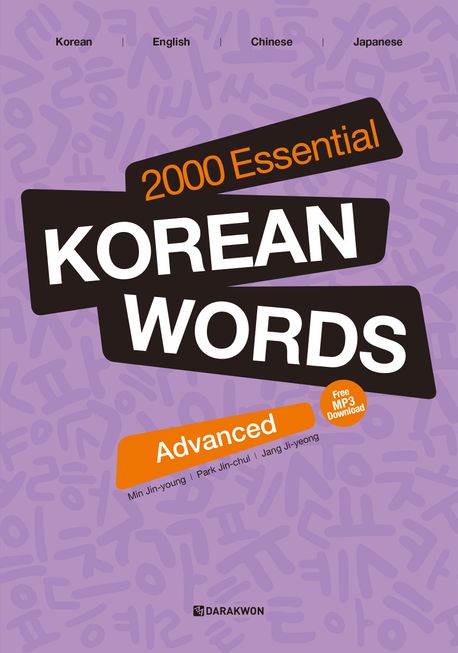
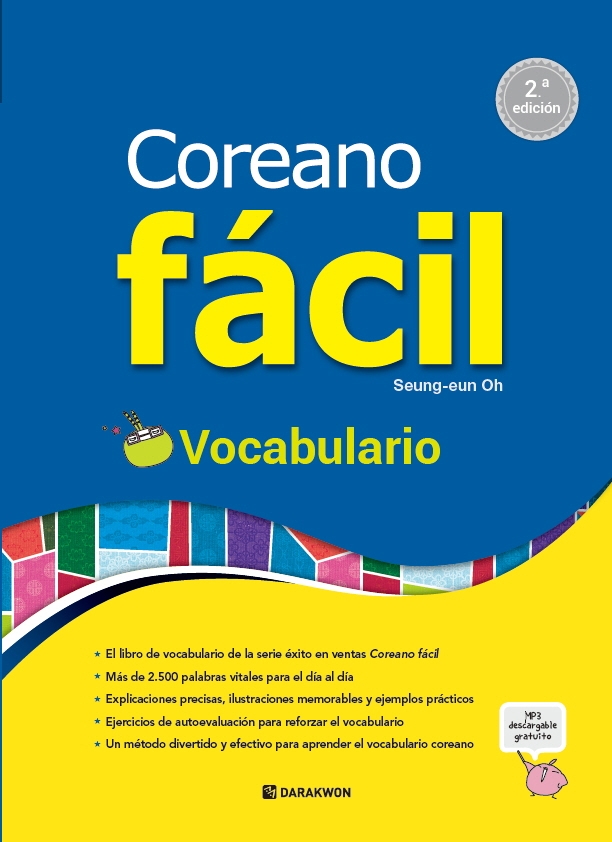
This book covers a total of approximately 2,000 words according to the following criteria. Selected the vocabulary words appeared more than 3 textbooks from the language institutes of ten universities on the advanced Korean level. • The words organized into fourteen topics. The provided example sentences are related to each topic focused on the example sentences used in textbooks and practical sentences frequently used in everyday life.• Useful word translations in English, Chinese, and Japanese!• The antonym, synonym, related word(s), and reference word(s) are provided in order to widen the students' vocabulary.• A review test similar with TOPIK with 'Let's Check'.• Through learning the Chinese characters, learners will be able to widen their vocabulary range.• Accurately recorded entry words and example sentences with MP3 files through QR codesTable of Contents머리말 Introduction 4이 책의 구성 및 활용 6How to use this book01 인간 1 People 1·人 1·人間 11 감정/감각 Emotions/Sensesㆍ感情/感觉ㆍ感情/感覚 16Let’s Check2 인상/성격 Impression/Personalityㆍ容貌/性格ㆍ印象/性格 29Let’s Check3 인지 행위 Cognitive Behaviorㆍ认知行为ㆍ認知行為 38Let’s Checkㆍ Korean through Chinese Characters 感 feelingㆍ感觉ㆍ感 4702 인간 2 People 2·人类 2·人間 21 신체/외양 Physical/Outward Appearanceㆍ身体/外表ㆍ身体/外見 50Let’s Check2 태도 Attitudeㆍ态度ㆍ態度 57Let’s Check3 행동/행위 Action/Behaviorㆍ行动/行为ㆍ行動/行為 69Let’s Checkㆍ Korean through Chinese Characters 變 to changeㆍ变ㆍ変 7803 삶 Life·生命·人生1 경조사 Family Eventㆍ喜事/丧事ㆍ慶事/弔事 80Let’s Check2 언어 행위 Speech Actㆍ语言行为ㆍ言語行為 86Let’s Check3 여가 생활 Leisure Lifeㆍ休闲生活ㆍ余暇生活 95Let’s Check4 인간관계 Human Relationsㆍ人际关系ㆍ人間関係 103Let’s Check5 일상 행위 Daily Behaviorㆍ日常行为ㆍ日常行為 113Let’s Checkㆍ Korean through Chinese Characters 相 each otherㆍ相ㆍ相 12104 의식주 The Necessities of Life·衣食住·衣食住1 식생활 Dietary Lifeㆍ饮食ㆍ食生活 124Let’s Check2 의생활 Clothing Lifeㆍ衣着ㆍ衣生活 133Let’s Check3 주생활 Housing Lifeㆍ居住ㆍ住生活 141Let’s Checkㆍ Korean through Chinese Characters 力 powerㆍ力量ㆍ力 14805 건강 Health·健康·健康1 건강 상태 Health Conditionㆍ健康状态ㆍ健康状態 150Let’s Check2 병/증상 Illness/Symptomㆍ疾病/症状ㆍ病気/症状 158Let’s Check3 치료 Treatmentㆍ治疗ㆍ治療 168Let’s Checkㆍ Korean through Chinese Characters 過 to be excessiveㆍ过分ㆍ過 17406 교육 Education·教育·教育1 교육 행정 Educational Administrationㆍ教育行政ㆍ教育行政 176Let’s Check2 적성/진로 Aptitude/Course in Lifeㆍ性向/出路ㆍ適性/進路 184Let’s Check3 철학/윤리 Philosophy/Ethicsㆍ哲学/伦理ㆍ哲学/倫理 192Let’s Check4 학문 용어 Academic Termㆍ学问用语ㆍ学問用語 199Let’s Check5 학문 행위 Academic Behaviorㆍ学问行为ㆍ学問行為 205Let’s Checkㆍ Korean through Chinese Characters 學 to learnㆍ学习ㆍ学 21607 사회생활 Social Life·社会生活·社会生活1 문제/해결 Problem/Solutionㆍ问题/解决ㆍ問題/解決 218Let’s Check2 사회 현상 Social Phenomenonㆍ社会现象ㆍ社会現象 229Let’s Check3 성공/실패 Success/Failureㆍ成功/失败ㆍ成功/失敗 238Let’s Check4 직장/직장 생활 Work/Life at Workㆍ职场/职场生活ㆍ職場/職場生活 249Let’s Checkㆍ Korean through Chinese Characters 成 to makeㆍ成就ㆍ成 25608 경제/경영 Economics/Business Administration·经济/经营·経済/経営1 경영 전략 Business Strategyㆍ经营策略ㆍ経営戦略 258Let’s Check2 경제 현상 Economic Phenomenonㆍ经济现象ㆍ経済現象 267Let’s Check3 경제 활동 Economic Activityㆍ经济活动ㆍ経済活動 275Let’s Check4 기업 경영 Business Managementㆍ企业经营ㆍ企業経営 282Let’s Check5 재무/금융 Finance/Bankingㆍ财务/金融ㆍ財務/金融 291Let’s Checkㆍ Korean through Chinese Characters 急 to be urgentㆍ急ㆍ急 29809 국가 Country·國家·国家1 법/질서 Law/Orderㆍ法律/秩序ㆍ法/秩序 300Let’s Check2 정치 Politicsㆍ政治ㆍ政治 310Let’s Check3 행정/사회 복지 Administration/Social Welfareㆍ行政/社会福利ㆍ行政/社会福祉 318Let’s Checkㆍ Korean through Chinese Characters 主 ownerㆍ主人ㆍ主 32510 문화/역사 Culture/History·文化/历史·文化/歴史1 대중문화 Popular Cultureㆍ大众文化ㆍ大衆文化 328Let’s Check2 역사 Historyㆍ历史ㆍ歴史 341Let’s Check3 전통문화 Traditional Cultureㆍ传统文化ㆍ伝統文化 349Let’s Checkㆍ Korean through Chinese Characters 意 meaningㆍ意思ㆍ意 35611 예술/스포츠 Arts/Sports·艺术/运动·芸術/スポーツ1 건축 Architectureㆍ建筑ㆍ建築 358Let’s Check2 문학 Literatureㆍ文学ㆍ文学 367Let’s Check3 스포츠 Sportsㆍ运动ㆍスポーツ 378Let’s Check4 예술 Artㆍ艺术ㆍ芸術 391Let’s Checkㆍ Korean through Chinese Characters 作 to make, to buildㆍ做,制造ㆍ作 40212 자연/환경 Nature/Environment·自然/环境·自然/環境1 기상/기후 Weather Condition/Climateㆍ气象/气候ㆍ気象/気候 404Let’s Check2 생태 Ecologyㆍ生态ㆍ生態 410Let’s Check3 자연 현상 Natural Phenomenonㆍ自然现象ㆍ自然現象 416Let’s Check4 재난/재해 Human Disaster/Natural Disasterㆍ灾难/灾害ㆍ災難/災害 424Let’s Check5 지형/지역 Topography/Regionㆍ地形/地域ㆍ地形/地域 433Let’s Checkㆍ Korean through Chinese Characters 物 itemㆍ物件ㆍ物 44213 과학/기술 Science/Technology·科学/技术·科学/技術1 교통/운송 Traffic/Transportationㆍ交通/运输ㆍ交通/運送 444Let’s Check2 정보/기술 Information/Technologyㆍ信息/技术ㆍ情報/技術 453Let’s Check3 통신/매체 Communication/Mediaㆍ通信/媒体ㆍ通信/メディア 465Let’s Checkㆍ Korean through Chinese Characters 度 lawㆍ法度ㆍ度 47414 성질 Properties·性质·性質1 속도/수량/크기 Speed/Quantity/Sizeㆍ速度/数量/大小ㆍ速度/数量/大きさ 476Let’s Check2 시간/시기 Time/Timingㆍ时间/时机ㆍ時間/時期 482Let’s Check3 의성어/의태어 Onomatopoeia/Mimetic Wordsㆍ拟声语/拟态语ㆍ擬音語/擬態語 490Let’s Check4 정도 Extentㆍ程度ㆍ程度 499Let’s Checkㆍ Korean through Chinese Characters 化 to becomeㆍ化ㆍ化 509부록 Appendix·附录·付録반의어/유의어, 접두사/접미사, 의존 명사 목록Antonyms/Synonyms, Prefixes/Suffixes, Bound Nouns 512ㆍ 유의어/반의어 Synonymsㆍ近义词ㆍ類義語 / Antonymsㆍ反义词ㆍ反対語 512ㆍ 접두사/접미사 Prefixesㆍ前缀ㆍ接頭辞 / Suffixesㆍ后缀ㆍ接尾辞 522ㆍ 의존 명사 Passive Verbsㆍ被动词ㆍ受身動詞 / Causative Verbsㆍ使动词ㆍ使役動詞 524정답 Answers 527색인 Index 532
“우리 N빵하자!” “진실의 미간이 나오네!” How well do you know these kinds of expressions that Korean people naturally and frequently use? Even if you are diligently studying Korean, when you see Korean subtitles on YouTube or read Korean comments on Instagram, it’s easy to feel like you are missing something. As our daily lives have changed since the advent of smart devices, frequently used words and phrases have also changed. “Everyday K-Lingo” reflects these changes, selecting the theme of “new daily life” using smartphones, social media, online shopping, content streaming platforms, delivery apps, KakaoTalk, etc. and including vocabulary and expressions that are frequently used in that daily life. Download Sample Pages However, just because one knows a lot of words doesn’t mean that one can express them easily. For example, if you want to say, “I left a comment on my favorite celebrity’s Instagram,” you need to know the vocabulary word for “comment” (“댓글) as well as the expression “to leave a comment” (“댓글을 달다”), and then you need to know how to connect “Instagram” and “to leave a comment” with the particle “에.” In this way, you must remember chunks of meaning rather than individual vocabulary units so you can quickly speak in Korean about a situation or action that comes to mind. To this end, “Everyday K-Lingo” presents vocabulary words in meaningful groups rather than as individual words. In addition, the book uses vivid Korean expressions to construct dialogue in a variety of situations, enabling students to learn how to use expressions in specific situations. It also includes rich Korean expressions such as “배 터질 것 같아 (I feel like my stomach is going to explode)” as well as non-standard words, buzzwords, and new words such as “찐맛집 (a truly delicious restaurant).” You will be able to naturally improve your Korean skills by reading interesting dialogues presented in 4-panel cartoons as easily as reading a webtoon, as well as by listening to audio files provided through QR codes. * Learn real Korean that Koreans use in their daily lives! The Korean language that Koreans actually use in YouTube subtitles, Instagram comments, and KakaoTalk conversations is usually difficult to learn from books. In addition, because there are many abbreviations, non-standard words, buzzwords, and new words, it’s often difficult to understand them unless you learn how to use them in certain situations. “Everyday K-Lingo” covers a variety of vocabulary words and expressions that Koreans frequently use in daily life, helping you learn real Korean. * Learn chunks of meaning so you can connect them in conversation! Just because you know a lot of vocabulary words doesn’t mean that you can easily express what you want to say. This is because it is difficult to lead a conversation if you do not know which vocabulary words are used together and which particles you must use to connect them. To this end, “Everyday K-Lingo” presents vocabulary in meaningful groups rather than as individual words. By recalling the chunks of meaning that you’ve memorized according to a specific situation or action, Korean conversation will be able to flow smoothly from your mouth. * Naturally learn Korean expressions in specific situations through 4-panel comics! By expressing specific situations from daily life through cartoons, this book makes it possible to learn Korean expressions in a fun and natural way. If you read it casually as if you were reading a webtoon and use the QR codes to listen to lively audio clips recorded by professional voice actors, you will be able to effectively learn daily conversation situations of Koreans. Table of Contents 서문 Preface 4이 책의 활용법 How to Use This Book 8목차 Table of Contents 12주요 등장인물 Main Characters 151 핸드폰을 새로 샀다 I Bought a New Cell Phone! 17 (1) New Cell Phone 18(2) Using a Cell Phone 24(3) Using an App 30(4) Cell Phone Problems 362 나도 SNS 한번 해 볼까? Should I Try Using Social Media Too? 47(1) Starting to Use Instagram 48(2) Instagram Posts 54(3) Using Instagram 60(4) Using YouTube 663 인터넷만 보면 다 사고 싶어 I Want to Buy Everything I See on the Internet 77(1) Online Shopping 78(2) Purchasing 84(3) Making an Inquiry 90(4) Issues and Returning 964 오늘은 하루 종일 넷플릭스 Today, I’m Watching Netflix All Day Long 107(1) Selecting Content 108(2) Watching Content 114(3) Evaluating Content 120(4) Canceling and Reasons 1265 저녁에 뭐 시켜 먹지? What Should We Order for Dinner? 137(1) Using the Delivery App 138(2) Confirming and Serving Delivery Food 144(3) Eating Food 150(4) Leaving Reviews 1566 우리 만날래? Want to Meet Up? 167(1) Deciding on a Place via KakaoTalk 168(2) Reserving and Notifying 174(3) At a Restaurant 180(4) Paying and Settling up 1867 행복해지고 싶다면 떠나라 If You Want to Be Happier, Leave 197(1) Before Reaching the Destination 198(2) At the Accommodation 204(3) At a Must-Eat Place 210(4) Taking and Sharing Photos 216Appendix 227Korean Translation 228Index 243
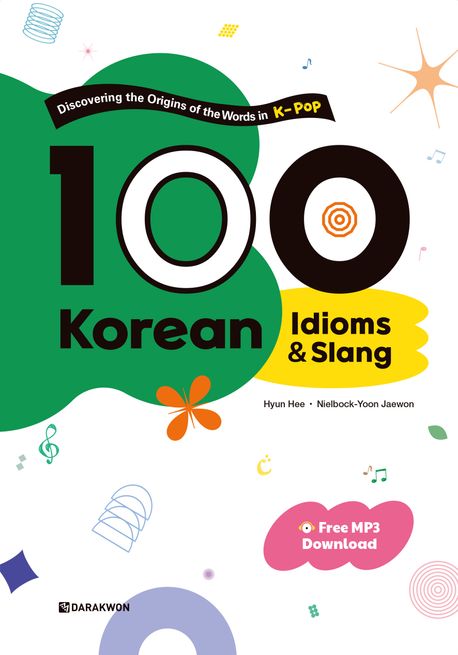
“When I listen to BTS’s song, the words ‘pumpkin seed’ are in there. Why on earth is that in there?” “In BLACKPINK’s song, when they miss someone, why are ‘intestines’ burning up?” Foreigners who like K-Pop and understand Korean lyrics to a certain degree might have seen the idioms and slang in the lyrics and tilted their head at these kinds of expressions. By presenting the idioms, four-character idioms, and slang hidden in K-Pop lyrics along with fun illustrations and example sentences, “100 Korean Idioms & Slang” was designed to help Korean-language learners at the intermediate level and above encounter and deeply understand Korean emotions and culture expressed in K-Pop lyrics, all while acquiring and having a command of various Korean expressions. Through simple quizzes and detailed explanations, this book allows readers to learn the origin and meaning of 50 idioms, 25 four-character idioms, and 25 slang words that appear in song lyrics, and helps them to understand K-Pop lyrics. Vivid descriptive examples and dialogues are presented for each expression, so you can practice and understand the context in which the expressions are used. Additionally, for each expression and example sentence, MP3 audio files of professional voice actors are provided via QR code, so you can check and follow along with the correct pronunciation and intonation. * Learn expressions that are actually used in K-Pop! Finds and explains the meaning of idiomatic expressions, four-character idioms, and slang words that are actually used in various K-Pop songs that are gaining popularity all around the world, so that foreign learners can grow more accustomed to Korean idiomatic expressions that can be difficult and unfamiliar. * You can infer the meaning of expressions through fun illustrations and quizzes to help you guess definitions! Idiomatic expressions aren’t frequently used with a literal meaning. With fun illustrations and simple quizzes, interest is maintained and you can do simple checks of your own knowledge, allowing learners to try to infer the meaning and usage of idiomatic expressions for themselves. * Through sound files, you can learn intonation and vivid nuance, and use expressions like a native speaker! Various idiomatic expressions and slang are used not just in K-Pop lyrics, but also in the daily lives of Korean people. Accordingly, by listening to and following along with sound files of professional voice actors for all expressions and example sentences, you can practice intonation and vivid nuance, and use expressions naturally like Koreans do in real-life conversations. * Check out idiomatic expressions found in a variety of K-Pop songs! Each expression introduces the K-Pop songs in which it is used, allowing learners to check out various songs in which an expression appears, aside from the songs they already know. If there’s a song you’re unfamiliar with, you can search for it and listen to it, and review while listening to the lyrics to hear the context in which the expression you learned is used. Table of Contents 서문 Preface 4일러두기 How to Use This Book 6차례 Table of Contents 10Part 1 관용어 Idioms 12 1. 간에 기별도 안 가다 For the message to not even reach the liver 142. 고삐를 늦추다 To loosen the reins 163. 골로 가다 To go to the valley 184. 골탕 먹다 To eat bone broth soup 205 귀에 못이 박히다 To get a callus in your ear 226. 그림의 떡 Rice cake in a picture 247. 김칫국부터 마시다 To drink kimchi soup first 268. 깡통을 차다 To wear a can 289. 깨가 쏟아지다 To rain sesame seeds 3010. 낙인 찍다 To brand 3211. 눈 깜짝할 사이 In the blink of an eye 3412. 눈 하나 깜짝 안 하다 To not blink an eye 3613. 눈앞이 캄캄하다 For it to be dark in front of one’s eyes 3814. 눈에 밟히다 To have one’s eye stepped on 4015. 대박이 나다 For a large gourd to sprout 4216. 뒷구멍으로 호박씨를 까다 To shell pumpkin seeds with your behind 4417. 딴전을 부리다/피우다 To act like it’s a different shop 4618. 말짱 도루묵 All sandfish 4819. 머리에 맴돌다 To hover in one’s head 5020. 바가지를 긁다 To scratch the bowl 5221. 바람을 피우다 To act like the wind 5422. 발이 떨어지지 않다 For one’s feet to not come up off the ground 5623. 배가 아프다 For one’s stomach to hurt 5824. 배꼽을 잡다 To grab one’s belly button 6025. 배알이 꼴리다 For one’s guts to be twisted 6226. 백기를 들다 To raise a white flag 6427. 본전도 못 찾다 To be unable to even find the principal 6628. 비위를 맞추다 To adjust one’s stomach 6829. 산통을 깨다 To break the box of fortunes 7030. 새빨간 거짓말 A bright red lie 7231. 속이 타다 For one’s insides to burn 7432. 손꼽아 기다리다 To wait counting on one’s fingers 7633. 시치미를 떼다 To take a name tag off a falcon 7834. 애가 타다 For one’s intestines to burn 8035. 약이 오르다 For one to be nettled 8236. 어깨가 무겁다 For one’s shoulders to be heavy 8437. 오지랖이 넓다 For the front of one’s clothes to be wide 8638. 이를 악물다 To grit one’s teeth 8839. 족쇄를 채우다 To put shackles on 9040. 쥐도 새도 모르게 Without a mouse or a bird realizing 9241. 직성이 풀리다 For one’s star to be released 9442. 찬물을 끼얹다 To douse with cold water 9643. 총대를 메다 To carry the gunstock 9844. 탈을 쓰다 To wear a mask 10045. 통이 크다 For the size to be big 10246. 퇴짜를 놓다/맞다 To mark/to be marked with the character for “reject” 10447. 트집을 잡다 To grab at a hole 10648. 풀이 죽다 For the starch to give way 10849. 학을 떼다 To get rid of malaria 11050. 허리띠를 졸라매다 To tighten one’s belt 112Part 2 사자성어 Four-Character Idioms 11451. 경거망동 To behave frivolously and foolishly 11652. 고진감래 After all of the bitterness comes sweetness 11853. 금상첨화 Adding flowers on top of silk 12054. 기고만장 For one’s energy to rise to a height of 10,000 jang 12255. 노심초사 To be so concerned with something that one burns with worry 12456. 대기만성 For a large bowl to be completed late 12657. 배은망덕 To forget and betray the favor you received from someone 12858. 백발백중 To shoot 100 times and hit 100 times 13059. 백전백승 To fight 100 times and win 100 times 13260. 사필귀정 Everything will certainly return to the proper path 13461. 안하무인 Below one’s eyes, nobody exists 13662. 약육강식 The flesh of the weak becomes the food of the strong 13863. 오매불망 To be unable to forget while asleep or awake 14064. 우유부단 To be so soft that one can’t make a decision 14265. 유유자적 To live as one pleases, inleisure and relaxation 14466. 이심전심 To communicate from heart to heart 14667. 이열치열 To use heat to deal with heat 14868. 작심삼일 A firmly made up mind cannot last 3 days 15069. 절치부심 To gnash one’s teeth and for one’s mind to be troubled 15270. 조강지처 A wife who sared a meal of dregs of liquor and rice bran 15471. 천방지축 The direction of the heavens and the axis of the earth 15672. 천생연분 A relationship decided by the heavens 15873. 칠전팔기 To fall down seven times and get up eight times 16074. 함흥차사 A government official dispatched to Hamheung 16275. 호시탐탐 A tiger stare and glowers 164Part 3 유행어 Slang 16676. 극혐 Ultra hate / Ultra disgusting 16877. 깜놀 Shocked / Shook 17078. 꼰대 Kkondae / Boomer 17279. 꽃길만 걷자 Let’s only walk on paths of flowers / Everything is coming up roses 174 80. 노답 No answer / No solution 17681. 노잼 No fun / Not funny 17882. 눈누난나 Nunu nana 18083. 라떼는 말이야 A latte is... / Back in my day 18284. 멘붕 Mental collapse / Mental breakdown 18485. 무야호 Mu-yahoo 18686. 소확행 Small but certain happiness 18887. 솔까 Honestly 19088. 심쿵 Heart boom / Heart pounding 19289. 썸 타다 To feel “Some” / To be in a situationship 19490. 어그로 Aggro / Provoking / Trolling 19691. 열폭 Inferiority explosion 19892. 인싸 Insider / Social / Popular 20093. 입덕하다 To become a fan / To get hooked 20294. 지못미 Sorry I couldn’t protect you 20495. 쩔다 To be salted / To be awesome / To be very good or bad 20696. 최애 Most loved / Bias 20897. 취향 저격 Preference shot / My style 21098. 하드 캐리 Hard carry / To carry 21299. 흑역사 Dark history / Dark past 214100. 1도 모르다 To not know / To know nothing / To have no idea 216부록 Appendix 218퀴즈 정답 Quiz Answer 220의미와 용례 한국어 설명 Meaning & Origin in Korean 225K-Pop 색인 Index of K-Pop Songs 248100개 표현 목록 Alphabetical Index of 100 Expressions 260
Remainder copy: Slightly damaged during transport. Book spine and cover dented. Otherwise new copy Este libro es el diccionario Español-Coreano más comprensivo y actualizado.
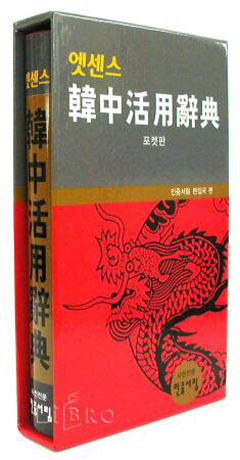
Dieses Wörterbuch im Kompaktformat enthält einen sorgfältig ausgewählten und umfangreichen Wortschatz und ist so eine handliche Alternative zu den großen Minjung Essence Wörterbüchern. >seit vielen Jahren bewährt >ca. 50.000 Einträge >handliches Format >im stabilen Kartonschuber
This dictionary is a comprehensive yet practical guide packed with the words and expressions most commonly used in everyday conversation. It features: - Romanization as a guide to pronunciation - Over 6500 essential entries with clear and precise definitions - Over 12000 practical and useful examples - Hangeul-in-a-Hurry chart for a quick reference - And more...
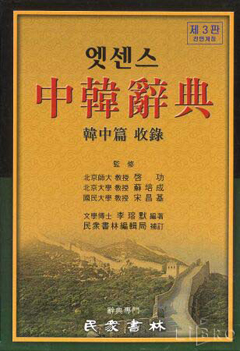
VERY COMPREHENSIVE Monolingual Korean Dictionary -백과 사전을 겸한 참신한 종합 국어 대사전- ο 온갖 분야의 정보가 골고루 담긴 풍부한 어휘와 정확한 주석 ο "한글 맞춤법"과 "학교 문법" 체계에 준거한 전면 개정 ο "표준 발음법"에 따른 규범적인 표준 발음의 확정 ο "외래어 표기법"에 의한 외래어의 한글 표기 통일
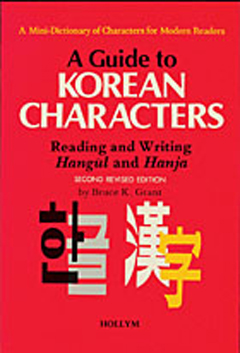
About This Book - Learning Korean is easier when you know Chinese characters! - Learn frequently used Chinese characters in Korean! - Enhance your vocabulary by using words written in Chinese characters! - This book will make it easy to read and write Chinese characters! Why this book? This book is intended for foreign students learning Korean. It was developed by the Korean Language Education Center in the Language Research Institute of Seoul National University reflecting the needs of the learners of Chinese characters. For teachers, the book shows how to teach the Chinese characters that learners often find difficult. It is composed of the most frequently used Chinese characters. The beginner level is focused on learning characters and the intermediate level on word formation. The systematic structure of the book will help learners grasp Chinese characters easily. - The Chinese characters in the textbook were chosen to expand the Korean vocabulary. - You can expand the Korean vocabulary by learning frequently used Chinese characters in Korean and the characters often used to make compound words. - This book has a systematic structure: the beginner level is to learn single characters and the intermediate level is to learn words written in Chinese characters. - You can practice the characters learned in < Today�s Characters > in context, and also see how a character is really used in a word. - Through the various exercises in < Let�s Practice > , you can practice and write the Chinese characters that acquired in each chapter.
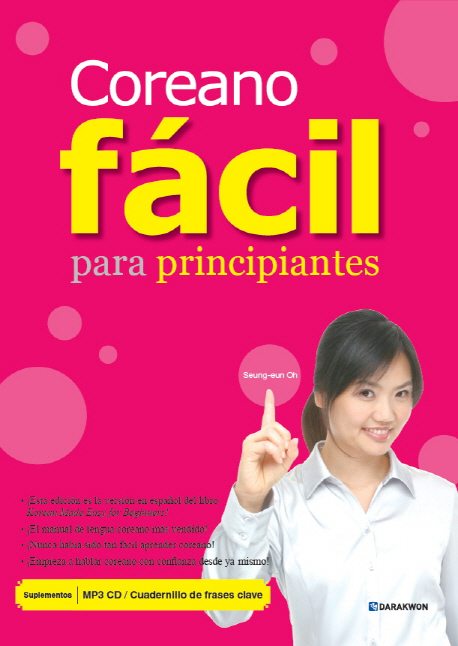
Este libro fue concebido para las personas de habla hispana que desean aprender el idioma coreano. Al hacerse mas estrecha la relacion entre Corea y el mundo de habla hispana, se hace mas necesario el material que contribuya a desarrollar dicha relacion.
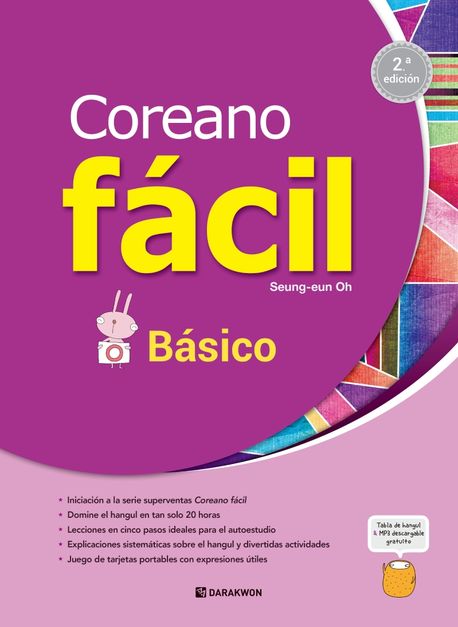
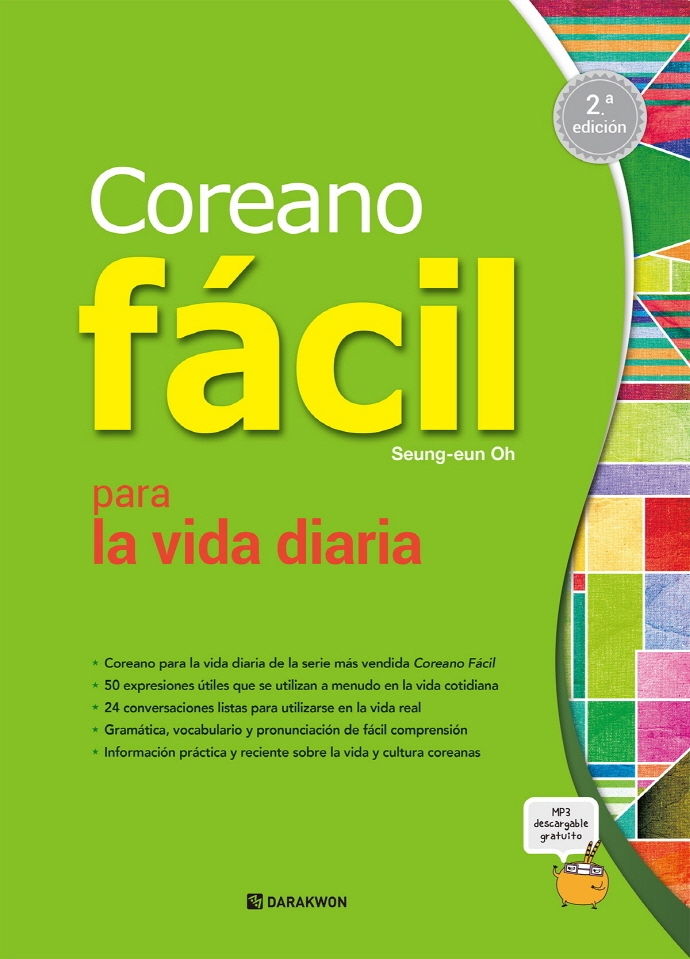
Click here to download the audiofiles This book is a part of the Korean Made Easy series, a bestseller in self-study Korean language books, now published in a Spanish version for Spanish speakers. This volume helps beginner students easily learn Hangul, pronunciation, basic vocabulary and core expressions. Each chapter is laid out in the 5 steps of “introduction-lesson-reading-listening-activities,” so that students can master Hangul in just 20 sessions. Readers will be able to study Hangul and basic vocabulary in a fun way through various forms of questions. The included Korean poster and portable expression cards aid readers in becoming familiar with Hangul and Korean expressions at any time and any place. *A customized Korean vocabulary book for Spanish speakers!* For Spanish-speaking students who wish to become fluent in Korean, the book provides a customized tool for learning Korean. *Detailed explanations about the letters and pronunciation of Hangul for beginners!* Even beginners can effectively learn the unfamiliar alphabet of Hangul by reading about how the letters were designed. Similar pronunciations in Spanish are suggested as to help Spanish speakers better understand the Korean alphabet. Native pronunciation is provided through QR codes and MP3 files. *Various activities and fun questions help students master Hangul and its pronunciation!* Pronunciation and letters which may be confusing for non-native speakers can be practiced through various activities and game-like training questions. A fun way to learn Hangul and its pronunciation. *Portable study aids for easy learning!* Included in the book are 24 useful expression cards essential for beginning students. Learning basic Korean expressions has never been easier. A Korean language poster illustrating the combination of vowels and consonants, numbers, etc. helps students learning Korean for the first time become familiar with the structure of Hangul. Contents 머리말 Prólogo 04 일러두기 Cómo utilizar este manual 06 차례 Índice 10 내용 구성표 Tabla de contenidos 12 Sección 1 Introducción al hangul 14 Sección 2 Peculiaridades de las vocales y las consonantes coreanas 18 Sección 3 Peculiaridades de las frases en coreano 21 Capítulo 1 Seis vocales simples ㅏ ㅓ ㅗ ㅜ ㅡ ㅣ 26 Capítulo 2 Tres consonantes simples ㅁ ㄴ ㄹ 34 Capítulo 3 Seis consonantes simples ㅂ ㄷ ㅅ ㅈ ㄱ ㅎ 44 Capítulo 4 Las consonantes ㅁ ㄴ ㄹ ㅇ ㅂ ㄷ ㅅ ㅈ ㄱ ㅎ en posición posvocálica 56 Capítulo 5 Cuatro diptongos con [j] ㅑ ㅕ ㅛ ㅠ 70 Capítulo 6 Dos vocales simples ㅐ ㅔ y dos diptongos con [j] ㅒ ㅖ 82 Capítulo 7 Cuatro consonantes aspiradas ㅍ ㅌ ㅊ ㅋ 92 Capítulo 8 Siete diptongos ㅘ ㅝ ㅙ ㅞ ㅚ ㅟ ㅢ 108 Capítulo 9 Cinco consonantes tensas ㅃ ㄸ ㅆ ㅉ ㄲ 122 Capítulo 10 Las consonantes ㅍ ㅌ ㅊ ㅋ ㅆ ㄲ en posición final y los grupos de dos consonantes en posición final 136 Revisión final 150 부록Ⅰ AnexoⅠ 정답 Clave de respuestas 154 듣기 대본 Transcripciones de las audiciones 162 색인 Glosario 171 부록Ⅱ AnexoⅡ 24개의 중요 표현 카드 Veinticuatro tarjetas con expresiones comunicativas útiles 183
Mängelexempar: Buchumschlag an den Kanten berieben, sonst neu und einwandfrei Damaged Copy: Cover slightly rubbed at edges, otherwise new copy
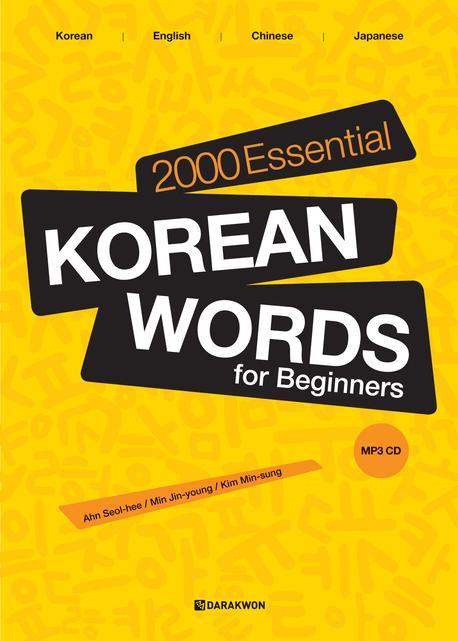
Download MP3 Files here This book covers a total of approximately 2,000 words according to the following criteria. Selected the vocabulary words appeared more than 3 textbooks from the language institutes of nine universities and two private institutes on the basic first and second level Korean. • The words organized into fourteen topics. The provided example sentences are related to each topic focused on the example sentences used in textbooks and practical sentences frequently used in everyday life• Useful word translations in English, Chinese, and Japanese!• The antonym, synonym, honorific form, low form, related word(s), and reference word(s) are provided in order to widen the students' vocabulary.• A review test similar with TOPIK with 'Let's Check'.• Through learning the Chinese characters, learners will be able to widen their vocabulary range.• Accurately recorded entry words and example sentences available through MP3 downoad Contents 1 약속하기 Making an Appointment Let’s Check!2 인간관계 Human Relationships Let’s Check!3 직장 생활 Office Life Let’s Check!4 하루 일과 Daily Work Let’s Check!• Korean through Chinese Characters 員 a member 06 여가 생활 Leisure1 여행 Travel Let’s Check!2 운동 Exercise Let’s Check!3 음악 Music4 취미 Hobbies Let’s Check!• Korean through Chinese Characters 出 to go out 07 날씨 Weather 1 계절 Seasons2 일기예보 Weather Forecast Let’s Check!• Korean through Chinese Characters 新 to be new 08 시간 Time1 날짜 Date Let’s Check!2 시간 Time Let’s Check!• Korean through Chinese Characters 日 a day 09 패션 Fashion 1 미용 Beauty Care 2 소품 Accessories 3 의류 Clothing Let’s Check!• Korean through Chinese Characters 物 a thing 10 경제활동 Economic Activities1 가게/시장 Store/Market Let’s Check!2 경제 Economy 3 쇼핑 Shopping Let’s Check!• Korean through Chinese Characters 入 to enter 11 교통/통신 Transportation/Communication1 길 찾기 Finding the Way 2 방향 Directions Let’s Check!3 우편 Mail4 위치 Locations5 전화 Telephone Let’s Check!6 탈것 Vehicles Let’s Check!• Korean through Chinese Characters 通 to be connected 12 장소 Places1 건물 Buildings 2 길 Roads Let’s Check!3 도시 Cities 4 동네 Neighborhoods5 서울 Seoul Let’s Check!• Korean through Chinese Characters 場 a place 13 집/자연 House/Nature 1 동식물 Animals and Plants 2 자연환경 Natural Environment Let’s Check!3 전기/전자 제품 Electric/Electronic Appliances4 집안 Household 5 집안 가구/물건 Household Furniture/Goods Let’s Check!6 집안 구조 Structure of the House 7 집안일 Housework Let’s Check!• Korean through Chinese Characters 家 a house 14 문화 Culture 1 대중매체 Mass Media2 사회 Society Let’s Check!3 영화/연극 Movies/Plays4 예술/문학 Art/Literature 5 전통문화 Traditional Culture Let’s Check!• Korean through Chinese Characters 動 to move 15 기타 Etc.1 기타 Etc.• Let’s Check! 부록 Appendix추가 어휘 Additional Vocabulary • 국가명 Nations • 색깔 Colors • 운동 Sports • 가계도 Family Tree • 신체 부위 명칭 The Names of Body Parts• 착용 동사 Verbs Related to Clothing and Accessories• 띠 The Chinese Zodiac Signs • 요일 Days of the Week• 월 Months •• 숫자 Numbers • 접속부사 Conjunctive Adverbs• 준말 Abbreviations • 반의어 Antonyms• 유의어 Synonyms • 단위명사 Counting Units • 전국 지도 National Map • 서울 지도 Seoul Map 불규칙 동사 • 형용사 활용표 Table of Irregular Verbs and Adjectives정답 Answer 색인 Index
With the second book of our best-selling “My First 500 Korean Words” series, you can effectively expand your Korean vocabulary from a beginner to an intermediate level. Audio files for this book are available on the TTMIK website.Tired of memorizing word lists without context?Feel like your Korean vocabulary is limited?With this book, you can learn 500 new Korean words and thousands of related words and expressions through short stories, making it easier to understand, retain, and use new words.This book is the perfect choice for those looking to build a strong vocabulary foundation and level up their Korean skills from a beginner to an intermediate level.Following the same structure as the first book, each lesson of “My First 500 Korean Words Book 2” presents 10 new words through a short story where the words are put together into meaningful context. Designed for upper beginners to intermediate learners, this book covers more types of words and more advanced grammar points compared to the previous book.Why You’ll Love This Book You can learn 500 words in context that are used daily by native Korean speakers. With the exercises and review quizzes, you can boost your retention of new words. The lessons are simple enough to complete daily, which will keep you motivated. You’ll naturally pick up complex conjugation and other grammar points while reading stories. ContentsPrefaceHow to Use This BookIntroductionWords Day 01-10Quiz Day 01-10Words Day 11-20Quiz Day 11-20Words Day 21-30Quiz Day 21-30Words Day 31-40Quiz Day 31-40Words Day 41-50Quiz Day 41-50AnswersIndex
Minjungseorim's Essence edition stands for a family of comprehensive dictionaries presented in a functional format. This dictionary has more than 150.000 main entries and 36.000 idiomatic expressions and comes in a robust cardboard case. Please note that the Korean entries are not romanized. The fourth edition was edited with a focus on how readers can use English—now established as a global lingua franca—more easily, flexibly, and correctly across various fields. To achieve this, a large body of newly collected material was selectively added with an emphasis on practical use, while existing content was carefully reviewed, refined, and supplemented from a fresh perspective. The main points emphasized in this revision are as follows: ■ The font size has been enlarged as much as possible to improve readability. ■ Important new words and expressions from science, electronics, economics, society, current affairs, and everyday life have been substantially added and reinforced. ■ Lively, practical example sentences that can be directly applied to professional writing and conversation are included. ■ Reference sections related to headwords have been expanded to provide broader and deeper background knowledge. ■ The appendix contains a wide range of up-to-date materials that can serve as useful references across various fields. 제4판은 세계 공통어로 자리 잡은 영어를 독자들이 어떻게 하면 보다 쉽고 유연성 있게 각 분야에서 올바르게 활용할 수 있을까 하는 점에 초점을 맞춰 편집 작업을 진행하였다. 이를 위하여 그동안 수집한 많은 새로운 자료들을 실용 위주로 선별 보충하였고, 기존의 내용들을 새로운 시각에서 일일이 검토하여 다듬고 보완하였다. 개정 작업에서 역점을 둔 점은 아래와 같다. ■ 활자의 크기를 최대한으로 확대하여 보기 쉽게 하였다. ■ 새로운 과학ㆍ전자ㆍ경제ㆍ사회ㆍ시사ㆍ일상생활 따위에서 중요 신어ㆍ어구 등을 대폭 보충ㆍ보강하였다. ■ 실무 영작문ㆍ회화 등에 그대로 활용할 수 있는 살아 있는 예문을 수록하였다. ■ 표제어에 관련된 참고란을 증설하여 관련 사항에 대한 폭넓은 지식을 얻을 수 있도록 하였다. ■ 부록에는 최신 자료를 바탕으로 여러 분야에서 참고가 될 수 있는 다양한 내용을 갖추었다.
Compact and functional English-Korean pocket dictionary This is a mini dictionary that is easy to carry and use. It contains 35,000 vocabularies and 10,000 idioms. Basic words, high school essential words, and university level words are classified and displayed, and an irregular verb table is included as an appendix at the end. 휴대와 사용이 간편한 미니 사전으로 작은 크기의 사전에 3만 5천 여개의 어휘와 1만 여개의 숙어 등 풍부한 어휘를 수록하고 있다. 기본어, 고교 필수어, 대학 교양어 수준의 단어를 구분하여 표시하였으며, 끝 부분에는 불규칙 동사표를 부록으로 실었다.
Dieses neu bearbeitete Wörterbuch aus der Essence Reihe ist derzeit das umfangreichste Deutsch-Koreanisch Wörterbuch. Es wurde unter der Leitung von Prof.Huh Hyung-kun vom Institut für deutschsprachige Literatur und Kultur an der Seoul National University in 5-jähriger Zusammenarbeit von 40 Germanisten erstellt. Diese neue veränderte und erweiterte Ausgabe unterscheidet sich von den früheren Ausgaben durch die folgenden Eigenschaften und Verbesserungen: Aufnahme von umfangreichem neuen Vokabular und entsprechender Beispielsätze Das bereits vorhandene Vokabular wurde entsprechend dem Sprachgefühl der jüngeren (Hangul-) Generation revidiert und die Beispielsätze aktualisiert. Erläuterungen mit teilweise japanisch gefärbten und altmodischen chinesischen Wortbegriffen wurden überarbeitet. Straffung der Organisation des Vokabulars und klare Ordung der Eintragungen für eine optimale Übersichtlichkeit. Übersetzung der meist chinesischen Lehnwörter für Fachtermini und Abkürzungen in ein verständliches Koreanisch. Die leicht verständlichen Lehnwörter wurden beibehalten. So spricht das Wörterbuch sowohl Benutzer der jüngeren als auch der älteren Generation an. Erweiterung des Anhangs Auf Mängelexemplare dieses Titels gewähren wir 15% Rabatt! Fragen Sie uns!