Product information "Baek: I Want to Die but I Want to Eat Tteokbokki"
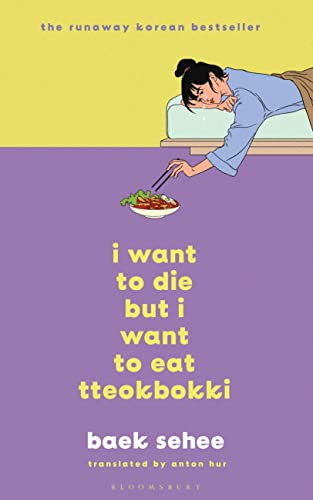
THE PHENOMENAL KOREAN BESTSELLER TRANSLATED BY INTERNATIONAL BOOKER SHORTLISTEE ANTON HUR 'Will strike a chord with anyone who feels that their public life is at odds with how they really feel inside.' Red PSYCHIATRIST: So how can I help you? ME: I don't know, I'm - what's the word - depressed? Do I have to go into detail?
Baek Sehee is a successful young social media director at a publishing house when she begins seeing a psychiatrist about her - what to call it? - depression? She feels persistently low, anxious, endlessly self-doubting, but also highly judgemental of others. She hides her feelings well at work and with friends; adept at performing the calmness, even ease, her lifestyle demands. The effort is exhausting, overwhelming, and keeps her from forming deep relationships. This can't be normal.
But if she's so hopeless, why can she always summon a desire for her favourite street food, the hot, spicy rice cake, tteokbokki? Is this just what life is like?
Recording her dialogues with her psychiatrist over a 12-week period, Baek begins to disentangle the feedback loops, knee-jerk reactions and harmful behaviours that keep her locked in a cycle of self-abuse. Part memoir, part self-help book, I Want to Die but I Want to Eat Tteokbokki is a book to keep close and to reach for in times of darkness.
0 of 0 reviews
Average rating of 0 out of 5 stars
Leave a review!
Share your experiences with other customers.
Login
No reviews found. Share your insights with others.
의심 없이 편안하게 사랑하고 사랑받고 싶은 한 사람의 이야기
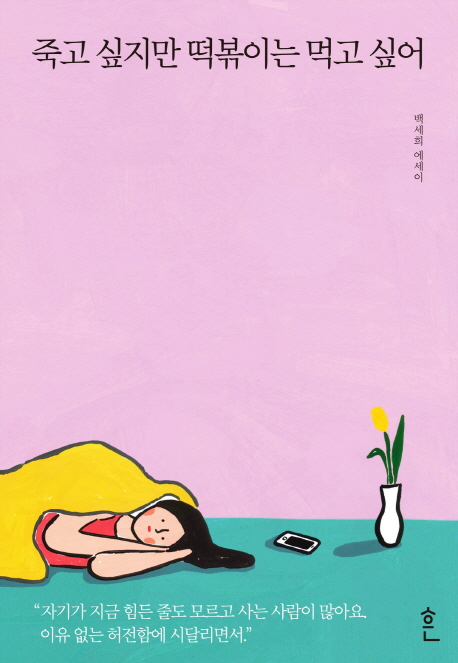
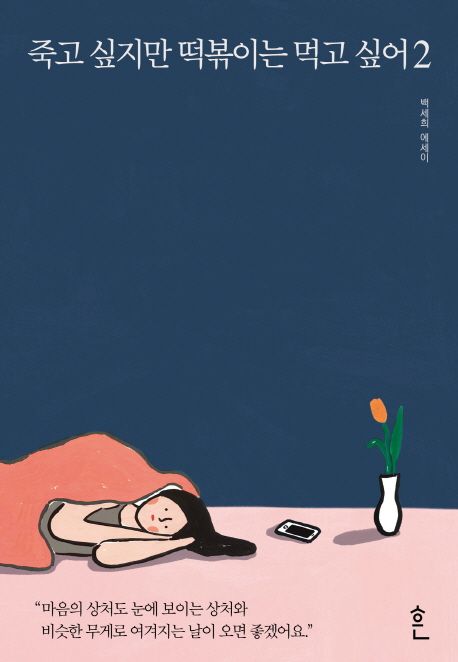
10년 넘게 기분부전장애(가벼운 우울 증상이 지속되는 상태)와 불안장애를 겪으며 정신과를 전전했던 저자와 정신과 전문의와의 12주간의 대화를 엮은 『죽고 싶지만 떡볶이는 먹고 싶어』. 지독히 우울하지도 행복하지도 않은 애매한 기분에 시달렸고, 이러한 감정들이 한 번에 일어날 수 있다는 사실을 알지 못해서 괴로웠던 저자는 2017년 잘 맞는 병원을 찾아 약물치료와 상담치료를 병행하고 있다. 이 책은 저자의 치료 기록을 담고 있다. 사적인 이야기가 가득하지만 어두운 감정만 풀어내기보다는 구체적인 상황을 통해 근본적인 원인을 찾고, 건강한 방향으로 나아가는 것에 중점을 두고 있다. 겉보기에는 멀쩡하지만 속은 곪아 있는 사람들, 불안 속에 하루하루를 버티고 있는 사람들에게 이제까지 간과하고 있었지만 본인으로부터 나오고 있을지 모를 또 다른 소리에 귀 기울여보게 한다.
2026년은 대한민국 산업화를 위해 국가 노동자로 독일에 이주했던 수많은 파독간호사들을 기념하는 역사적 좌표가 되는 해이다. 파독
간호사 인터뷰집, 독일교육 등 그동안 독일과 한국의 증언과 고백언어들을 들려주었던 박경란 작가가 그간의 경험과 관점을 모아
하나의 세계관을 만들어 그의 첫 장편소설을 선보인다. 『안녕, 홍이』는 파독간호사 60주년이 되는 2026년 1월 30일
출간된다.
이 작품은 파독 간호사 60주년이라는 역사적 좌표 위에서, 일본군 ‘위안부’ 피해자, 강제 징용, 전쟁과 분단, 파독 여성 노동자 등 한국의 근현대사의 집단 기억을 한 여성의 기억 안에 봉인한 ‘기억의 계보 서사 문학’이다.
독일 파독 간호사로 일한 이모의 장례식에 참석한 차혜경은 이모의 친구 조현자와 그의 딸 은수, 그리고 조현자의 엄마 홍이, 이렇게
3세대의 기억의 계보를 시공간을 넘나들며 마주하게 된다. 작품은 여성의 몸과 침묵, 생존의 방식이 어떻게 세대를 건너 ‘계보’가
되어 오늘에 도착했는지를 액자소설 구성으로 들려준다. 기록과 문학의 경계를 넘나드는 작가의 상상력은 독자들에게 ‘기억이 어떻게
계보가 되어 역사가 되는가’를 잘 보여 준다.
소설의 계보는 개인사와 역사적 사건에 머무르지 않고, 일본군 위안부 피해자들의 침묵, 강제 징용 노동자의 몸의 기억, 전쟁과
분단의 트라우마, 파독 여성 노동자의 이주 경험, 그리고 그 모든 것을 이어받은 딸의 삶, 이 기억과 상처, 생존 방식, 그리고
희망이 세대에서 세대로 이어진다.
Contents:
1.똥례이모
2. 은수
3.엄마현자
4. 홍이
5. 서은수 그리고 조현자
6.파독간호사 현자
7.안녕, 내딸
8. 안녕, 엄마
작가의 말
2026 wird zu einem historischen Bezugspunkt im Gedenken an die zahlreichen koreanischen Krankenschwestern, die als staatlich entsandte Arbeitskräfte zur Industrialisierung Südkoreas nach Deutschland auswanderten. Die Autorin Park Kyung-ran, die bislang durch Interviewsammlungen mit nach Deutschland entsandten koreanischen Krankenschwestern sowie durch Werke über deutsche Bildung die Stimmen und Bekenntnissprachen Deutschlands und Koreas hörbar gemacht hat, bündelt ihre bisherigen Erfahrungen und Perspektiven zu einem eigenen Weltbild und legt mit diesem Werk ihren ersten Roman vor. „안녕, 홍이“ (Hallo, Hong-i) erscheint am 30. Januar 2026, dem 60. Jahrestag der Entsendung koreanischer Krankenschwestern nach Deutschland.
Dieses Werk ist eine „genealogische Erinnerungserzählung“, die auf dem historischen Bezugspunkt des 60-jährigen Jubiläums der nach Deutschland entsandten Krankenschwestern die kollektiven Erinnerungen der modernen und zeitgenössischen koreanischen Geschichte – darunter die Opfer der japanischen Militär-“Trostfrauen”, Zwangsarbeit, Krieg und Teilung sowie weibliche Arbeitsmigration nach Deutschland – im Gedächtnis einer einzelnen Frau versiegelt.
Cha Hye-kyung, die an der Beerdigung ihrer Tante teilnimmt, die als koreanische Krankenschwester in Deutschland gearbeitet hatte, begegnet dort der Freundin ihrer Tante, Jo Hyun-ja, deren Tochter Eun-su und Jo Hyun-jas Mutter Hong-i. So entfaltet sich vor ihr die Genealogie der Erinnerungen über drei Generationen hinweg, die Zeit und Raum überschreitet. In einer Rahmenerzählung zeigt der Roman, wie der weibliche Körper, das Schweigen und die Strategien des Überlebens generationenübergreifend zu einer „Genealogie“ werden und bis in die Gegenwart reichen. Die Vorstellungskraft der Autorin, die die Grenzen zwischen Dokumentation und Literatur überschreitet, veranschaulicht eindrücklich, wie Erinnerung zu Genealogie und schließlich zu Geschichte wird.
Die Genealogie des Romans bleibt nicht bei persönlichen Lebensgeschichten oder historischen Ereignissen stehen. Sie verbindet das Schweigen der Opfer der japanischen Militär-Trostfrauen, die körperlich eingeschriebenen Erinnerungen von Zwangsarbeitern, die Traumata von Krieg und Teilung, die Migrationserfahrungen koreanischer Arbeiterinnen in Deutschland und das Leben der Töchter, die all dies erben. Erinnerungen, Wunden, Überlebensweisen und Hoffnung werden so von Generation zu Generation weitergegeben. (KI-Übersetzung)
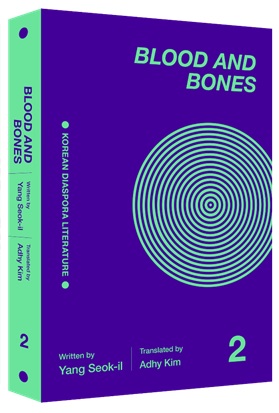
It is Osaka in the 1930s. Kim Shunpei, a migrant from Jeju Island, works at a fish cake factory and is widely feared for his physical strength and brutality. He moves through life in the only way he knows how: by terrorizing those around him.A bestseller in Japan, this harrowing, kaleidoscopic novel portrays the violent and eventful life of a flawed man modeled after the author's own father.Publisher’s ReviewBlood and Bones, originally published in Japanese in 1998, follows a half-century of the violent, eventful life of migrant worker Kim Shunpei in Osaka. Feared by coworkers, bosses, neighbors, family members, and gangs alike, he moves through life in the only way he knows how: by terrorizing those around him. Yang Seok-il's vivid portrait of Kim Shunpei is modeled after the life of his own father. Built from intimate memories of struggle in the gritty underbelly of Osaka, Yang's harrowing, kaleidoscopic novel depicts how patriarchal violence and restricted life chances can wrack a minority Korean community both during and after Japan's empire.About the AuthorYang Seok-il (b. 1936- )Born in Osaka, Japan, to a couple from Korea’s Jeju Island who settled in Japan during the Japanese occupation of the Korean Peninsula, Yang, whose Japanese name is Yan Sogiru, graduated from Osaka Prefectural Kozu High School and did odd jobs including driving a taxi after a business he pursued failed. His 1980s non-fiction work Takushi doraiba nisshi (Taxi Driver Diary), based on his experience as a cabbie, was made into the 1993 critically acclaimed film All under the Moon. He also won the 1998 Yamamoto Shugoro Prize of Japan for his semi-autobiographical novel Blood and Bones, which was also made into a film released in 2004.About the TranslatorAdhy Kim is a writer, scholar, and teacher of Asian and Asian American literature and culture.ContentsBlood and Bones 2Chapter 14Chapter 15Chapter 16Chapter 17Chapter 18Chapter 19Chapter 20Chapter 21Chapter 22Chapter 23Chapter 24Chapter 25Chapter 26