Koreanische Romane in englischer Übersetzung
Filter products
“A love story between friends. It is so well written. [Kyung-sook Shin] has this use of language that is just beautiful and poetic. It’s a great book if you’re looking to escape.” —Chelsea Handler, #1 New York Times bestselling authorHow friendship, European literature, and a charismatic professor defy war, oppression, and the absurd Set in 1980s South Korea amid the tremors of political revolution, I’ll Be Right There follows Jung Yoon, a highly literate, twenty-something woman, as she recounts her tragic personal history as well as those of her three intimate college friends. When Yoon receives a distressing phone call from her ex-boyfriend after eight years of separation, memories of a tumultuous youth begin to resurface, forcing her to re-live the most intense period of her life. With profound intellectual and emotional insight, she revisits the death of her beloved mother, the strong bond with her now-dying former college professor, the excitement of her first love, and the friendships forged out of a shared sense of isolation and grief. Yoon’s formative experiences, which highlight both the fragility and force of personal connection in an era of absolute uncertainty, become immediately palpable. Shin makes the foreign and esoteric utterly familiar: her use of European literature as an interpreter of emotion and experience bridges any gaps between East and West. Love, friendship, and solitude are the same everywhere, as this book makes poignantly clear.
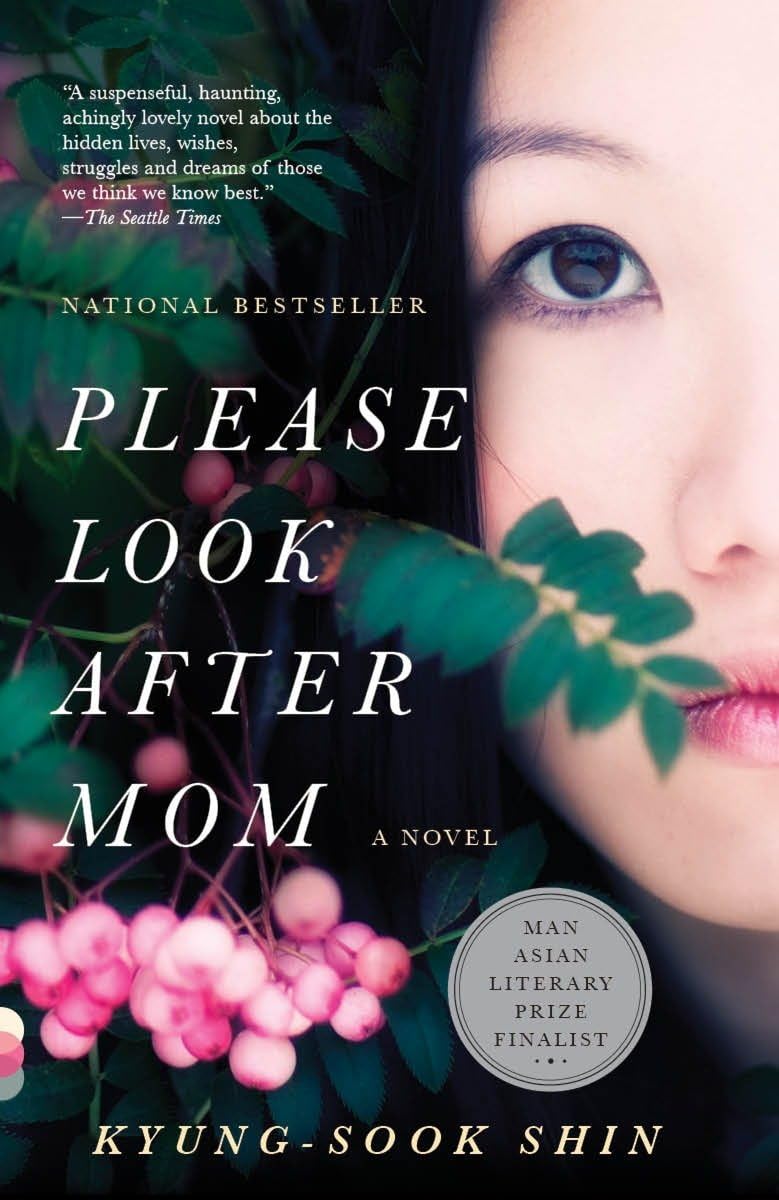
NATIONAL BESTSELLER • WINNER OF THE MAN ASIAN LITERARY PRIZEWhen sixty-nine-year-old So-nyo is separated from her husband among the crowds of the Seoul subway station, her family begins a desperate search to find her. Yet as long-held secrets and private sorrows begin to reveal themselves, they are forced to wonder: how well did they actually know the woman they called Mom?
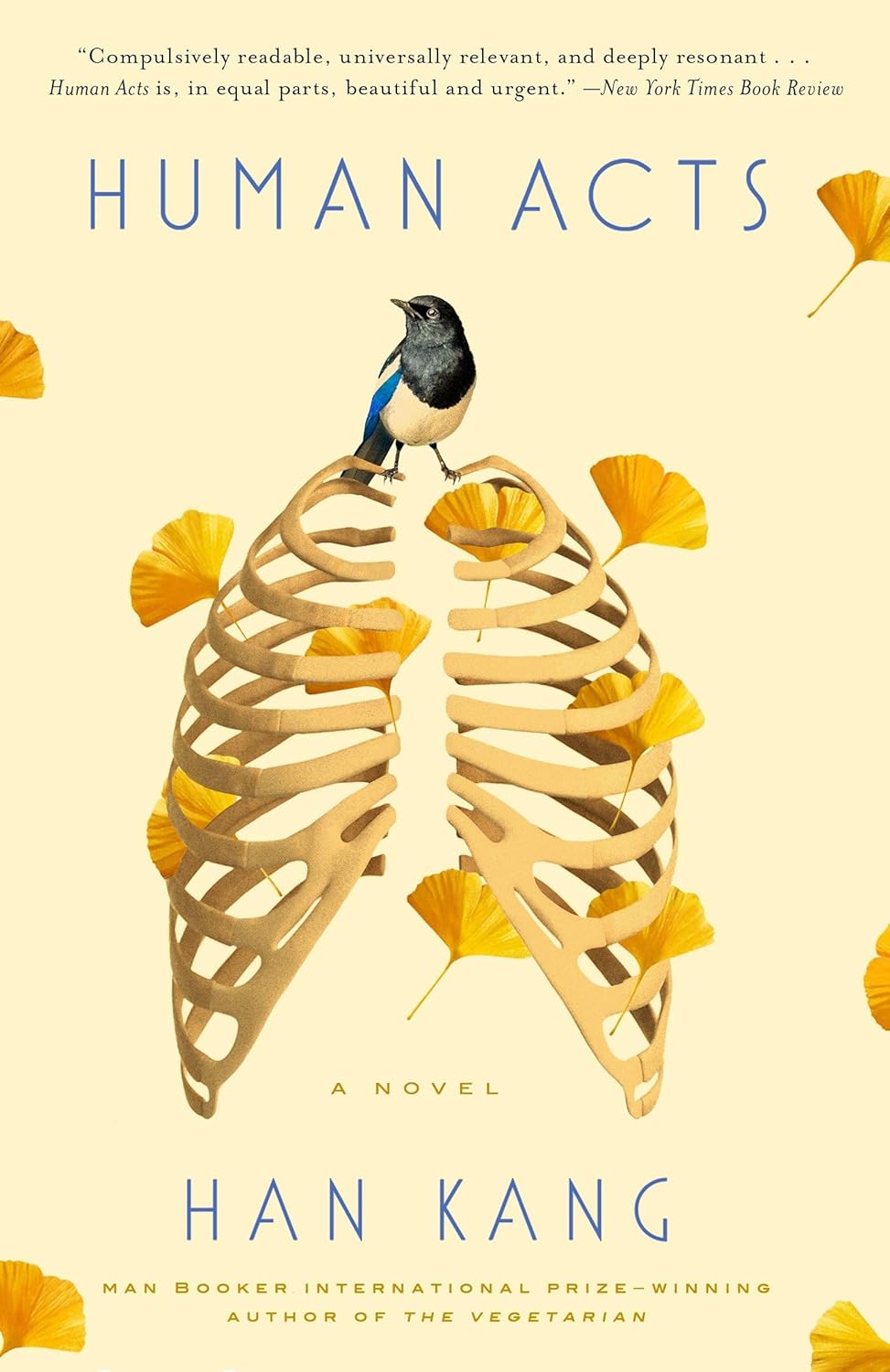
Amid a violent student uprising in South Korea, a young boy named Dong-ho is shockingly killed. The story of this tragic episode unfolds in a sequence of interconnected chapters as the victims and the bereaved encounter suppression, denial, and the echoing agony of the massacre. From Dong-ho’s best friend who meets his own fateful end; to an editor struggling against censorship; to a prisoner and a factory worker, each suffering from traumatic memories; and to Dong-ho's own grief-stricken mother; and through their collective heartbreak and acts of hope is the tale of a brutalized people in search of a voice. An award-winning, controversial bestseller, Human Acts is a timeless, pointillist portrait of an historic event with reverberations still being felt today, by turns tracing the harsh reality of oppression and the resounding, extraordinary poetry of humanity. “Compulsively readable, universally relevant, and deeply resonant . . . in equal parts beautiful and urgent.”—The New York Times Book Review Shortlisted for the International Dublin Literary Award • One of the Best Books of the Year: The Atlantic, San Francisco Chronicle, NPR, HuffPost, Medium, Library Journal
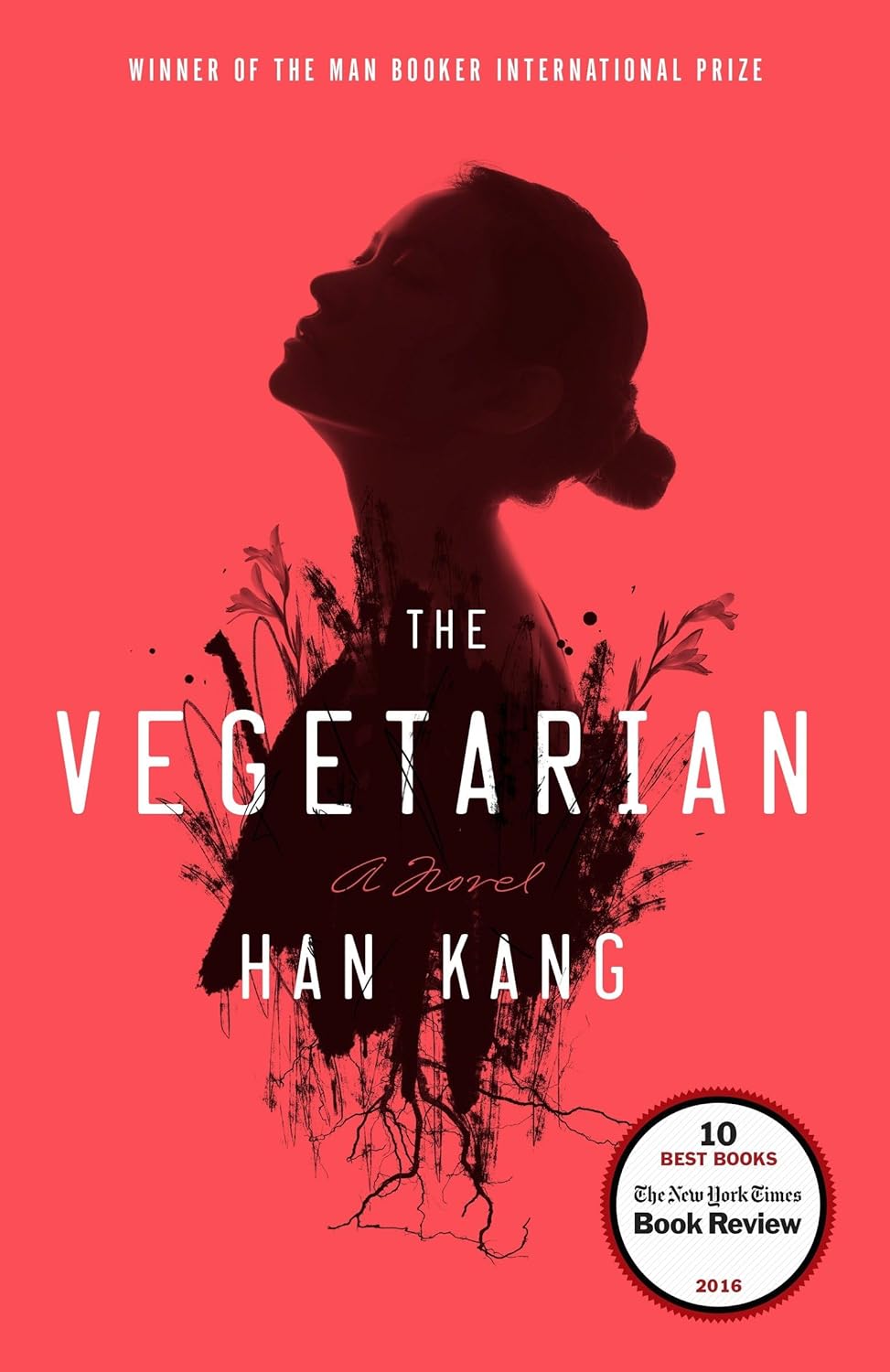
Before the nightmares began, Yeong-hye and her husband lived an ordinary, controlled life. But the dreams—invasive images of blood and brutality—torture her, driving Yeong-hye to purge her mind and renounce eating meat altogether. It’s a small act of independence, but it interrupts her marriage and sets into motion an increasingly grotesque chain of events at home. As her husband, her brother-in-law and sister each fight to reassert their control, Yeong-hye obsessively defends the choice that’s become sacred to her. Soon their attempts turn desperate, subjecting first her mind, and then her body, to ever more intrusive and perverse violations, sending Yeong-hye spiraling into a dangerous, bizarre estrangement, not only from those closest to her, but also from herself. Celebrated by critics around the world, The Vegetarian is a darkly allegorical, Kafka-esque tale of power, obsession, and one woman’s struggle to break free from the violence both without and within her. “Ferocious.”—The New York Times Book Review (Ten Best Books of the Year)“Both terrifying and terrific.”—Lauren Groff“Provocative [and] shocking.”—The Washington Post
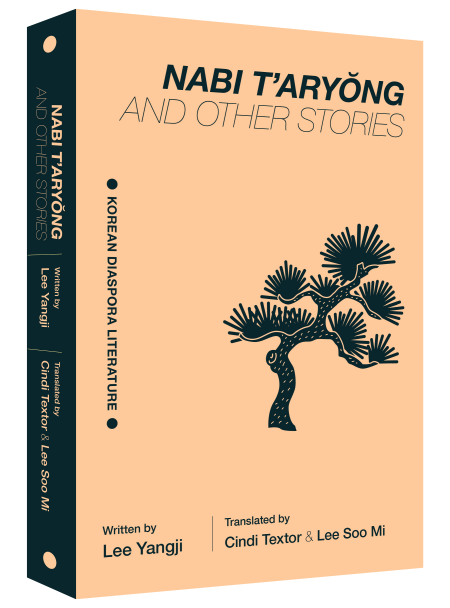
An Ethnic Korean Woman in Japan Struggles to Find Her IdentityWhen she utters “our country,” which does she mean, Korea or Japan? Lee Yang-ji’s short stories “Yuhi” and “Nabi T’aryǒng” portray the agony and inner conflict of Zainichi (ethnic Koreans residing in Japan) who find themselves considered strangers both in Korea and Japan.“Yuhi” features the eponymous protagonist going to Korea in search of her roots as does Aiko, the main character of “Nabi T’aryǒng.” Both women grow frustrated after realizing that they are considered marginal persons who can be neither Korean nor Japanese.The two works vividly show traces of the writer’s agonizing search for her identity and feelings of ambivalence as a second-generation Zainichi. Through these autobiographical stories, she uses her personal problems to brilliantly explore the realm of ethnic identity and language.Included WorksNabi T’aryŏng (Nabi taryon, 1982)The Diver (Kazukime, 1983)My Brother, Gone Before Me (Anigoze, 1983)Yuhi (Yuhi, 1988)About the AuthorLee Yangji (Yoshie Tanaka, 1955–1992)A second-generation Zainichi (ethnic Korean residing in Japan) novelist, artist, and folk dancer, Lee Yangji used writing as one of many creative outlets to explore her experience as an outsider in both Japanese and Korean society. She studied in Korean literature and performance at Waseda University in Tokyo and later at Seoul National University, where she wrote “Nabi T’aryǒng.” In 1989, she became the first Zainichi woman to receive the Akutagawa Prize "Yuhi," the last novel she published during her lifetime.In 1992, Lee died at age 37 from acute myocarditis, and her final novel Ishi no koe was published posthumously. To mark the 30th year of her passing, Yangji Lee Selection and Kotoba no Tsue: Lee Yangji Essay Collection were published in 2022.About the TranslatorCindi Textor is assistant professor of Japanese literature and culture at the University of Utah. She has translated Zainichi author Kim Sok-pom’s The Curious Tale of Mandogi’s Ghost (2010) and her papers have appeared in the publications positions: asia critique, The Journal of Korean Studies, and The Asia-Pacific Journal: Japan Focus.Lee Soo Mi earned a PhD in Japanese literature from the University of California at Berkeley. A third-generation Zainichi raised primarily by her illiterate grandparents, who often told her stories of their struggle and survival in Japan, she has researched writers and artists from historically marginalized communities with a focus on Zainichi women and their autobiographical expressions of struggle, resistance, and empowerment.ContentsYuhiThe DiverMy Brother, Gone Before MeNabi T’aryǒng: A Mourning Butterfly
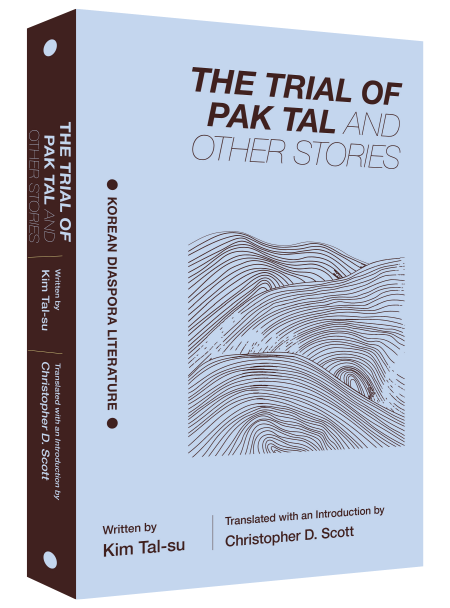
Kim Tal-su (1920–1997) was one of the first and leading writers of the Korean Diaspora in 20th-century Japan. The stories in this collection include the critically acclaimed novella “The Trial of Pak Tal” and cover a range of periods and topics like the struggles of Koreans in wartime Japan, the Korean War and its aftermath, and the layers of Japanese and Korean history on the island of Tsushima. Full of the writer’s unique blend of humor and pathos, these stories offer a moving and multifaceted look at how Koreans fought to find their voice and identity in Japanese culture and society.Publisher’s ReviewThe so-called Zainichi Korean diaspora in Japan is a large and diverse community with a long and painful history that began with the Japanese colonization of Korea (1910-1945). One of the most prolific and influential Zainichi Korean writers in Japan, Kim Tal-su (1920-1997) left behind a wide body of work depicting the many social and psychological dilemmas that Zainichi Koreans face, such as passing and outing, racism and discrimination, and ethnic identity and political affiliation. This collection, which contains some of Kim’s most important shorter works, showcases his vitality and versatility as a writer. Together, these stories offer new perspectives on Zainichi Korean identity and agency and new horizons for rethinking Japanese and Korean history beyond the borders of the nation-state.Beginning with “Kindred Spirits,” a lively look at Koreans passing as Japanese and trespassing as bootleggers in wartime Japan, this collection includes the critically acclaimed novella “The Trial of Pak Tal,” a political satire about the Korean War (and the war within the Zainichi Korean self) through the eyes of a farmhand-turned-freedom fighter named Pak Tal and an equally sly and subversive narrator, and the historical travelogue “All the Way to Tsushima,” which follows Kim and his compatriots to the island of Tsushima, located between Japan and Korea, on a sentimental search for their lost homeland. The collection ends with two of Kim’s earliest works, “One’s Place” and “Memories of My Grandmother,” which explore the place of Zainichi Koreans in Japanese society and their lingering sense of loss and displacement.Sensitively and skillfully translated from the Japanese by Christopher D. Scott, with a detailed introduction to Kim’s life and literary career, “The Trial of Pak Tal and Other Stories” is a revolutionary work of Zainichi Korean literature and a landmark of Korean diasporic literature. Bridging the histories of Japan, the Korean Peninsula, and the United States—much like Min Jin Lee’s 2017 bestselling novel Pachinko—this collection brings long overdue recognition to a community that, as Lee writes at the opening of her novel, “history has failed.” As this translation shows, however, history has not failed Kim; it has redeemed him. Like Pak Tal in “The Trial of Pak Tal,” Kim has come back, albeit in English this time. And he has some unforgettable stories to tell.About the AuthorKim Tal-suA leading Zainichi (ethnic Korean residing in Japan) writer whose fiction charted the inner lives of Koreans during and after the Japanese occupation, Kim was born in Changwon, Gyeongsangnam-do, in 1920 and immigrated to Japan at age 10 along with family. He attended elementary school there but dropped out after being bullied by his Japanese classmates. Undaunted, he began learning Japanese and reading Japanese literature while performing menial jobs like factory worker, public bath attendant, and garbage collector. After graduating from Nihon University College of Art, he began working in 1943 as a reporter for the daily Gyeongseong Ilbo (Keijō Nippō) in Seoul.In 1947, Kim published his first novel Kōei no machi (City of Descendants). His works were hailed for eloquently and evocatively capturing the dilemmas faced by Koreans under Japanese colonial rule and the subsequent sorrow and resentment felt by his compatriots. His other major works include the novel Genkai nada (The Genkai Sea, 1953), the novella “The Trial of Pak Tal” (1958), and the 12-volume Nihon no naka no Chōsen bunka (Korean Culture in Japan, 1970–1991), which focuses on ancient relations between Korea and Japan.About the TranslatorChristopher D. Scott teaches Japanese and Japanese culture at The Nueva School in San Mateo, California. He received his bachelor’s degree from Princeton University and his master’s and PhD from Stanford University. His other published translations from Japanese to English include Kim Sa-ryang’s “Into the Light,” Levy Hideo’s A Room Where the Star-Spangled Banner Cannot Be Heard, and Shu Ejima’s Quick Draw.ContentsAcknowledgmentsA Note on Names and RomanizationTranslator’s IntroductionKindred SpiritsThe Trial of Pak TalAll the Way to TsushimaOne's PlacesMemories of My Grandmother
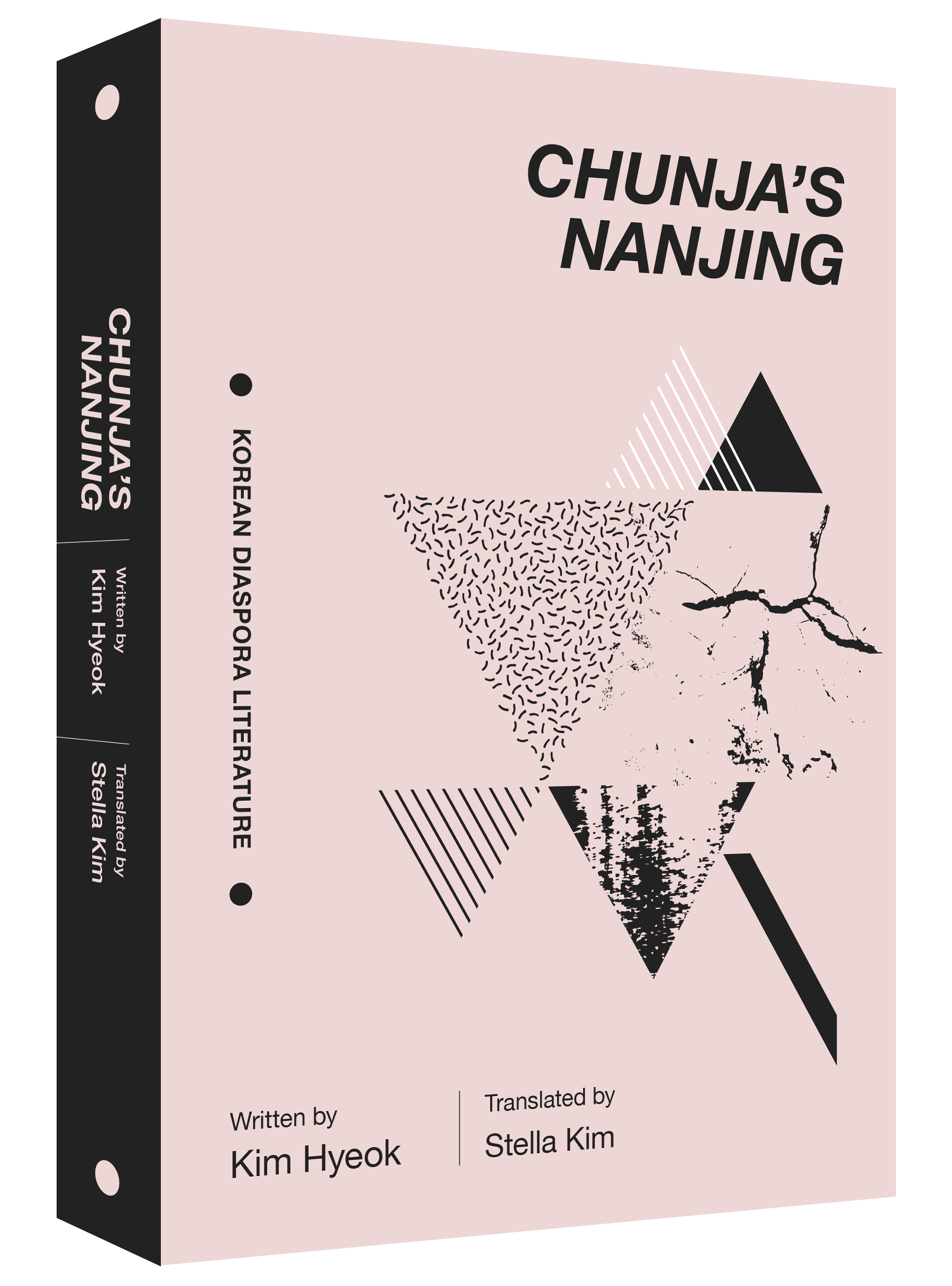
Chunja’s Nanjing explores in depth the tragic events of the 1930s dubbed the “Tragedy in Deer Valley” in Jiandao, a historical border region along the north bank of the Tumen River in China's Jilin Province with many ethnic Koreans, in the beginning of the novel and the “Rape of Nanjing” in Nanjing, China, at the end. The novel also discusses the plight of women forced into sexual slavery by the Japanese imperial army before and after World War II.Though a novel, this book intertwines the truth and pain of the past to create a story based on historical materials such as statements from Chinese women forced into sexual slavery by Japan, archival documents about the relevant incidents, and a variety of reports.Publisher’s ReviewHow would you feel if you found out that your grandmother is a surviving “comfort woman”? When Jonghyeok, a Korean-Chinese student studying in Japan, falls in love with a Japanese girl named Haruko, he decides to introduce her to his grandmother, Chunja. Yet, upon his arrival at the small village in Yanbian, China, he finds his grandmother surrounded by reporters. He learns that she used to be a “comfort woman” who had been forced into sexual slavery for Japanese troops during World War II. Through Chunja’s retelling of her past experiences, Chunja’s Nanjing delineates violent historical injustices perpetrated by Japan against Koreans and Chinese in the border region of Gando (Jiandao) and in Nanjing.Yet, rather than simply dwelling on the tragic past, the book brings the issue of “comfort women” to the present through Jonghyeok and Haruko—the grandson of a Korean comfort woman and the granddaughter of a Japanese soldier who served in China during the war. It is through these two young people that the author offers a glimpse of hope for reflection and reconciliation as they come to understand each other’s pain and search for a way to move forward.Chunja’s Nanjing is an artistic journey that takes the readers through a powerful testimony about the appalling treatment of Korean “comfort women” during the war and the possibility of a new peace and resolution in Northeast Asia.About the AuthorKim HyeokBorn in Longjing in China's Jilin Province in 1965, Kim Hyeok made his literary debut in 1985 with the short stories “Descendants of Pygmy” and “Noah’s Ark.” A former reporter for major newspapers such as The Yanbian Daily, he has published an array of works including the novels Pox Pustules Bloom in the Shade, Women on Juzi Street, Poet, Empress Wanrong, Chunja’s Nanjing, and Silent Age; the short story collections To Kill a Genius and The Bridge of the Other Shore; a compilation of serialized columns titled The Yun Dong-ju Code; biographies such as Standing on the Silk Road: A Biography of Han Nak-yeon, and Salt Flowers: A Biography of Kang Kyeong-ae; and the full-length reportages Tall Pine Tree in Yisongting and Blue Water of the Hailan River and Reading Chinese-Koreans Through Films.A member of the China Writers Association, Kim founded the Yun Dong-ju Research Society of Longjing after returning to his hometown and is now president of the organization. He is also working on the 12-part epic novel Garam, which is set in Northeast Asia over a period of 100 years.About the TranslatorStella Kim is a Korean-American translator and interpreter who won the 2014 Literature Translation Institute Korea Award for Aspiring Translators and the 2016 Korea Times’ Modern Korean Literature Translation Award. She has translated works like Launch Something! by Bae Myung-hoon (Honford Star, 2022) and Painter of the Wind by Lee Jung-myung (co-translated, Harriett Press, 2023), as well as short stories and excerpts published in ASIA, Asia Literary Review, Asymptote Journal, Korean Literature Now, and other publications.ContentsPart IBotchan Karakuri ClockA Testimony in SpringA Tragedy in Deer ValleyFlower GraveA Hymn on a Moonlit NightPart IIInto the TunnelFactory Girl RecruitmentKhaki-Colored TerrorA Party in HellThe Fiery Lake of Burning SulfurA Pipe That Couldn’t Be PlayedBlood RainPart IIIHaruko’s NanjingCats Cry for SpringMonochrome MemoriesA Sturdy PipeOur TimeEndnotes
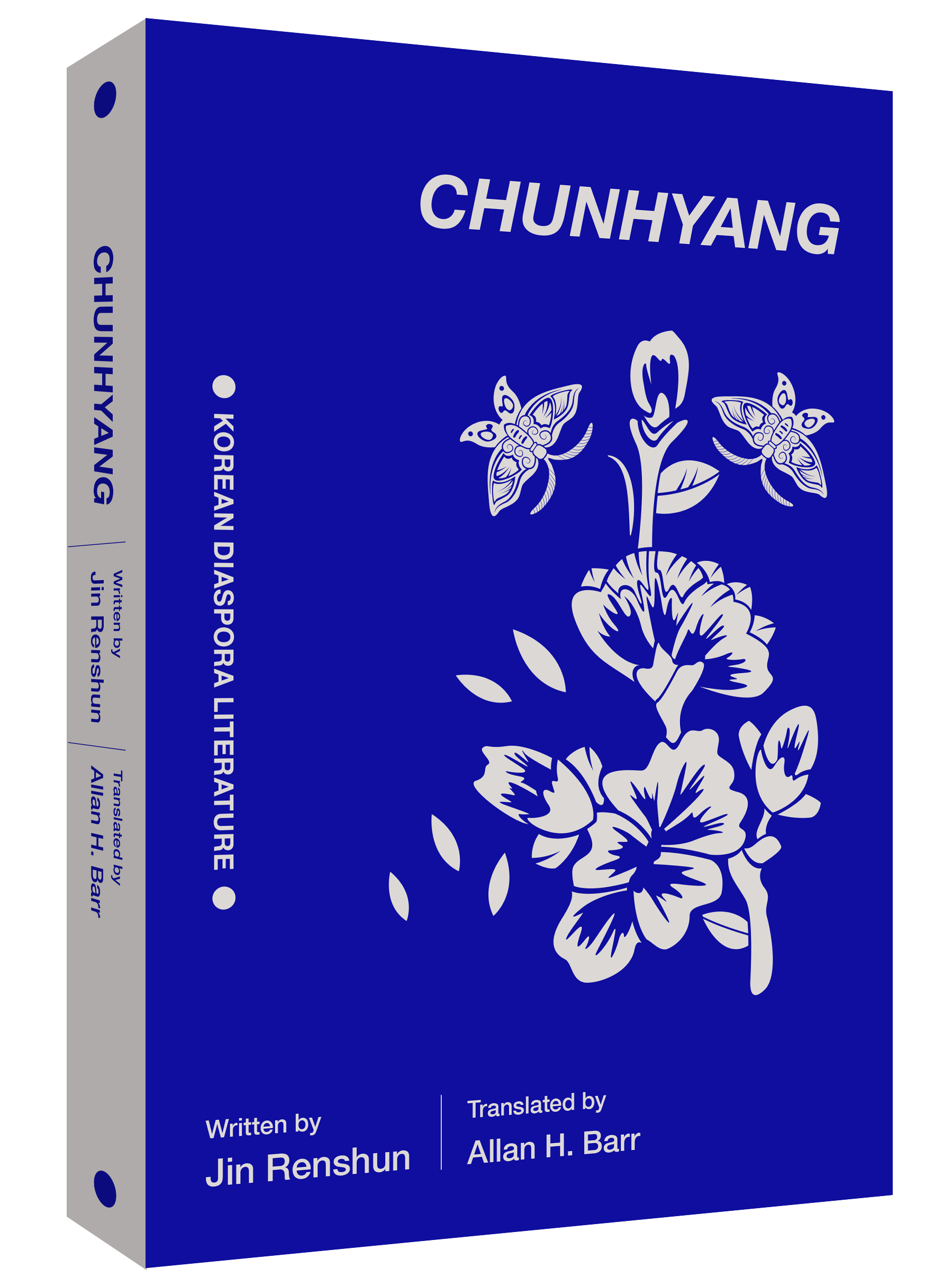
Central to the Korean pansori musical storytelling tradition is Chunhyangga, an eighteenth-century love story involving the romance between Yi Mongryong, heir to a noble family, and Chunhyang, daughter of a courtesan. In Chunhyang, novelist Jin Renshun reimagines that romance, challenging its premises and taking it in a radically new direction.Chunhyang is the story of a mother and a daughter’s quests for independence and self-worth in a world where women are too often confined and devalued. Beautifully told, blending lyricism with humor, Chunhyang introduces us to a memorable cast of characters—from powerful officials to orphaned children—and carries us toward a dramatic and poignant conclusion.SynopsisChunhyang’s mother is the daughter of an apothecary, and beautiful beyond compare. While young, she falls in love with a noble official who spends a huge sum of money to build her a house, which comes to be known as Attar Lodge. There Chunhyang is born, and there her mother acquires fame as Lady Hyang, praised by hack writers and pansori (solo lyrical opera) singers alike.Over time, Attar Lodge becomes the home to a number of other underprivileged people: an abandoned woman, an impoverished gentleman, the son of a singsong girl, the daughter of a thief. Despite their low social status, they enjoy life to its fullest. Their stories attract many visitors, such as lustful businessmen, young men yearning for fame, and arrogant nobles. Yi Mongryong, son of a prominent family, meets Chunhyang by chance at the Dano Festival and is immediately smitten. He mistakes her for Lady Hyang and goes to her mother’s house at midnight. But Mongryong is no different from other men before him: his love interest is no more than a fleeting fancy, for he has other ambitions. Lady Hyang uses hack writers and pansori singers to exaggerate and spread the love story of Chunhyang and Mongryong, turning it into a classic legend. The new Namwon magistrate, Byeon Hakdo, tries to force Chunhyang to marry him. Lady Hyang comes up with a dramatic idea to prevent that from happening, and Chunhyang also makes a decision that is totally different from the one we know in the classic Chunhyangga.About the AuthorJin RenshunHer works include the novel Chunhyang, the short story and novella collections Peach Blossom, The Pine Town, and In Commemoration of My Friend Jin Zhi, and the essay collections White as a Lily and Sentient Beings. She has won many honors including the Chunshen Original Literary Award, Junma Literary Awards for Ethnic Minority Writers, Chuang Chung-Wen Literary Award, China Writers Publishing Group Award, Lin Jinlan Short Story Award, People’s Literature Short Story Award, Short Story Award of Selected Stories, Novel Monthly Hundred Flowers Award, and October Literature Award. Her works have been translated into English, Korean, Arabic, Japanese, Russian, German, and Mongolian. She is a member of the presidium of the China Writers Association and chair of the Jilin Writers Association.About the TranslatorAllan H. Barr is a scholar of Ming and Qing literature and prominent translator of contemporary Chinese writing. His published translations include Yu Hua’s China in Ten Words, Han Han’s This Generation, and Ai Weiwei’s 1000 Years of Joys and Sorrows. He is a professor of Chinese at Pomona College in Claremont, California.ContentsPart ILady HyangThe Hallim Vice CommissionerAttar LodgeChunhyangLady HyangGimsuSodanMr. BongjuChunhyangThe Hallim Vice Commissioner’s WidowThe Palace Music MasterGimsu and IMr. BongjuPart IIEungilSodan and MeYi MongryongChunhyangYi MongryongChunhyangThe New PrefectByeon HakdoThe Pansori PerformerOksu the ScholarGimsu, or SapienceLady HyangChunhyang
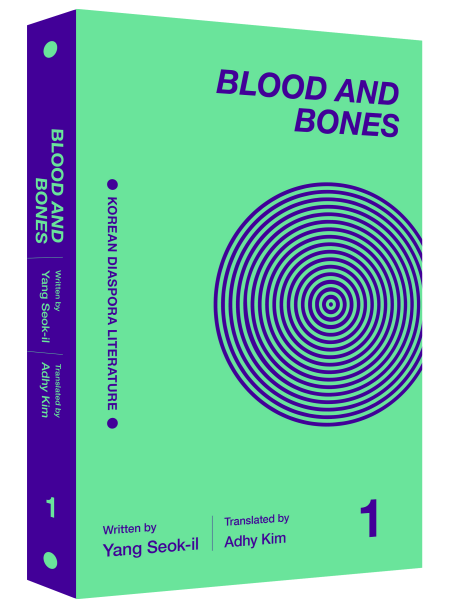
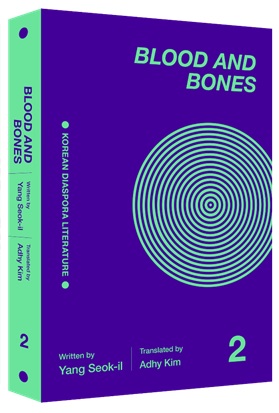
It is Osaka in the 1930s. Kim Shunpei, a migrant from Jeju Island, works at a fish cake factory and is widely feared for his physical strength and brutality. He moves through life in the only way he knows how: by terrorizing those around him.A bestseller in Japan, this harrowing, kaleidoscopic novel portrays the violent and eventful life of a flawed man modeled after the author's own father.Publisher’s ReviewBlood and Bones, originally published in Japanese in 1998, follows a half-century of the violent, eventful life of migrant worker Kim Shunpei in Osaka. Feared by coworkers, bosses, neighbors, family members, and gangs alike, he moves through life in the only way he knows how: by terrorizing those around him. Yang Seok-il's vivid portrait of Kim Shunpei is modeled after the life of his own father. Built from intimate memories of struggle in the gritty underbelly of Osaka, Yang's harrowing, kaleidoscopic novel depicts how patriarchal violence and restricted life chances can wrack a minority Korean community both during and after Japan's empire.About the AuthorYang Seok-il (b. 1936- )Born in Osaka, Japan, to a couple from Korea’s Jeju Island who settled in Japan during the Japanese occupation of the Korean Peninsula, Yang, whose Japanese name is Yan Sogiru, graduated from Osaka Prefectural Kozu High School and did odd jobs including driving a taxi after a business he pursued failed. His 1980s non-fiction work Takushi doraiba nisshi (Taxi Driver Diary), based on his experience as a cabbie, was made into the 1993 critically acclaimed film All under the Moon. He also won the 1998 Yamamoto Shugoro Prize of Japan for his semi-autobiographical novel Blood and Bones, which was also made into a film released in 2004.About the TranslatorAdhy Kim is a writer, scholar, and teacher of Asian and Asian American literature and culture.ContentsBlood and Bones 1Chapter 1Chapter 2Chapter 3Chapter 4Chapter 5Chapter 6Chapter 7Chapter 8Chapter 9Chapter 10Chapter 11Chapter 12Chapter 13
It is Osaka in the 1930s. Kim Shunpei, a migrant from Jeju Island, works at a fish cake factory and is widely feared for his physical strength and brutality. He moves through life in the only way he knows how: by terrorizing those around him.A bestseller in Japan, this harrowing, kaleidoscopic novel portrays the violent and eventful life of a flawed man modeled after the author's own father.Publisher’s ReviewBlood and Bones, originally published in Japanese in 1998, follows a half-century of the violent, eventful life of migrant worker Kim Shunpei in Osaka. Feared by coworkers, bosses, neighbors, family members, and gangs alike, he moves through life in the only way he knows how: by terrorizing those around him. Yang Seok-il's vivid portrait of Kim Shunpei is modeled after the life of his own father. Built from intimate memories of struggle in the gritty underbelly of Osaka, Yang's harrowing, kaleidoscopic novel depicts how patriarchal violence and restricted life chances can wrack a minority Korean community both during and after Japan's empire.About the AuthorYang Seok-il (b. 1936- )Born in Osaka, Japan, to a couple from Korea’s Jeju Island who settled in Japan during the Japanese occupation of the Korean Peninsula, Yang, whose Japanese name is Yan Sogiru, graduated from Osaka Prefectural Kozu High School and did odd jobs including driving a taxi after a business he pursued failed. His 1980s non-fiction work Takushi doraiba nisshi (Taxi Driver Diary), based on his experience as a cabbie, was made into the 1993 critically acclaimed film All under the Moon. He also won the 1998 Yamamoto Shugoro Prize of Japan for his semi-autobiographical novel Blood and Bones, which was also made into a film released in 2004.About the TranslatorAdhy Kim is a writer, scholar, and teacher of Asian and Asian American literature and culture.ContentsBlood and Bones 2Chapter 14Chapter 15Chapter 16Chapter 17Chapter 18Chapter 19Chapter 20Chapter 21Chapter 22Chapter 23Chapter 24Chapter 25Chapter 26
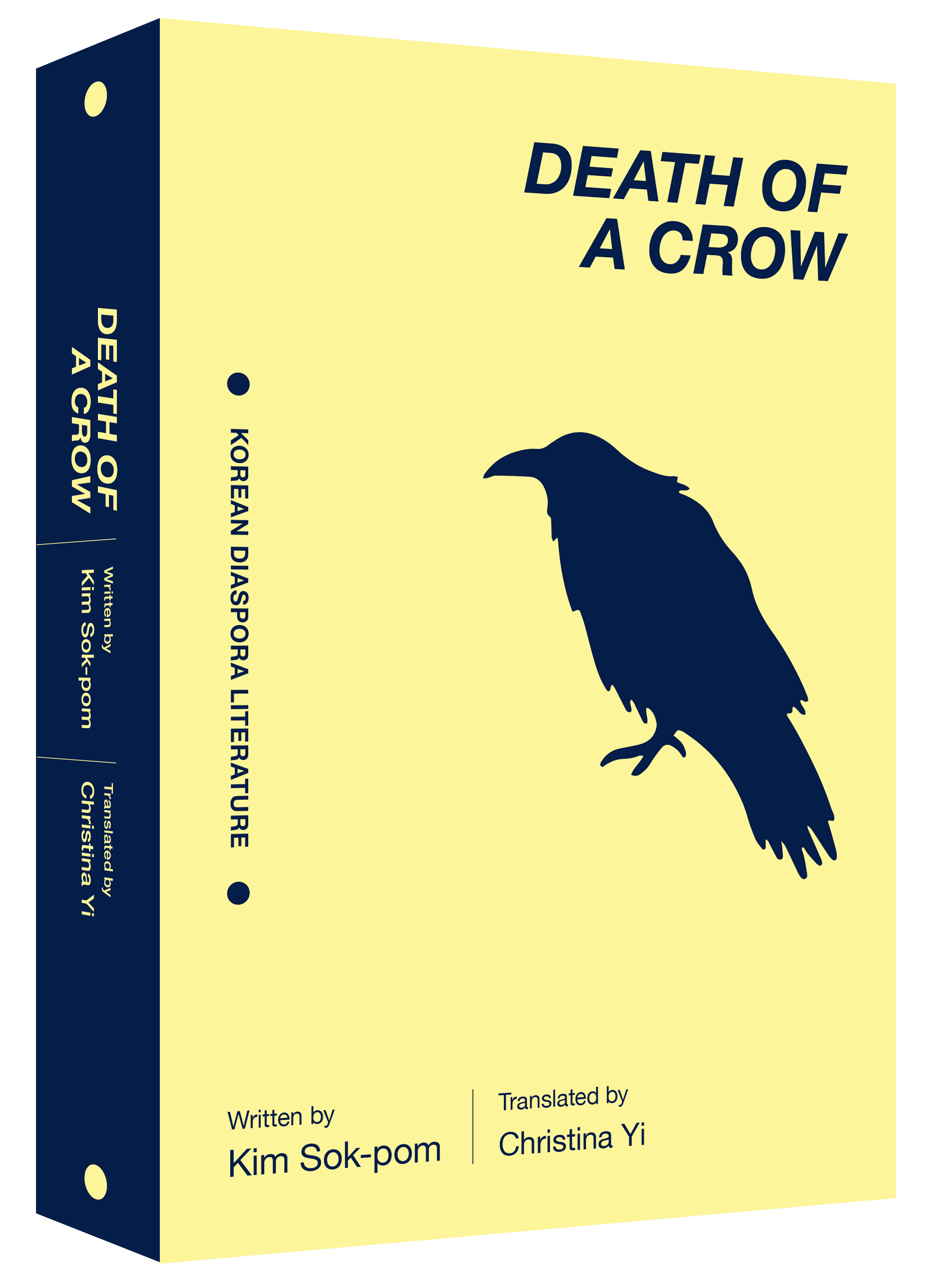
1st Collection of Short Stories on the Jeju April 3 Incident Published in 1957 as a Way of Informing the World Kim Sok-pom has devoted his writing career to raising awareness of the Jeju April 3 Incident through literature. Death of a Crow (1957) marked the beginning of his campaign; known as one of his major works, it is also the one that first earned him recognition. By writing about the uprising, he delved into history and the problems of humanity. Chronicling a variety of lives linked to the event was also his way of gaining understanding of this world.“Bak-seobang, Jailer,” “Death of a Crow,” and “Gwandeokjeong” are a series of closely intertwined works in this book that depict Jeju amid the massacre that lasted for about a year starting from summer 1948; “Death of a Crow” and “Gwandeokjeong” also feature the same person. Though “Feces and Freedom” and “A Tale of a False Dream” do not deal with the uprising directly, they help reveal the reasons why the author studied the massacre and his opinions of it.About the AuthorKim Sok-pomNovelist Kim Sok-pom, born in Osaka, Japan, in 1925, has extensively written novels related to the Jeju April 3 Incident on Jeju Island in 1948. He grew interested in the topic after hearing about the horrendous massacre from his relatives, who had stowed away to Japan. He devoted himself to raising awareness of such savagery through literature. Beginning with “Bak-seobang, Jailer” and “Death of a Crow” and later through The Curious Tale of Mandogi’s Ghost, “Gwandeokjeong,” and The Moon, he has kept producing works inspired by the event. In pursuit of freedom and liberation based on universality and in opposition to the absolutization of Japanese language, Kim has chosen to reclaim his identity as a Korean writer. For The Volcanic Island (Kazanto), he earned the Asahi Shimbun's Osaragi Jiro Award in 1983 and the Mainichi Arts Prize in 1984.About the TranslatorChristina Yi is an associate professor of modern Japanese literature at the University of British Columbia in Vancouver, Canada. Receiving her Ph.D. from Columbia University, she had her first monograph, Colonizing Language: Cultural Production and Language Politics in Modern Japan and Korea, published by Columbia University Press in 2018. Yi was also the co-editor for both a special issue on zainichi (ethnic Korean residents of Japan) Korean literature and film for Azalea: Journal of Korean Literature and Culture 12 (2019) and the edited volume Passing, Posing, Persuasion: Cultural Production and Coloniality in Japan’s East Asian Empire (University of Hawaii Press).ContentsTranslator’s ForewordBak-seobang, JailerDeath of a CrowGwandeokjeongFeces and FreedomA Tale of a False Dream
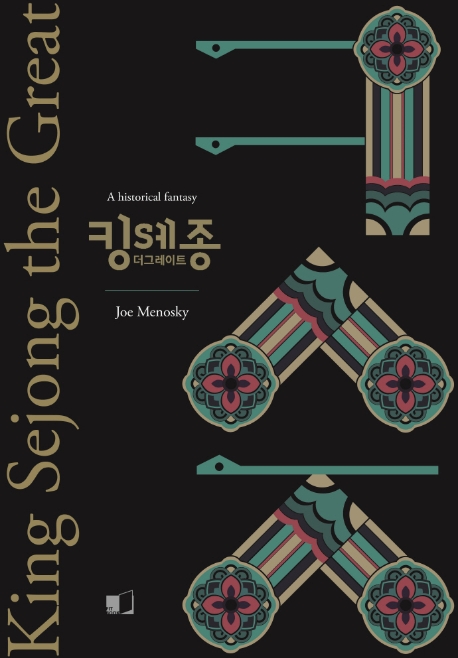
Joe Menosky is a television writer and producer best known for his work within the Star Trek storytelling universe. Mr. Menosky has written for Star Trek: the Next Generation, Star Trek: Deep Space Nine, Star Trek: Voyager, and Star Trek: Discovery. Most recently he has written for The Orville and For All Mankind. King Sejong the Great is his first novel.
Prize-winning author Choe In-ho paints a dizzying portrait of what living in a modern, self-centered society entails in his breakthrough short story Tower of Ants. The plot centers around a young man who is going nowhere in his 9-5 advertising job when, one day, his apartment is suddenly infested with ants. The story soon becomes a battle for sanity as the thousands upon thousands of insects slowly take over the man's life, his apartment and his mind. 『개미의 탑』은 집안의 개미들 때문에 고생하는 한 남자의 이야기를 통하여, 조직 사회의 일원이 되어 개미처럼 살아가는 현대인의 삶을 우울하게 보여준다. 똑같은 모습으로 일사분란하게 잠시도 쉬지 않고 단 것을 찾아 모으는 개미들처럼, 각자의 개성과 자유를 억압당한 채 비인간적인 조직의 질서 속에서 돈과 쾌락을 얻기 위해 질주하는 모습- 그것은 바로 현대를 사는 우리들의 모습이다.