
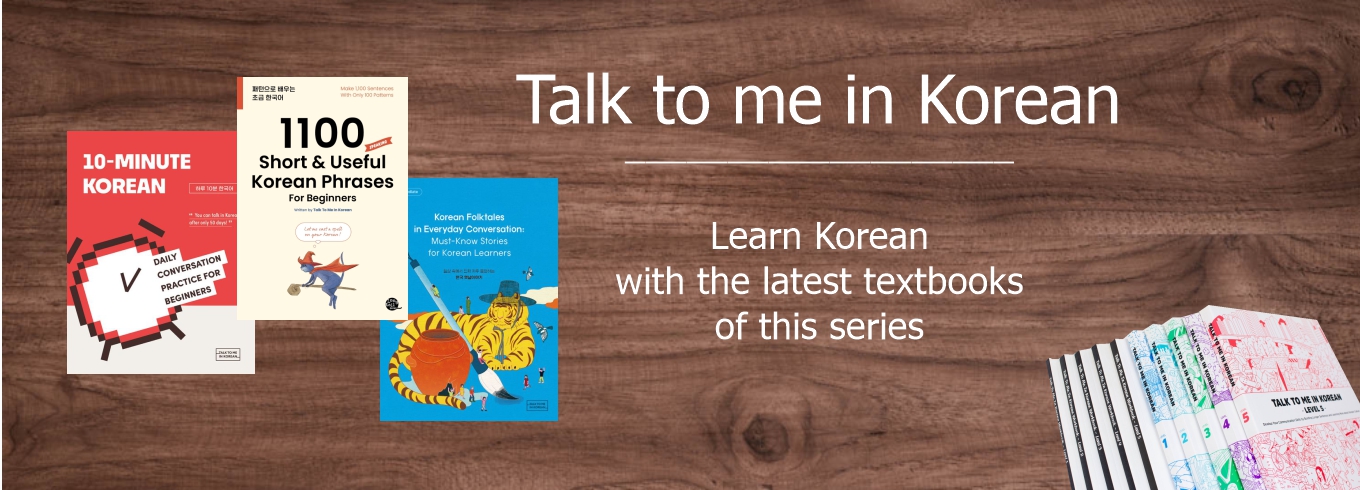
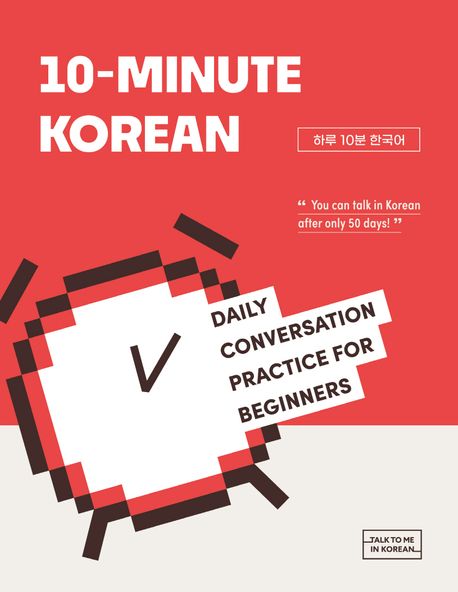
Train yourself for real Korean interactions in 10-minute chunks! You’ll reach a lower intermediate level after just 50 days. Look Inside the book on VimeoHow You’ll Learn Study in chunks short enough for any schedule Learn through natural conversation Pick up practical grammar you can apply anywhere Listen, repeat, and role-play with audio read by native speakers Not all of us can study for 30 minutes or more each day. Life is crazy — we understand!That’s why we’ve created a book for beginners that fits right into your schedule.Reach a lower intermediate level in just 50 days.10 Minutes A Day Find all your study material on just two pages every day. Read, listen, repeat, and practice in 10 minutes — you won’t find a Korean textbook easier to follow. Real-Life Conversations Learn with natural conversations that touch on daily life in Korea and elsewhere. After 50 days, you’ll be able to hold your own in a variety of real situations. Practical Grammar, Learn Naturally Pick up handy grammar points and vocabulary in context. Stay on track with helpful explanations. Each lesson helps build a base you can use to keep studying later. Listen and Repeat Use our audio track to check comprehension, model pronunciation, and practice speaking your part. Get immersed with ambient sound recorded in Korea.If you’re looking for a fun and easy start to your studies, 10-Minute Korean is the book for you. Table of ContentsPrefaceHow to Use This BookQuick Guide to 한글(Hangeul)Korean Speech LevelsBasic Korean GreetingsDay 01 제 이름은 최경은이에요. My name is Kyeong-eun Choi.Day 02 저 학생 아니에요. I’m not a student.Day 03 이게 뭐예요? What’s this?Day 04 저 집에 가요. I go home. / I’m going home.Day 05 책 읽어요. I read a book. / I’m reading a book.Review Quiz 01-05Day 06 저는 스물네 살이에요. I’m 24 years old.Day 07 오늘 5월 22일이에요. Today is May 22nd.Day 08 생일이 언제예요? When is your birthday?Day 09 7시 30분이에요. It’s 7:30.Day 10 그거는 4만 8천 원이에요. That one is 48,000 won.Review Quiz 06-10Day 11 한강 공원에서 운동해요. I exercise in Han river park.Day 12 우리 같이 저녁 먹을까요? Shall we have dinner together?Day 13 현우 씨도 맥주 마실래요? Hyunwoo, do you want to drink some beer, too?Day 14 우리 카페 가자. Let’s go to the cafe.Day 15 여기 우유 있어요? Is there any milk here?Review Quiz 11-15Day 16 한국어 할 수 있어요? Can you speak Korean?Day 17 한국 드라마 보고 있어요. I’m watching a Korean drama.Day 18 한국 노래 듣는 거예요? Are you listening to Korean songs?Day 19 저는 잘생긴 사람을 좋아해요. I like handsome men.Day 20 제가 제일 좋아하는 가수예요. This is the singer that I like the most.Review Quiz 16-20Day 21 저 남편이랑 영화 보러 가요. I’ll go to watch a movie with my husband.Day 22 그냥 집에서 쉴 거예요. I’ll just get some rest at home.Day 23 저기요! 주문할게요. Excuse me! I’ll place an order.Day 24 오늘 점심에 먹을 음식이에요. This is the food that I’ll eat for lunch today.Day 25 서울역 도착했어? Did you arrive at Seoul station?Review Quiz 21-25Day 26 한국어 공부하려고 왔어요. I came here to study Korean.Day 27 그거 우리 본 영화 아니야? Isn’t it the movie that we watched?Day 28 아이스크림부터 끊는 거 어때요? How about stop eating the ice cream first?Day 29 저 좀 도와주세요. Please give me some help.Day 30 그거 예쁜데 진짜 비싸요. That one is pretty but really expensive.Review Quiz 26-30Day 31 그 영화 보지 마세요. Don’t watch that movie.Day 32 바다에 수영하러 가고 싶어. I want to go swimming at the beach.Day 33 자전거 탈 줄 알아요? Do you know how to ride a bike?Day 34 저 친구랑 게임 해도 돼요? Is it okay if I play games with my friend?Day 35 보통 키인 것 같아요. It seems like it’s just average height.Review Quiz 31-35Day 36 좀 기다리셔야 돼요. You should wait a bit.Day 37 내가 오늘 발을 안 씻어서 그래. It’s because I didn’t wash my feet today.Day 38 그릇 뜨거우니까 조심하세요. The bowl is hot, so be careful.Day 39 어제 뛰다가 넘어졌어요. Yesterday I was running and then fell down.Day 40 홍대입구역에서 지하철 타시면 돼요. You can take a subway at the Hongik University station.Review Quiz 36-40Day 41 빨리 방학되면 좋겠다! It would be great if the vacation comes quickly!Day 42 나랑 사귀었던 사람이야. He is the one that I used to have a relationship with.Day 43 나 내일부터 엄마랑 운동하기로 했어. I decided to exercise with mom starting tomorrow. Day 44 전에 허리 치료 받은 적 있어요? Have you ever had your back treated before?Day 45 경은 씨 어디 있는지 알아요? Do you know where Kyeong-eun is?Review Quiz 41-45Day 46 너 자는 동안 내가 다 먹었어. I ate all of it while you were sleeping.Day 47 피자를 너무 많이 먹었더니 배 아파. I ate too much pizza and now my stomach hurts. Day 48 집에서 나오자마자 머리에 새똥 맞았어. As soon as I came out from home, I got bird poop on my head. Day 49 내가 사 줄 테니까 그냥 나와. I’ll buy it for you, so just come out.Day 50 한국어 배운 지 얼마나 됐어요? How long have you studied Korean?Review Quiz 46-50Answer KeyKorean NumbersGlossary
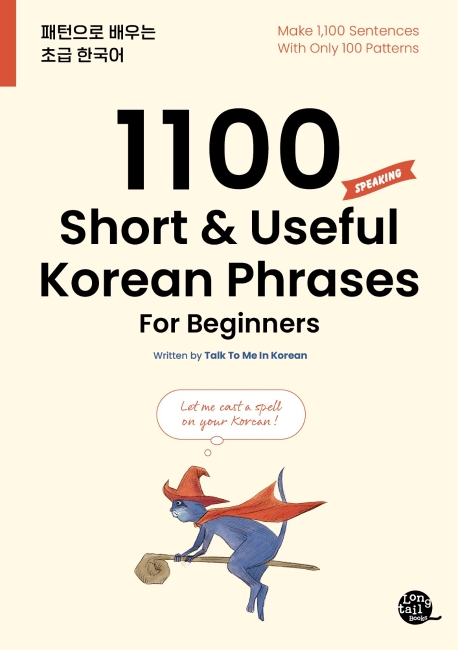
Learn 1,100 useful Korean phrases based on 100 commonly used sentence patterns, with QR codes for audio tracks and cute, witty illustrations that will make your studying more fun. Free audio files are available HERE As a beginner, Korean sentences might look like random combinations of words and phrases. But that is not true! Once you find the patterns hidden in sentences, learning Korean becomes much easier and even more fun.This book includes 100 common sentence patterns that are essential for beginners and each pattern is accompanied by 11 example sentences.What do we mean by “patterns“?“Patterns” in this book refer to set phrases and common groups of words that often go together in Korean. By studying sentence patterns, you can form your own Korean sentences more confidently and naturally! Practice speaking the sentences repeatedly so that you can get familiar with each sentence pattern. Sentences written in Korean are arranged on the left side of a page and those in English are on the right side. We recommend you cover one of the two sides with a piece of paper or your hand and test your understanding! Study words with the index. In the index, you can find all the vocabulary words used! In fact, this book is also very useful to study words and practice making sentences with them. Use the QR codes! There is a QR code for each pattern with which you can check the native speaker’s pronunciation CONTENTS Pattern 001. This is + N. / It is + N. Pattern 002. This is + N. / It is + N. Pattern 003. This is not + N./ It is not + N. Pattern 004. I have + N. / There is + N. Pattern 005. I do not have + N. / There is not + N. Pattern 006. Please give me + N. Pattern 007. What is + N? Pattern 008. What is + N? Pattern 009. What is + N? Pattern 010. By any chance, is it + N? / By any chance, are you + N? Pattern 011. I go to + N. / I am going to + N. Pattern 012. It is in/at + N. / I am in/at + N. Pattern 013. Where is + N? Pattern 014. I am on my way to + N. Pattern 015. When is + N? Pattern 016. As for + N, when is it? Pattern 017. Is it already + N? Pattern 018. I like + N. Pattern 019. And there is/are also + N. Pattern 020. I like + N. Pattern 021. Do you like + N? Pattern 022. How about + N? / How about + V-ing? Pattern 023. How/What about + N? Pattern 024. What do you think about/of + N? Pattern 025. Then, how/what about + N? Pattern 026. N + is not so good. / N + is not that great. Pattern 027. Is + N + not available/possible? Pattern 028. I should do + N + first. / You should do + N + first. Pattern 029. There is only + N. / There is nothing but + N. Pattern 030. What does + N + mean? Pattern 031. I do not know + N + well. / I am not sure about + N. Pattern 032. It is too + Adj. / I am so + Adj. Pattern 033. This is the most + Adj. Pattern 034. N + is more + Adj + than I expected. Pattern 035. It is a little bit + Adj. / Something about it is a little + Adj. Pattern 036. I am + V-ing + now. Pattern 037. I cannot + V. Pattern 038. I am + V-ing + now. Pattern 039. I am still + V-ing. / I am still in the middle of + N. Pattern 040. I want to + V. Pattern 041. What do you want to + V? Pattern 042. Please + V. Pattern 043. Hurry up and + V. / Please + V + quickly. Pattern 044. Please + V + this way. Pattern 045. Do not + V. Pattern 046. Why do you + V + like that? Pattern 047. Where did you + V + this? Pattern 048. It already + V-ed. / It has already + V-ed. Pattern 049. I have not + V-ed + yet. Pattern 050. How did you + V? Pattern 051. 001 I did not + V + anything. Pattern 052. Please + V (+ for me). Pattern 053. Please + V (+ for me). Pattern 054. Please + V (+ for me). Pattern 055. I can + V. Pattern 056. I have to + V. / I should + V. Pattern 057. I have to + V. / I should + V. Pattern 058. I have to + V. / I should + V. Pattern 059. Until/By when should I + V? / How long should I + V? Pattern 060. I am going to + V. Pattern 061. When will you + V? Pattern 062. I will be back after + V-ing. Pattern 063. I will + V + for just a little while. / Let me + V + for just a little while. Pattern 064. Then, shall we + V? Pattern 065. After + V-ing. / Only after + V-ing. Pattern 066. I think + S + V-ed. Pattern 067. I am on my way to go and + V. Pattern 068. S + will + V + at around ( ) o’clock. Pattern 069. You may + V. / It is okay to + V. Pattern 070. Can/May I + V? / Is it okay to + V? Pattern 071. You should not + V. / You cannot + V. Pattern 072. There is something I want to + V. Pattern 073. I almost + V-ed. Pattern 074. What should I do in order to + V? Pattern 075. Where should I go in order to + V? Pattern 076. Are you + Adj + by any chance? / Do you + V + by any chance? Pattern 077. Since when have you + V-ed? Pattern 078. It is probably + Adj. / S + probably + V. Pattern 079. I like it so much because + S + V/Adj. / I am so glad that S + V/Adj. Pattern 080. In my opinion, S + will + V. / In my opinion, S + will be + Adj. Pattern 081. It could be that + S + V. / S + might + V. Pattern 082. What if + S + V/Adj? Pattern 083. That is true, but + S + V. Pattern 084. Sometimes + S + V/Adj. / There are times when + S + V/Adj. Pattern 085. Don’t you think it is too + Adj? / Don’t you think + S + V + too much? Pattern 086. That is too + Adj. Pattern 087. Is + N + okay? / Is it okay to + V? Pattern 088. S + V + together with + N. Pattern 089. Which of these is the most + Adj? / Which of these do you + V + the most? Pattern 090. S + V + one out of these. Pattern 091. How do you + V? / How did you + V? Pattern 092. S+ V + before + V-ing. Pattern 093. S + V + again later. Pattern 094. Even so, I + V. Pattern 095. As far as I know + S + V. Pattern 096. I am not sure, but + S + V. / Although I do not know very well, S + V. Pattern 097. In fact, I + V. Pattern 098. If you do it like this, S + V. Pattern 099. If you have time tomorrow, S + V. Pattern 100. It may + V, and it may + V. / It may or may not + V.

After studying with this book, you too will be a 한글마스터! Have you ever struggled to read the titles of your favorite K-dramas because of the fancy or handwritten font? Do you sometimes wonder what Korean handwriting says because you can’t entirely make out all the letters? Do you just want to learn to read and write 한글 better?With 한글마스터, you will master the Korean writing system in no time!We cover all the 한글 letters in detail and give you tips on how to easily read Korean handwriting or fonts. This is why we believe you will find this book super useful even if you already know how to read Hangeul. TalkToMeInKorean is a website and community where learning Korean may not be magically easy, but is fun and exciting. Language learning can be boring, challenging, and sometimes frustrating, especially when there are not enough motivating or fun factors. As a community that motivates and nurtures learners to develop their language skills in fun and innovative ways, the variety of content available at Talk To Me In Korean has drawn over 1.9 million people to the site to download over 50 million lessons. CONTENTS Chapter I. The History of Hangeul Chapter II. Introduction to Hangeul “Time-out #1” When Do Koreans Learn Hangeul? Chapter III. Learn Hangeul Unit I. Single Vowels (단모음) Unit II. Consonants (자음) Part 1 Unit III. Consonants (자음) Part 2 (Aspirated Consonants) Drills and Exercises (Unit I ~ Unit III) Unit IV. Compound Vowels (이중모음) Part 1 – y+vowel Unit V. Compound Vowels (이중모음) Part 2 – w+vowel and u+i Drills and Exercises (Unit IV ~ Unit V) Unit VI. Bat-chim (받침, Final Consonants) Unit VII. Double Consonants (쌍자음) Unit VIII. Compound Consonants as Bat-chim (겹받침) Unit IX. Linking Sounds in Korean Drills and Exercises (Unit VI ~ Unit IX) Final Test “Time-out #2” You Know More Korean Than You Think Chapter IV. Hangeul Handwriting Unit I. Korean Handwriting Tips “Time-out #3” Abbreviations in Korean Slang Unit II. Practice Your Handwriting “Time-out #4” Shortening Sentences Without Sacrificing Meaning Unit III. Korean Handwriting Quiz “Time-out #5” Chinese Characters in the Korean Language Answers
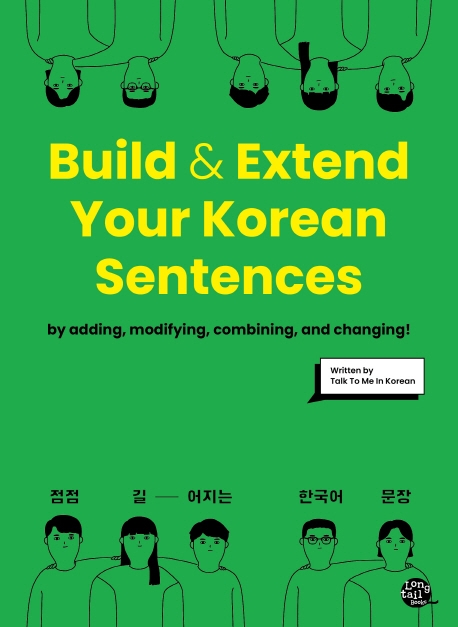
Get a better understanding of Korean sentence structures and confidently extend your sentences! This book is designed for beginner and intermediate Korean learners that want to practice extending Korean sentences related to everyday activities. Free audio files are available HERE Benefits of studying with this book: Develop a general understanding of how Korean sentences are structured Learn to make progressively longer sentences Listen to native speakers enunciating each sentence used in the book Study expressions and sentences related to everyday activities Equip yourself with basic words in the “Glossary” Tips on using this book: Jump right into “Extension Practice”! This book has three types of practices – Conjugation Practice, Extension Practice, and Speaking Practice. If you’re already familiar with tense conjugations, you may skip “Conjugation Practice” and jump right into “Extension Practice”! In need of brushing up on your Korean grammar? Go to the “Korean Language Basics” part!“Korean Language Basics” is where you can find grammar points used in “Extension Practice”. If you find “Extension Practice” a little too difficult, go to the beginning part of this book to find “Korean Language Basics”! Don’t forget to download the audio tracks for free here!

Avoid these common mistakes and have more confidence!Making mistakes is a natural part of learning a new language, but knowing which mistakes are commonly made by other learners and how to fix them can save you a lot of time and trouble. This book, which we made in collaboration with Billy from the famous Youtube channel, GO! Billy Korean, will help you learn about the 100 most common mistakes you can avoid when speaking Korean. All Korean learners can benefit from this book as it deals with mistakes made by Korean learners regardless of their level.Billy’s channel broadly covers topics about Korea from the culture, food, tourist destinations to even Korean dialects. Working on this book with Billy, who is also a Korean learner himself, we were able to better pinpoint what Korean learners struggle with when using Korean. In addition to introducing common mistakes and why they need to be avoided, we also give you in-depth explanations about how to say the same thing more naturally, along with sample sentences. Free audio files are available HERE You can also listen to native speakers' pronunciation for each of the sample sentences presented throughout the book. All the sentences are recorded at two different speeds (normal and slow). Contents Table Of ContentsPrefaceHow To Use This BookChapter 1. Korean Word Order Is Different Chapter 2. To Be Or Not To BeChapter 3. Don’t Mix Politeness LevelsChapter 4. Don’t Be Afraid To Be FormalChapter 5. How Not To Form Negative SentencesChapter 6. Special Verbs For Negative SentencesChapter 7. Honorifics Can’t Be Used For EverythingChapter 8. Be Humble When Talking About YourselfChapter 9. Don’t Say “You” Chapter 10. There Is No “He” Or “She”Chapter 11. Please Don’t Say “Please”Chapter 12. Counting HeadsChapter 13. Counting ThingsChapter 14. That’s Not The Only Way To Say “Only”Chapter 15. How To Raise A PetChapter 16. Counting AnimalsChapter 17. Just Because You Don’t, Doesn’t Mean You Can’tChapter 18. Listing Past Tense ActionsChapter 19. Not Using “And” EnoughChapter 20. When To Use “If” And “When”Chapter 21. Plural Forms Are More Flexible In KoreanChapter 22. How Are You?Chapter 23. Let’s Not Do ItChapter 24. How Much Later Will It Be? Chapter 25. Hot Weather That’ll Burn Your FingerChapter 26. You’re Wearing Clothes WrongChapter 27. They’re My Parents, Not OursChapter 28. Hello And GoodbyeChapter 29. Coming And GoingChapter 30. Leave Now And Come BackChapter 31. What Time Is It?Chapter 32. What Day Is It?Chapter 33. Organizing Your TimeChapter 34. What’s Your Name?Chapter 35. Saying Your Age WrongChapter 36. How Old Are You?Chapter 37. Speak Casually To YourselfChapter 38. What Do You Think?Chapter 39. The Plain FormChapter 40. Explaining What You ThinkChapter 41. How To Use -에 And -에서Chapter 42. You’re WelcomeChapter 43. Transitive And Intransitive VerbsChapter 44. What Do You Want?Chapter 45. I Need ItChapter 46. What Will You Do?Chapter 47. Saying You’re SorryChapter 48. Who’s Who?Chapter 49. Who’s There?Chapter 50. This And ThatChapter 51. This Or ThatChapter 52. Well, Excuse Me!Chapter 53. Because Doesn’t Mean BecauseChapter 54. It’s Because Of You!Chapter 55. Again And AgainChapter 56. Setting The TopicChapter 57. Choosing The TopicChapter 58. Don’t Overuse The Object MarkerChapter 59. How Not To Combine ParticlesChapter 60. Adding EmotionChapter 61. Adding More EmotionChapter 62. You Can’t Play A ComputerChapter 63. The Third PersonChapter 64. Don’t Be SadChapter 65. What’s The Temperature?Chapter 66. Counting MonthsChapter 67. Inside Or WithinChapter 68. Family TermsChapter 69. How To Make FriendsChapter 70. Suggestions Can Be RudeChapter 71. The 데 FormChapter 72. From When To WhenChapter 73. From Whom To WhomChapter 74. Asking To SomeoneChapter 75. Seeing And HearingChapter 76. Body Parts Don’t Have EmotionsChapter 77. Don’t Translate LiterallyChapter 78. Did You Forget?Chapter 79. Try To RememberChapter 80. Familiar NamesChapter 81. Dear JohnChapter 82. I Cut My FingerChapter 83. How To Clean EverythingChapter 84. Irregular ㅂ VerbsChapter 85. Looking Forward To ItChapter 86. Break A Leg!Chapter 87. Answering Negative QuestionsChapter 88. Too ManyChapter 89. Are You A Shy Person?Chapter 90. Saying YesChapter 91. Saying NoChapter 92. Spelling Matters TooChapter 93. Through DoingChapter 94. Want It ToChapter 95. You Wanna?Chapter 96. It’s Unfortunately IncorrectChapter 97. For Me And YouChapter 98. All The WhileChapter 99. The Busiest StoreChapter 100. Saying That’s Too Bad
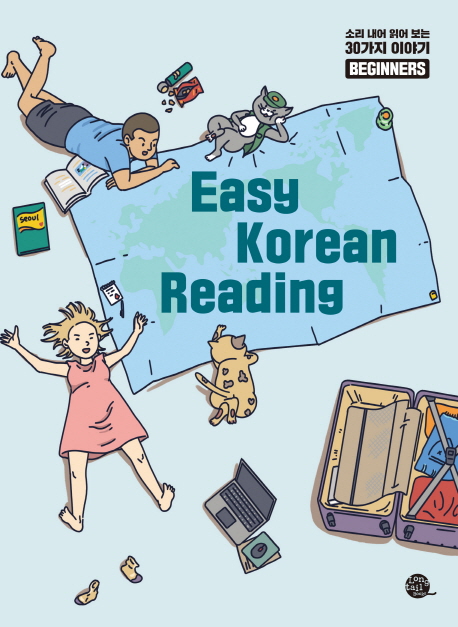
Looking for an easy Korean reading material for beginners?This will help you have much more confidence in your Korean reading comprehension through 30 short stories about various everyday topics! Free audio files are available HERE If you’ve been learning Korean for more than at least a month now and feel like you are ready to start reading stuff, but you find regular novels and magazines too hard to begin with, our Easy Korean Reading For Beginners will be a great place to start!First, read the Korean story part.And practice reading everything out loud through the slow reading segment. (Listen to the accompanying audio tracks.)And check the translation to see if you understood everything correctly.We provide you with all the key vocabulary words so you can get the most out of your reading session. TalkToMeInKorean.com has provided FREE Korean language learning content to five million learners around the globe since 2009, and with over 800 lessons published on the official website at?TalkToMeInKorean.com, it has become the largest community in the world for Korean learners. Easy Korean Reading For Beginners will help you have much more confidence in your Korean reading comprehension through 30 short stories about various everyday topics. If you've been learning Korean for more than at least a month now and feel like you are ready to start reading stuff, but you find regular novels and magazines too hard to begin with, our Easy Korean Reading For Beginners will be a great place to start. Table of Contents Preface How to Use This Book 1 요리 Cooking 2 영화 Movies 3 병원 Hospitals and Clinics 4 영화관 Movie Theaters 5 잠 Sleeping 6 편의점 Convenience Stores 7 쇼핑몰 Shopping Malls 8 버스 Buses 9 서점 Bookstores 10 동물원 The Zoo 11 캠핑 Camping 12 아침 시간 In the Morning 13 택배 Deliveries 14 안내 Information 15 회식 Company Dinners 16 생일 Birthdays 17 안내방송 Announcements 18 초대 Invitation 19 화장품 Makeup 20 편지 Letters 21 가을 Autumn 22 치매 Dementia 23 취미 Hobbies 24 소개 Introductions 25 반려동물 Pets 26 택시 Taxis 27 야식 Late-night Snacks 28 동호회 Clubs 29 핸드폰 Cell Phones 30 냉장고 Refrigerators
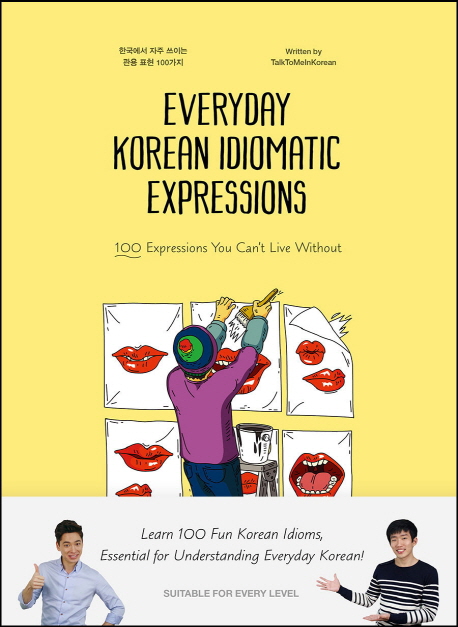
Free audio files are available HERE TalkToMeInKorean is a website and community where learning Korean may not be magically easy, but is fun and exciting. Language learning can be boring, challenging, and sometimes frustrating, especially when there are not enough motivating or fun factors. As a community that motivates and nurtures learners to develop their language skills in fun and innovative ways, the variety of content available at Talk To Me In Korean has drawn over 1.9 million people to the site to download over 50 million lessons. CONTENTS HOW TO USE EVERYDAY KOREAN IDIOMATIC EXPRESSIONS CHAPTER. 1 뒷북치다 CHAPTER. 2 두 손 두발 다 들다 CHAPTER. 3 아직 멀었어요 CHAPTER. 4 놀고 있다 CHAPTER. 5 뒤통수치다 CHAPTER. 6 불난 데 부채질 하다 CHAPTER. 7 입을 모으다 CHAPTER. 8 손 놓고 있다 CHAPTER. 9 번지수를 잘못 찾다 CHAPTER. 10 말을 돌리다 ㆍ ㆍ [중략] ㆍ ㆍ CHAPTER. 91 손꼽아 기다리다 CHAPTER. 92 날개 돋친 듯 팔리다 CHAPTER. 93 물거품이 되다 CHAPTER. 94 바람맞다 CHAPTER. 95 갈수록 태산이다 CHAPTER. 96 꿀 먹은 벙어리 CHAPTER. 97 속는 셈 치고 CHAPTER. 98 일이 꼬이다 CHAPTER. 99 화풀이하다 CHAPTER. 100 모르는 게 약이다
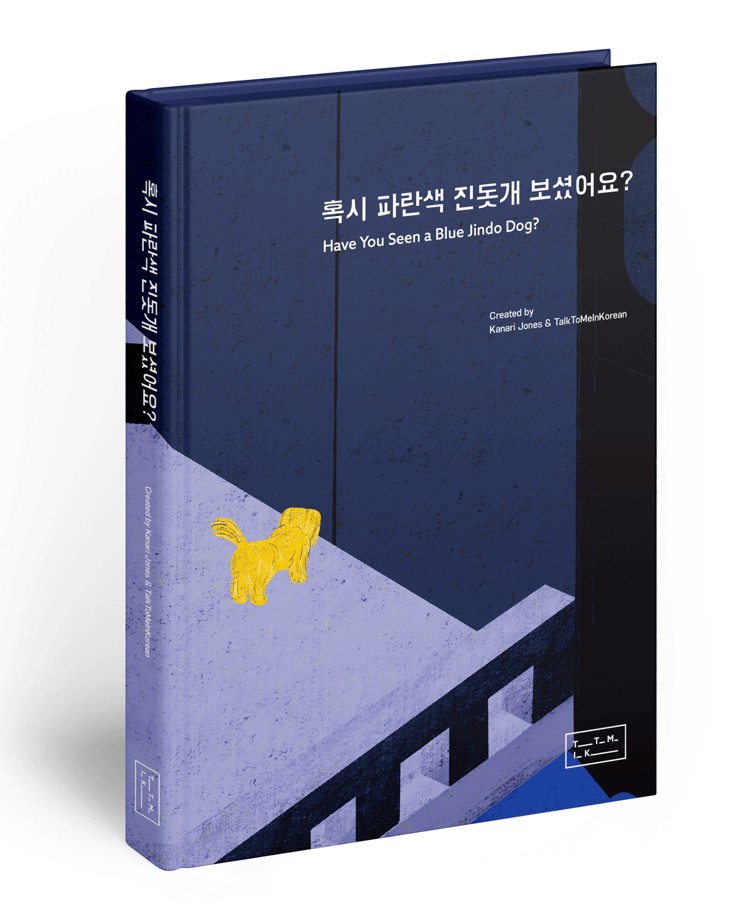
Ever since robot parrots appeared, Sapsal’s neighbors are not the same people they used to be. And now, Sapsal’s friend, Jin also suddenly went missing! Can Sapsal and her friends find Jin?Have You Seen a Blue Jindo Dog? – 혹시 파란색 진돗개 보셨어요? was created especially for beginner and intermediate learners who have been looking for proper reading materials to improve their Korean skills. Thus, this book will give you an enjoyable experience and help you reinforce what you’ve learned so far as well.The story begins with suspicious robot parrots being delivered to the village. Everyone has changed since that day. And now, Sapsal’s friend, Jin suddenly went missing! Sapsal and her friends decided to call themselves the ‘Jin Expedition’ and set out on a journey to find their friend ‘Jin’.Another point to note is that most sentences in this book use grammar points introduced in levels 1 to 5 in the Talk To Me In Korean Essential Curriculum, making it easier for beginner and intermediate learners to understand the story! You can find the glossary of grammar points and vocabulary used in the book at the end of the book. A full English translation is also provided for the whole story!CONTENTSWhy We Created This BookWho Co-wrote This BookWhat Characters Are in the StoryChapter 1 앵무 로봇 The Robot ParrotsChapter 2 하얀 탑 The White TowerChapter 3 삽살이의 하얀 공 Sapsal’s White BallChapter 4 핑이의 우주선 Ping’s SpaceshipChapter 5 담비의 보물 창고 Dambi’s Treasure StorageChapter 6 책 읽던 오리 The Duck Who Was Reading a BookChapter 7 진이 원정대 The Jin ExpeditionChapter 8 주머니에 깃털이 있는 옷을 입은 남자 The Man with a Feather in His PocketGlossary

Learn how to speak Korean with correct pronunciation in a fun and easy way. Use the TTMIK: Audio App and Scan the QR codes in the book on our mobile app to use accompanying video and audio files. Free audio files are available HEREAn all-in-one guide for confident and accurate Korean pronunciation! This book introduces not only standard Korean pronunciation rules but also pronunciations that many Korean learners struggle with. Learners of all levels can learn to speak Korean accurately through the detailed and fun explanations and valuable tips offered in the book.And here are even more reasons you will love this book! Illustrations and video animations will help you check the right tongue position and mouth shape. You can listen to the correct pronunciation recorded by native speakers. You can reinforce what you’ve learned in each lesson through various exercises and quizzes! Table of Contents How to Use This Book Preface Chapter 1. The Pronunciation That Korean Learners Struggle with the Most: Consonants Lesson 1-1. Can You Tell the Difference Between ㄱ, ㅋ, and ㄲ? Lesson 1-2. Are You Playing with a Ball or a Bean? Quiz Time Lesson 2-1. Can You Tell the Difference Between ㄷ, ㅌ, and ㄸ? Lesson 2-2. Are You Saying That You Shivered or That You Dusted Yourself Off? Quiz Time Lesson 3-1. Can You Tell the Difference Between ㅂ, ㅍ, and ㅃ? Lesson 3-2. Do You Feel Pain in Your Foot or in Your Arm? Quiz Time Lesson 4-1. Can You Tell the Difference Between ㅅ and ㅆ? Lesson 4-2. Do You Want Me to Buy It or Wrap It? Quiz Time Lesson 5-1. Can You Tell the Difference Between ㅈ, ㅊ, and ㅉ? Lesson 5-2. Are You Asking for My Car or My Ruler? Quiz Time Chapter 2. The Pronunciation That Korean Learners Struggle with the Most: Vowels Lesson 1-1. Can You Pronounce 오 and 어 Differently? Lesson 1-2. A Cup of Nosebleed in the Morning? Quiz Time Lesson 2-1. Can You Pronounce 요 and 여 Differently? Lesson 2-2. Is It Yoga Time or Free Time? Quiz Time Lesson 3-1. Can You Pronounce 으 and 어 Differently? Lesson 3-2. Did You Get It Wrong or Were You Robbed? Quiz Time Lesson 4-1. Can You Pronounce 우 and 으 Differently? Lesson 4-2. Are You Saying That You Are Lucky or That You Like Silver? Quiz Time Chapter 3. How on Earth Should I Pronounce 의? Chapter 4. Transformers Lesson 1-1. Doubles in Disguise Lesson 1-2. Decepti-consonants Lesson 1-3. Space Bridge Lesson 1-4. More Than Meets the Eye Lesson 2-1. Throw Away the Rules! Lesson 2-2. Just Memorize It! Lesson 3. Follow My Lead! Lesson 4. When in Rome… Lesson 5. ㄴ, Watch Out for ㄹ. Lesson 6. The Quiet Strength of ㅎ Lesson 7-1. Sticky Consonants Lesson 7-2. Morphing Consonants Chapter 5. 읽 Wherefore Art Thou Pronounced 익? Chapter 6. What?! I Did Not Know It Would Sound Like This! Lesson 1. Why Isn’t 겉옷 Pronounced [거톧]? Lesson 2. Why Isn’t 꽃잎 Pronounced [꼬칩]? Chapter 7. Why Don’t I Sound Right? Lesson 1. What Is the Difference Between G and ㄱ? Lesson 2. What Are the Differences Between N and ㄴ, and D and ㄷ? Lesson 3. What Are the Differences Between M and ㅁ, and B and ㅂ? Lesson 4. What Are the Differences Between L, R, and ㄹ? Lesson 5. ㅅ the Chameleon Lesson 6. What Is the Difference Between J and ㅈ? Chapter 8. Not Quite English Lesson 1. Sit on the Bench, Not on My Benz. Lesson 2. Why English Is Pronounced Differently in Korean Lesson 3. Native Korean Speakers vs. The Dictionary Chapter 9. That Is Not My Name. Chapter 10. Do Not Get Lost On Your Way to Costco. Chapter 11. Correct Order, Wrong Food Lesson 1. Sundae Blues Lesson 2. Why Are Olives So Hard to Find? Chapter 12. There Is No Gang in Gangnam. Chapter 13. To Avoid Stress, Correct Your Stress Lesson 1. Highs and Lows Lesson 2. What Did You Eat? vs. Did You Eat Something? Chapter 14. The Dictionary Is Wrong?! Bonus: The Short-Long Debate Glossary
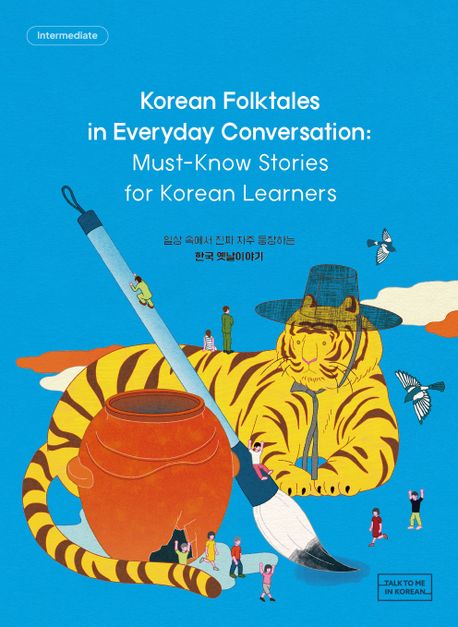
Get familiar with the stories only Koreans know! Polish your reading skills and learn everyday cultural expressions with these fun Korean folktales. Look Inside the book on Vimeo Free audio files are available HERE How You’ll Learn Discover Korean culture through 15 classic stories Pick up words, phrases, and grammar in context Follow along and concentrate better with native audio Remember the tortoise and the hare? What about the green frogs? Surely you’ve heard of the snail bride? From Han Seokbong to Hong Gildong, Korean Folktales in Conversation clues you in on Korea’s most famous old stories and how they come up in everyday life — all while you practice your reading skills!Culture and ConversationDive deeper into Korean culture with 15 classic stories. Pick up useful folktale-based phrases sure to impress a native speaker.Learning in ContextPick up new words and phrases naturally in every story. Understand better with English translations and helpful reading supports for vocab and grammar.Read and ListenFollow along with our audio track word by word, story by story. Each story comes to life recorded by native speakers.Table of ContentsPrefaceHow To Use This Book01 I Am Not Scared of Tigers!호랑이와 곶감 The Tiger and the Dried Persimmon02 Whatever You Say, I Will Do the Opposite.청개구리 이야기 The Green Frogs03 Darkness Cannot Stop Us한석봉과 어머니 Han Seokbong and His Mother04 Magpies Never Forget은혜 갚은 까치 The Magpie Which Repaid a Favor05 Or Else I Will Eat You.해와 달이 된 남매 The Brother and Sister Who Became the Sun and the Moon06 No bottom, No gain콩쥐 팥쥐 Kongjwi and Patjwi07 Uh-oh, This Is Unexpected.혹부리 할아버지 The Old Man with a Lump08 Making a Long Distance Relationship Work견우와 직녀 Gyeonu and Jiknyeo09 Confidence Maketh Con Man대동강을 판 김 선달 Seondal Kim Who Sold the Daedong River10 Don’t Be Greedy, Bro!흥부와 놀부 Heungbu and Nolbu11 How to Become an Actual Cow-boy소가 된 게으름뱅이 The Lazy Man Who Became a Cow12 Doppelganger Alert손톱 먹은 쥐 The Mouse That Ate Fingernails13 A Huge Fan of Garlic단군 이야기 The Dan-gun Story14 Someone Is In My House!우렁이 각시 The Snail Bride15 The Most Famous Name In Korea홍길동전 The Tale of Hong GildongGrammar PointGlossar

This handy guide, complete with everything a traveler needs to know while staying in Korea, will make your trip more enjoyable, ease your communication woes, and gives you the knowledge to get around Korea with confidence! Free audio files are available HERE Traveling to another country where you are not familiar with the national language can sometimes lead to frustration and/or a poor experience. This handy guide, complete with everything a traveler needs to know while staying in Korea, will make your trip more enjoyable, ease your communication woes, and gives you the knowledge to get around Korea with confidence!This book is designed for those traveling to Korea who find themselves wanting or needing to speak Korean without taking an expensive language course, having to download an expensive computer program, or download hundreds upon hundreds of audio files.Divided into sections by location and situation, Korean Phrasebook For Travelers covers nearly every situation which a traveler may encounter.The romanizations in this particular book have been modified from the “official romanization” system to better suit English speakers. TalkToMeInKorean is a website and community where learning Korean may not be magically easy, but is fun and exciting. Language learning can be boring, challenging, and sometimes frustrating, especially when there are not enough motivating or fun factors. As a community that motivates and nurtures learners to develop their language skills in fun and innovative ways, the variety of content available at Talk To Me In Korean has drawn over 1.9 million people to the site to download over 50 million lessons. CONTENTSⅠ. BASIC PHRASES1. Greetings2. Talking to a stranger3. Shopping4. Introducing yourselfⅡ. AT THE AIRPORT1. Departures2. ArrivalsⅢ. GETTING AROUND1. Taking the subway2. Taking a bus3. On the street4. Taking a taxiⅣ. ACCOMMODATIONS1. At a hotel2. At a guesthouseⅤ. EATING1. At a typical Korean restaurant2. At a Korean barbecue restaurant3. At a Korean fast food restaurant4. At a food court5. At a family restaurant6. At a buffet7. At a bar/pub8. At a cafeⅥ. SHOPPING1. At a clothing store2. At a bag store3. At an accessory/jewelry store4. At a shoe store5. At a cosmetics store6. At a convenience store7. At a big supermarket8. At a traditional marketⅦ. FUN PLACES1. At a palace2. On a mountain3. At a theme park4. At a water park5. At a ski resortⅧ. FESTIVALS IN KOREAⅨ. BUSY AREAS IN SEOULⅩ. VISITING A LOCAL CITY1. At a bus terminal2. At a train stationⅩⅠ . EMERGENCIES1. At a hospital/pharmacy2. At a lost/found or police officeⅩⅡ . MORE ABOUT KOREAN LANGUAGE1. Quick guide to 한글 (Hangeul)2. Numbers3. Directions4. Subway station names

This book introduces common sentence patterns used in interview questions as well as day-to-day conversations. Conversations are basically continuations of questions and answers. Sometimes you ask questions, and other times you answer questions. In this book, we introduce common sentence patterns used in interview questions as well as day-to-day conversations. Free audio files are available HERE There are 50 questions, divided into 10 different categories, and each question is followed by 3 more similar questions, and each sample answer is also followed by 3 more possible answer types. (200 main questions and 200 answers in total!) And about each of the 50 questions, there is a sample answer by Talk To Me In Korean teachers and a short sample dialogue, also followed by study notes.This will be a great learning material for anyone who is preparing for any kind of interviews in Korean, Korean speaking test, or real-life conversations at work or during travel. TalkToMeInKorean.com is a Korean language learning website that became popular overseas before it was recognized in Korea. Ever since its foundation in 2009, more than 5 million people have?visited TalkToMeInKorean.com. TTMIK audio lessons have been downloaded over 50 million times while TTMIK YouTube videos have received over ten million views?thus far.?TTMIK was ranked as the #1 Language Blog by Lexiophiles in 2010 and 2013 thanks to votes from users all over the world. Additionally, TTMIK was one of the recipients of the Prime Minister Award at the 2013 Korea Content Awards.? Contents EATING HABITS 식습관 1 Is there a food that you can’t eat? 2 Do you tend to eat a lot? 3 Do you make sure you eat breakfast? 4 Do you tend to eat out a lot? 5 Do you tend to eat regular meals? SLEEPING HABITS 수면 습관 6 Around what time do you usually go to bed? 7 How many hours a day do you usually sleep? 8 Can you normally sleep well just about anywhere? 9 Do even the slightest sounds easily wake you up? 10 What do you normally do when you can’t sleep? YOUR SCHOOL DAYS 학창 시절 11 What kind of student did you want to be? 12 Which school subject did you like the most? 13 Was there a school subject that you particularly hated? 14 Were you a student who went to a lot of private institutes? 15 Have you ever liked a teacher (romantically)? YOUR THOUGHTS ABOUT WORK 직업관 16 Have you ever transferred jobs? 17 Are you doing work that is related to your major? 18 Have you ever had trouble with your boss at work? 19 Was there a profession that your parents expected you to have? 20 If you could choose one out of all the jobs in the world, what would you want to choose? YOUR TASTE IN DRAMA 드라마 취향 21 Where do you normally watch dramas? 22 Is there a particular drama genre that you prefer? 23 What is the title of the drama that you’ve enjoyed the most? 24 Do you mainly watch Korean dramas or foreign dramas? 25 Have you ever gone home early on purpose in order to watch a drama? YOUR THOUGHTS ABOUT DATING 연애관 26 If you like someone, are you usually the one who approaches him?her first? 27 When you date someone, do you usually see him?her with marriage in mind? 28 When you date someone, what kind of problems mainly cause trouble? 29 Do you tend to, or did you use to, go on a lot of blind dates or group blind dates? 30 Do you usually date someone who you like, or someone who likes you? CELEBRITIES 연예인 / 유명인 31 Have you ever joined a fan club? 32 Is there a celebrity with whom you are personally close? 33 Have you ever thought you wanted to become a celebrity? 34 Who was the first celebrity you’ve seen in person? 35 Is there a celebrity who you would want to meet and talk to in person? PERSONALITIES 성격 36 Do you believe that someone’s personality can change? 37 Do you often hear that you have a good personality? 38 Between your parents, whose personality do you take after more? 39 Was there a moment when your personality changed a lot? 40 Do you usually hang out with people who have a similar personality to yours? SPENDING HABITS 소비 습관 41 On which item do you spend the most money? 42 Until when did you live off an allowance from your parents? 43 Have you ever heard people around you say you are a penny?pincher? 44 Do you tend to spend money on other people rather than yourself? 45 What is the first item you could spend less on if you needed to cut down on spending? OBSESSION, ADDICTION, COMPULSION 집착/중독/강박 46 Have you ever been obsessed with anyone? 47 Do you think you are a perfectionist? 48 Are you the type of person who hates losing to someone? 49 How long can you focus on one thing? 50 Have you ever overcome an addiction on your own?

Learn Korean slang expressions that are used on a daily basis in South Korea. You can understand a lot more of the conversations you hear in Korean by understanding commonly used slang expressions. Earn street cred in Korea by using the expressions inside this book! Free audio files are available HEREHave you ever heard a couple of people talking to each other in Korean and you can kind of understand what they are saying, but there are some things you just don’t get? Ever listened to a Korean drama dialogue only to become frustrated when you can’t find a certain term or phrase in your dictionary? More than likely, the words you were trying to find were slang expressions, and, unfortunately, no dictionary can help you understand them. However, the staff and teachers of TTMIK have come to your rescue with this book by combining two volumes of our popular e-book series “Slang Expressions in Korean” into one beautiful book! Learn Korean slang expressions that are used on a daily basis in South Korea. TalkToMeInKorean is a website and community where learning Korean may not be magically easy, but is fun and exciting. Language learning can be boring, challenging, and sometimes frustrating, especially when there are not enough motivating or fun factors. As a community that motivates and nurtures learners to develop their language skills in fun and innovative ways, the variety of content available at Talk To Me In Korean has drawn over 1.9 million people to the site to download over 50 million lessons. CONTENTS #1 간지 나다#2 갑질#3 강추#4 개고생#5 개기다#6 개나소나#7 개판 오분전#8 고고싱#9 공주병, 왕자병#10 근자감#11 꼴값 떨다#12 낚이다#13 널널하다#14 넘사벽#15 노가다#16 농땡이#17 눈(이) 맞다#18 단맛, 쓴맛#19 답문#20 당근#21 대박#22 득템#23 땡땡이#24 똥개 훈련#25 레알#26 말을 씹다, 문자를 씹다#27 멘붕#28 무개념#29 미드, 일드, 중드#30 바가지 쓰다#31 백수, 백조#32 빠순이/빠돌이#33 빡세다#34 빡치다#35 뺨 치다#36 뻐기다#37 사고 치다#38 생까다#39 싸가지#40 쌩얼#41 아점#42 안습#43 알바#44 얼짱#45 엄친아, 엄친딸#46 열라#47 열폭#48 염장질#49 잉여#50 종결자#51 짝퉁#52 짤없다#53 짱나#54 쩔다#55 쪽팔리다#56 쫄다#57 초딩#58 폐인#59 허접#60 헛물켜다
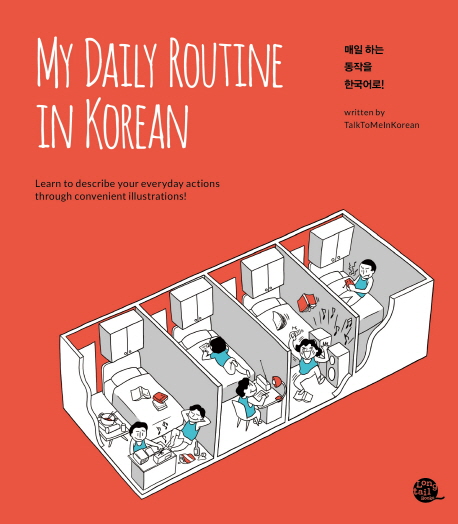
My Daily Routine In Korean is a picture dictionary designed to help you learn everyday Korean words and expressions through convenient visual aids. Free audio files are available HERE Between the moment you wake up in the morning until you go to bed at night, you do hundreds of small activities that you do on a daily basis. How do you say “dispense shampoo” or “toss and turn”? Do you know how to say “open the book” or “set the alarm” in Korean?My Daily Routine In Korean is a picture dictionary designed to help you learn everyday Korean words and expressions through convenient visual aids. The book is divided into 32 different categories which are related to common everyday activities, and each of the categories introduces up to 17 phrases through fun illustrations. The translation of each phrase is on the reverse page of the illustration, and you can also find an index of all 408 expressions at the end of this book.With this book, you do not have to memorize every word in order from cover to cover, but if you learn better that way, that’s fine, too! The easiest and one of the more productive ways to study with this book is by choosing a topic which interests you and choose one or two words/expressions from that topic to use in your everyday actions and conversations. Read the words or expressions aloud and listen to the MP3 audio pronunciation of the words/expressions if you’d like to hear them spoken by a native speaker, write them down in a notebook, and put them to use! The more you read, write, say, or hear words and expressions in practice, the easier you can recall the word or expression when you need to use it. CONTENTS #1 SLEEPING 잠자기 #2 WAKING UP 일어나기 #3 SHOWERING 샤워하기 #4 WASHING HAIR 머리 감기 #5 WASHING FACE 세수하기 #6 BRUSHING TEETH 양치하기 #7 SHAVING 면도하기 #8 GLASSES AND CONTACT LENSES 안경과 렌즈 #9 GETTING DRESSED 옷 입기 #10 MAKEUP 화장 #11 COOKING 요리하기 #12 EATING 음식 먹기 #13 DOING THE DISHES 설거지하기 #14 CLEANING 청소하기 #15 LAUNDRY 빨래 #16 GARDENING 정원 가꾸기 #17 TELEPHONE 전화 #18 TELEVISION 텔레비전 #19 RADIO 라디오 #20 WEB SURFING 웹서핑 #21 READING A BOOK 책 읽기 #22 SITTING 앉기 #23 LYING DOWN 눕기 #24 STANDING 서기 #25 HEARING 듣기 #26 SEEING 보기 #27 TASTING 맛보기 #28 TOUCHING 만지기 #29 WALKING 걷기 #30 MARRIAGE 결혼 #31 BIRTHDAY 생일 #32 MOVING 이사하기
Learn your first 500 Korean words and thousands of related words and expressions that you can start using right away in your everyday conversations in Korean! 50 days x 10 words each day = 500 wordsBut that’s not it. Each word is accompanied by many related words and expressions, so in the end you will be learning thousands of useful Korean expressions, in context. And all the key words are presented to you through context, through a story. Free audio files are available HEREAfter studying with each day’s worth of words, you can also get the full story in Korean! And to also make it even easier for you to remember the word you study, we provide two types of review exercises.You can download all audio tracks on our Book Audio page. TalkToMeInKorean is a website and community where learning Korean may not be magically easy, but is fun and exciting. Language learning can be boring, challenging, and sometimes frustrating, especially when there are not enough motivating or fun factors. As a community that motivates and nurtures learners to develop their language skills in fun and innovative ways, the variety of content available at Talk To Me In Korean has drawn over 1.9 million people to the site to download over 50 million lessons. CONTENTS Preface How to Use This Book Korean Language Basics Day 01-50 Antonyms Answers Index
With the second book of our best-selling “My First 500 Korean Words” series, you can effectively expand your Korean vocabulary from a beginner to an intermediate level. Audio files for this book are available on the TTMIK website.Tired of memorizing word lists without context?Feel like your Korean vocabulary is limited?With this book, you can learn 500 new Korean words and thousands of related words and expressions through short stories, making it easier to understand, retain, and use new words.This book is the perfect choice for those looking to build a strong vocabulary foundation and level up their Korean skills from a beginner to an intermediate level.Following the same structure as the first book, each lesson of “My First 500 Korean Words Book 2” presents 10 new words through a short story where the words are put together into meaningful context. Designed for upper beginners to intermediate learners, this book covers more types of words and more advanced grammar points compared to the previous book.Why You’ll Love This Book You can learn 500 words in context that are used daily by native Korean speakers. With the exercises and review quizzes, you can boost your retention of new words. The lessons are simple enough to complete daily, which will keep you motivated. You’ll naturally pick up complex conjugation and other grammar points while reading stories. ContentsPrefaceHow to Use This BookIntroductionWords Day 01-10Quiz Day 01-10Words Day 11-20Quiz Day 11-20Words Day 21-30Quiz Day 21-30Words Day 31-40Quiz Day 31-40Words Day 41-50Quiz Day 41-50AnswersIndex

Simply follow the guidelines and simple missions in this book and you will find yourself writing in Korean much better and much more confidently! Great for all levels!Here’s why you are going to love this book! You can learn commonly used day-to-day Korean expressions. You can turn everyday moments into learning opportunities. Your social media feed will become more interesting! Daily writing practices will give you a confidence boost in your Korean skills. What was your day like today? What is on your mind right now? What are you celebrating? These are not only good questions to answer on social media, but also great topics to write about for improving your Korean! Improve your Korean writing skills by sticking to a regular schedule with the 30-day challenge in this book. Made Specifically for Effective Daily Writing Practices Writing practices are a crucial part of learning to “speak” Korean well. You can slow down and construct sentences at your own pace before you use them. It is not always easy, however, to decide what to write about. The TTMIK team designed this book so that even learners with no writing experience can start making realistic and natural sentences in Korean! Share Your Day on Social Media in Korean! Just follow the friendly guidelines in this book and fill in the blanks with words about your own daily life. You will find yourself writing very natural and interesting captions for your social media posts in Korean! Every time you take a photo with your phone, you can easily find a phrase or sentence structure you can use to make a really cool Korean caption.You can listen to the audio tracks for this book at talktomeinkorean.com/audio. Table of Contents Preface How to Use This Book Korean Language Basics Day 1. [N] 시작: 휴가 시작 Day 2. [N1] + -(이)랑 [N2]: 엄마랑 쇼핑 Day 3. [N] 중: 산책 중 Day 4. 오늘도 [N]: 오늘도 운동 Day 5. [N] 전: 외출 전 Day 6. [N1] + -이/가 좋아하는 [N2]: 내가 좋아하는 옷 Day 7. [N] 끝: 청소 끝 Review Day 8. 오랜만에 [N]: 오랜만에 치킨 Day 9. 너무 [Adj] + -다!: 너무 귀엽다! Day 10. [N1] + -의 [N2] Part 1: 오늘의 점심 Day 11. [N1] + -의 [N2] Part 2: 예지의 그림 Day 12. [N] + -을/를 [V] + -았/었/였다.: 카메라를 샀다. Day 13. 아! [V] + -고 싶다!: 아! 여행 가고 싶다! Day 14. 아! [V] + -기 싫다!: 아! 일어나기 싫다! Day 15. [V] + -기 성공: 1년에 책 100권 읽기 성공 Review Day 16. 나를 위한 [N]: 나를 위한 선물 Day 17. [N1] + -은/는 [N2] + -와/과 함께: 케이크는 커피와 함께 Day 18. [N] + -은/는 처음: 운전은 처음 Day 19. [V] + -(으)ㄹ 때 [Adj] + -(으)ㄴ/는 [N]: 웃을 때 예쁜 소희 Day 20. [Adj] + -(으)ㄴ/는 [N]: 피곤한 월요일 Day 21. [Adj] + -(으)ㄹ 것 같다.: 맛있을 것 같다. Day 22. [N] + -을/를 [V] + -(으)ㄹ까 고민 중: 머리를 자를까 고민 중 Review Day 23. [V] + -고 있는 나: 졸고 있는 나 Day 24. 내가 [V] + -는 이유: 내가 살이 찌는 이유 Day 25. 벌써 [N] + -(이)네.: 벌써 12월이네. Day 26. [N] + -이/가 별로 [Adj] + -네.: 사람이 별로 없네. Day 27. [V] + -(으)ㄹ 수 있을까?: 오늘 집에 갈 수 있을까? Day 28. [V] + -(으)세요.: 주말 잘 보내세요. Day 29. [V/Adj] + -아/어/여요. / [V/Adj] + -(스)ㅂ니다.: 결혼해요. / 결혼합니다. Day 30. [V/Adj] + -았/었/였어요. / [V/Adj] + -았/었/였습니다.: 행복한 생일이었어요. / 행복한 생일이었습니다. Review Glossary
In just 12 weeks you can develop a more robust vocabulary and speak Korean more fluently with My Weekly Korean Vocabulary! If you are tired of memorizing vocabulary and seeing very little progress, this book offers an alternative way to learn and apply Korean vocabulary words and sentences to your life at whatever level of Korean you are comfortable with so you actually learn the words rather than simply memorizing. Each day you have one new keyword, and built upon that keyword are 20 additional phrases and sentences that get progressively longer.You can use this book as a 12-week study aid or as a reference book. Stash it in your backpack or purse to use a phrasebook when you’re traveling around Korea. It does not matter how to use this book or what your level of Korean is as long as you know how to read 한글 (Hangeul)! Whether you are a beginner or advanced Korean learner, everyone can benefit from using My Weekly Korean Vocabulary book.You can see the following in this book: 84 key words to study with 20 sample sentences for each word User-created drawings to help you visualize words Vocabulary & grammar breakdown notesCONTENTSWEEK 1보다 to see; to look; to watch; to meet up; to read전화 phone call; telephone듣다 to hear; to listen친구 friend말하다 to talk; to say; to speak; to tell노래 song가르치다 to teachWEEK 2먹다 to eat; to drink공부 studies, one’s learning마시다 to drink일 work; task읽다 to read질문 question쓰다 to writeWEEK 3빠르다 to be fast지각 being late (for school/work/appointment)느리다 to be slow요리 cooking, cookery깨끗하다 to be clean냄새 smell, odor지저분하다 to be messy; to be dirtyWEEK 4기다리다 to wait운동 exercise, workout; sport(s)뛰다 to run; to jump길 road, street; way걷다 to walk요일 day of the week앉다 to sitWEEK 5배우다 to learn; to study손 hand잊다 to forget발 foot있다 to be there; to exist; to have눈 eye없다 to not have; to be not there; to not existWEEK 6울다 to cry짜증 irritation, annoyance웃다 to laugh, smile걱정 worry, concern재미있다 to be fun; to be funny; to be interesting문제 problem, issue; thing; matter지루하다 to be boring; to be boredWEEK 7크다 to be big; to be tall; to be loud돈 money작다 to be small, little시간 time; hour좋아하다 to like머리 head; hair싫어하다 to dislike, hateWEEK 8자다 to sleep잠 sleep일어나다 to wake up; to get up거짓말 lie만나다 to meet (up); to be seeing someone사이 relationship, relations헤어지다 to part; to break upWEEK 9무섭다 to be scary; to be scared돕다 to help이상하다 to be weird, odd, strange묻다 to ask화내다 to be angry at someone; to yell at someone out of anger생각 thought; opinion; idea부럽다 to be jealous, enviousWEEK 10만들다 to make이유 reason입다 to wear (clothes)실패 failure열다 to open성공 success닫다 to closeWEEK 11사다 to buy약속 plans; promise팔다 to sell부족 shortage, lack, insufficiency알다 to know밥 food; meal; cooked rice모르다 to not knowWEEK 12주다 to give사랑 love받다 to receive연락 contact원하다 to want문자 text message빌리다 to borrow; to rent

In just 12 weeks you can develop a more robust vocabulary and speak Korean more fluently with My Weekly Korean Vocabulary! If you are tired of memorizing vocabulary and seeing very little progress, this book offers an alternative way to learn and apply Korean vocabulary words and sentences to your life at whatever level of Korean you are comfortable with so you actually learn the words rather than simply memorizing. Each day you have one new keyword, and built upon that keyword are 20 additional phrases and sentences that get progressively longer.You can use this book as a 12-week study aid or as a reference book. Stash it in your backpack or purse to use a phrasebook when you’re traveling around Korea. It does not matter how to use this book or what your level of Korean is as long as you know how to read 한글 (Hangeul)! Whether you are a beginner or advanced Korean learner, everyone can benefit from using My Weekly Korean Vocabulary book.You can see the following in this book: 84 key words to study with 20 sample sentences for each word User-created drawings to help you visualize words Vocabulary & grammar breakdown notesYou can study with Book 1 first, but even if you have not studied with Book 1 yet, you can still start learning with Book 2.Tables of ContentsMy Weekly Korean Vocabulary Book 2WEEK 13좋다 to be good; to be desirable; to be nice; to like꿈 dream싫다 to hate, dislike; to be unlikable, unpleasant계획 plan쓰다 to use; to hire노력 effort, endeavor, hard work찾다 to look for; to findWEEK 14같다 to be the same기분 feelings; mood다르다 to be different비교 comparison고르다 to choose인기 popularity필요하다 to need; to be necessaryWEEK 15덥다 to be hot시험 test, exam춥다 to be cold여행 travel, trip모자라다 to lack; to be insufficient준비 preparation믿다 to believe (in), trustWEEK 16밝다 to be bright실망 disappointment어둡다 to be dark이해 understanding바꾸다 to change집 house, home늦다 to be lateWEEK 17이기다 to win나이 one’s age지다 to lose날씨 weather궁금하다 to be curious기회 opportunity, chance신나다 to be exciting; to be excitedWEEK 18많다 to be a lot, many실수 mistake적다 to be little or few (quantity)키 one’s height귀찮다 to be hassling얼굴 face놀다 to play; to hang outWEEK 19따뜻하다 to be warm불만 complaint차갑다 to be cold불편 inconvenience뜨겁다 to be hot하루 one day정하다 to decideWEEK 20가깝다 to be close, nearby해외 overseas, abroad멀다 to be far책 book시키다 to have/make someone do something, to order영화 movie쉬다 to restWEEK 21쉽다 to be easy신발 shoes어렵다 to be difficult건강 one’s health싸우다 to fight, quarrel살 flesh; one’s weight; fat아프다 to be sick; to hurtWEEK 22낮다 to be low고장 breakdown, malfunction (with a machine)높다 to be high (altitude)부탁 one’s favor보내다 to send옷 clothes놀라다 to be surprisedWEEK 23가볍다 to be lightweight고민 one’s worries무겁다 to be heavy기억 one’s memory바쁘다 to be busy맛 taste타다 to rideWEEK 24사귀다 to be in a relationship with someone눈 snow예쁘다 to be pretty비 rain부끄럽다 to be shy; to be embarrassing; to be embarrassed끝 end씻다 to wash

Keep up with current events in Korean while taking your language skills to the next level! You can study with 50 short news articles written in Korean about interesting topics. Free audio files are available HERE Keep up with current events in Korean while taking your language skills to the next level! The popular News In Korean program that used to be available through a subscription-based service on TalkToMeInKorean.com has been published in book format! You can study with 50 short news articles written in Korean about interesting topics.Each article is followed by a complete translation, as well as highlights of main vocabulary words. After reading each article, check how much you understood through the exercise quiz questions. If you are about to study with Korean news articles for the first time, we made a video sharing some tips on how to improve your Korean using news material. CONTENTS News #1 세계 안보를 위협하는 에볼라 바이러스News #2 준고령 인구 1000만 명 돌파News #3 냄새를 못맡는 사람이 더 빨리 사망News #4 나이 많은 신입 사원News #5 사람 손보다 100배 민감한 로봇 손가락News #6 관객이 웃을 때마다 돈을 받는 코미디 클럽News #7 3D 프린터로 권총 만든 일본 남성 구속News #8 호화 열차를 타고 감상하는 가을 경치News #9 고대인들보다 잇몸 염증이 심각한 현대인들News #10 중국어를 필수 과목으로 지정한 포르투갈의 소도시News #11 룸메이트를 찾는 중년층 증가News #12 졸업을 미루는 대학생들News #13 한국 여성들의 지나친 다이어트의 원인News #14 경매에 출품되는 노벨상 메달News #15 일본에서 백만 명 이상의 콘서트 관객을 동원한 빅뱅News #16 대학만큼 들어가기 어려운 유치원News #17 애플을 상대로 승소한 아이폰 사용자News #18 잃은 시력을 회복시켜 주는 실험 성공News #19 택시가 승차 거부하면 20만 원 벌금News #20 감염자의 연령이 다양해지고 있는 대상포진News #21 하루 평균 스마트폰 사용 시간은 3시간 39분News #22 사양길로 접어드는 종이 달력News #23 한국 영화, 이제 관객 수 1억 명 돌파는 거뜬News #24 동안으로 보이게 만드는 식품 4가지News #25 2억 2천만 년 전 “거대 공룡” 무덤 발견News #26 서울시 범죄 우범 지역에서 클래식 음악 방송News #27 암의 대부분은 무작위로 발생, 유전으로 예측 힘들어News #28 한국에 진출한 가구 업체 이케아News #29 스타벅스 커피가 가장 비싼 곳은 한국News #30 두려운 기억을 지워 주는 카레News #31 1970년에 비해 절반 밖에 소비되지 않는 쌀News #32 “면세 담배 좀 사다 주세요”News #33 서울의 아파트 전세금으로 경기도 아파트 구매 가능News #34 서울 시내 게스트하우스 3년새 3배 증가News #35 문화가 있는 수요일” 행사를 진행하는 국립한글박물관News #36 하루 한 번 낮잠으로도 면역력을 회복할 수 있어News #37 물을 정화해서 다시 쓰는 미래의 샤워 기술News #38 신비로운 사진작가 비비안 마이어를 찾아서News #39 자전거로 제주도 한 바퀴News #40 부모 잔소리가 아이의 반항 키운다News #41 헌법재판소, 간통죄 위헌 판단 근거는?News #42 땅콩 자주 먹으면 사망률 낮아진다News #43 43억 년 전, 화성에 대서양만 한 바다 있었던 것으로 밝혀져..News #44 육아냐 일이냐, 선택의 기로에 놓인 한국 엄마들News #45 운동 안 하고 살을 뺄 수 있다?News #46 몸에 좋은 사과, 언제 어떻게 먹을까News #47 어린이 손님 받지 않는 카페, 음식점 늘어News #48 장수 마을 오키나와, 왜 비만 마을이 되었나News #49 꽃 피는 봄날에 우울증 증가?News #50 눈꺼풀 떨림 증상, 마그네슘 섭취하세요
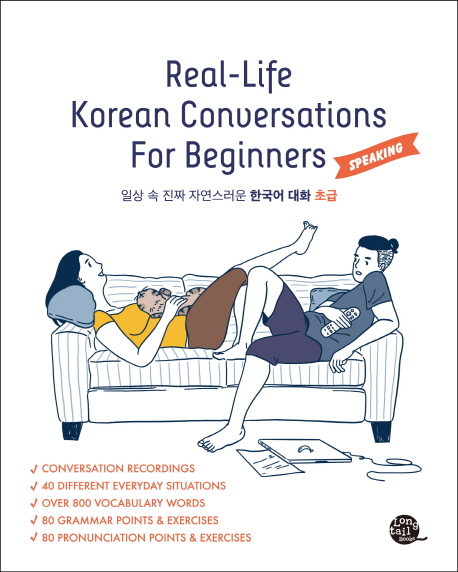
Real Life Korean Conversations for Beginners includes 40 different dialogues taken from real life so you can navigate through social situations in Korean with ease. Free audio files are available HERE Going to a wedding? Want to see that new movie? Starting a budding romance? Once you’ve studied with this book, you’ll have no problem doing those things in Korean! Real Life Korean Conversations for Beginners includes 80 different dialogues taken from real life so you can navigate through social situations in Korean with ease.In each unit of Real Life Korean Conversations for Beginners there are 2 dialogs delivered just like native Korean speakers would use in conversation. The first dialogue is a short warm-up and the following dialogue is more in depth. You can listen and follow along with the accompanying audio tracks (tip: try repeating each line in a loud voice; this improves your pronunciation and puts you on the fast track to fluency!).Each unit also includes a list of the important words used in the conversation, followed by a grammar break-down with activities so you can practice that newly learned vocabulary like a champ. There are also cultural tips to help you understand some of the how and why Koreans speak the way they do. One of the best features of the book is the pronunciation points. There are 2 pronunciation points with exercises accompanying each dialogue to help the words roll right off your tongue like a natural.Are you ready to speak Korean like a native? The best way to do so is to listen to natural conversations and then repeat what you’ve learned. Real Life Korean Conversations for Beginners is the perfect tool to help you do just that! TalkToMeInKorean is a website and community where learning Korean may not be magically easy, but is fun and exciting. Language learning can be boring, challenging, and sometimes frustrating, especially when there are not enough motivating or fun factors. As a community that motivates and nurtures learners to develop their language skills in fun and innovative ways, the variety of content available at Talk To Me In Korean has drawn over 1.9 million people to the site to download over 50 million lessons. CONTENTS PrefaceHow to Use This BookIntroductionsDialogue #1 Self-IntroductionsDialogue #2 Exchanging NumbersFriendsDialogue #3 How are you?Dialogue #4 PlansInvitationsDialogue #5 DinnerDialogue #6 WeddingFamilyDialogue #7 Coming HomeDialogue #8 Waking UpShoppingDialogue #9 MarketplaceDialogue #10 Clothing StoreDialogue #11 Shoe StoreDialogue #12 Electronics StoreDialogue #13 Furniture StoreDialogue #14 Cosmetics StoreDialogue #15 BookstoreOn a DateDialogue #16 Blind DateDialogue #17 Movie DateDialogue #18 ParkDialogue #19 ConfessingDialogue #20 RejectionAt WorkDialogue #21 Overtime WorkDialogue #22 MeetingDialogue #23 Work ScheduleDialogue #24 Getting a JobDialogue #25 Company DinnerSchoolDialogue #26 ClassDialogue #27 ExamFoodDialogue #28 RestaurantDialogue #29 Coffee ShopDialogue #30 Friend’s HouseDialogue #31 CookingDialogue #32 Ordering DeliveryHealthDialogue #33 PharmacyDialogue #34 HospitalDialogue #35 Not Feeling WellTransportationDialogue #36 TaxiDialogue #37 BusDialogue #38 SubwayDialogue #39 AirplaneDialogue #40 Bicycle
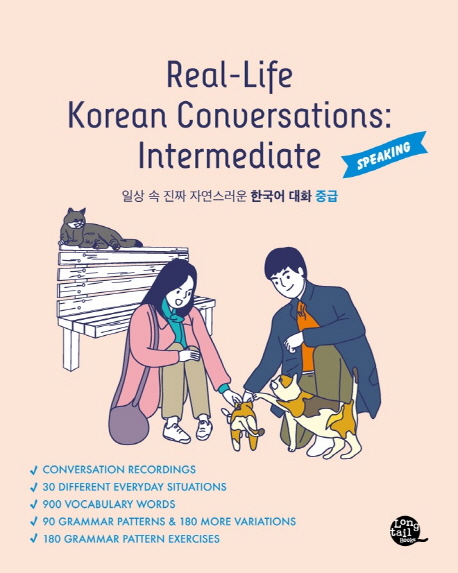
Learn essential intermediate-level sentence patterns through natural everyday conversations and improve your Korean vocabulary! Free audio files are available HEREThis book contains typical Korean dialogues on 30 different topics. They are all very common situations that you may experience in your day-to-day life. The conversations have been written in just the right length for an intermediate learner, and each line has an English translation on the adjacent page. You can listen to every vocabulary word, sample sentence, and complete dialogue from the book using the accompanying audio tracks. TalkToMeInKorean is a website and community where learning Korean may not be magically easy, but is fun and exciting. Language learning can be boring, challenging, and sometimes frustrating, especially when there are not enough motivating or fun factors. As a community that motivates and nurtures learners to develop their language skills in fun and innovative ways, the variety of content available at Talk To Me In Korean has drawn over 1.9 million people to the site to download over 50 million lessons. CONTENTS PrefaceHow to Use This BookIntroductionsDialogue #1 Self-IntroductionsDialogue #2 Exchanging NumbersFriendsDialogue #3 How are you?Dialogue #4 PlansInvitationsDialogue #5 DinnerDialogue #6 WeddingFamilyDialogue #7 Coming HomeDialogue #8 Waking UpShoppingDialogue #9 Clothing StoreDialogue #10 Shoe StoreDialogue #11 Furniture StoreDialogue #12 Cosmetics StoreOn a DateDialogue #13 Blind DateDialogue #14 Movie DateDialogue #15 ParkDialogue #16 RejectionAt WorkDialogue #17 Overtime WorkDialogue #18 MeetingDialogue #19 Company DinnerSchoolDialogue #20 ClassDialogue #21 ExamFoodDialogue #22 RestaurantDialogue #23 CookingDialogue #24 Ordering DeliveryHealthDialogue #25 PharmacyDialogue #26 HospitalDialogue #27 Not Feeling WellTransportationDialogue #28 TaxiDialogue #29 SubwayDialogue #30 Airplane

Seoulistic.com is designed to provide local insider knowledge on how to navigate Korea like a pro. While trying to make Korea more accessible to the world with over 240 original online articles and videos, Seoulistic has attracted over 4.5 million views on YouTube, over one million page views per month on the blog, and has appeared on the BBC as well as the New York Daily News.? CONTENTS * How To Use This Book * Introduction To Han-geul * Food * Transportation * Shopping * Daily Life * Health * Career
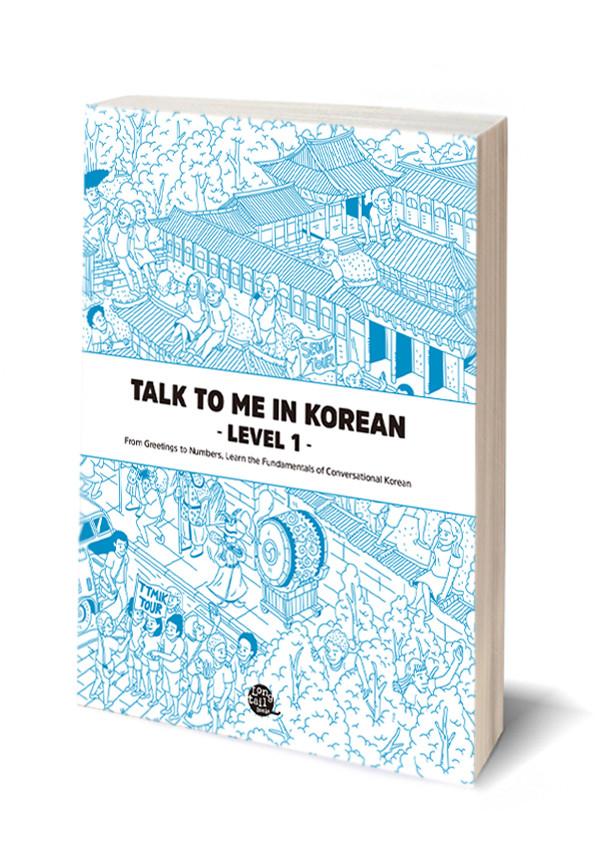
You can download the free audio files HERE. Learn Korean more effectively with our core grammar lessons! From saying the basic greetings, to counting numbers, and to having simple yet natural conversations in Korean, you can learn the basics of the Korean language with this textbook. We made this book to help you learn Korean on your own, even if you don’t go to a Korean language school to take a course. TTMIK Books are based on the lessons available on our website and in the podcast but improved and edited to fit the book format, so that you can learn Korean on your own. The book comes with mp3 audio files including the recordings of all of the major vocabulary words, expressions, sample sentences and dialogues used in the book.After learning each grammar point, you will also see a sample dialogue based on what you’ve learned in the certain unit. You will also see some exercise questions so that you can check and reinforce what you’ve learned. TalkToMeInKorean.com is a Korean language learning website that became popular overseas before it was recognized in Korea. Ever since its foundation in 2009, more than 5 million people have?visited TalkToMeInKorean.com. TTMIK audio lessons have been downloaded over 50 million times while TTMIK YouTube videos have received over ten million views thus far. TTMIK was ranked as the #1 Language Blog by Lexiophiles in 2010 and 2013 thanks to votes from users all over the world. Additionally, TTMIK was one of the recipients of the Prime Minister Award at the 2013 Korea Content Awards. Learn Korean more effectively with our core grammar lessons! From saying the basic greetings, to counting numbers, and to having simple yet natural conversations in Korean, you can learn the basics of the Korean language with this textbook. Contents LESSON 1. Hello, Thank you / 안녕하세요, 감사합니다 LESSON 2. Yes, No, What? / 네, 아니요 LESSON 3. Goodbye, See you / 안녕히 계세요, 안녕히 가세요 LESSON 4. I&m sorry, Excuse me / 죄송합니다, 저기요 LESSON 5. It&s me, What is it? / -이에요, -예요 LESSON 6. This is …, What is this? / 이거…, 이거 뭐예요? LESSON 7. This, That, It / 이, 저, 그, 거/것 LESSON 8. It&s NOT me / 아니에요 LESSON 9. Topic/Subject Marking Particles / -은/-는, -이/-가 LESSON 10. Have, Don&t have, There is, There isn&t / 있어요, 없어요 [Blog] Places in Korea: Han River (한강) LESSON 11. Please give me … / … 주세요 LESSON 12. It&s delicious, It tastes awful, Thank you for the food / 맛있어요, 잘 먹겠습니다 LESSON 13. I want to … / …고 싶어요 LESSON 14. What do you want to do? / 뭐 -고 싶어요? LESSON 15. Sino-Korean Numbers / 일, 이, 삼, 사, … LESSON 16. Basic Present Tense / -아/-어/-여요 LESSON 17. Past Tense / -았/었/였어요 LESSON 18. Location-marking Particles / 어디, -에, -에서 LESSON 19. When / 언제 LESSON 20. Native Korean Numbers / 하나, 둘, 셋, 넷, … [Blog] Travel in Korea: Taking a Taxi LESSON 21. Negative Sentences / 안, -지 않다 LESSON 22. Verbs / 하다 LESSON 23. Who? / 누구? LESSON 24. Why? How? / 왜? 어떻게? LESSON 25. From A To B, From C Until D / -에서/부터 -까지 [Answers]