LEARN KOREAN
- Active Korean
- Business Korean
- Darakwon
- Ewha Korean
- Get it Korean
- Grammar Books
- Hi Korean
- Hollym
- I Love Korean
- Integrated Korean
- Korean Made Easy
- Koryo University Fun
- Learn! Korean with BTS
- Master Korean
- Sejong Korean Textbooks
- Seoul University Korean
- SNU Korean+
- Sogang Korean
- Korean Language Calendar
- Talk to me in Korean
- TOPIK
- Yonsei University
- All Others
The Best Korean Grammar Books
Filter products
Korean Made Easy–Grammar II (Intermediate to Advanced) — from core grammar points to real-world usage, all in one book! Korean Made Easy–Grammar II (Intermediate to Advanced) is the grammar textbook from the long-loved Korean Made Easy series. As the second book in the grammar series aligned with TOPIK and the ISCK curriculum, it covers 100 intermediate and advanced grammar points, organized into four parts according to function and meaning. Each unit is divided into Grammar Essentials, which explains core concepts and usage restrictions, and Grammar in Action, which illustrates how the grammar is used in real situations. An appendix at the end of the book includes 100 supplementary grammar points, allowing learners to cover the full range of intermediate–advanced grammar related to the target items. As in Volume 1, QR codes provide Korean-language explanations, usage charts, and practice exercises, making this book an optimized resource for learners who want to fully master Korean grammar. Key Features 1. A structure that allows learners to study freely according to their goals Korean Made Easy–Grammar II (Intermediate to Advanced) organizes grammar points corresponding to TOPIK II and ISCK intermediate–advanced levels into four parts, enabling learners to independently find and study the grammar items they need. 2. Master grammar from core concepts to real-life usage Each unit consists of Grammar Essentials, which explains the core concepts and usage constraints, and Grammar in Action, which presents real-world usage by situation. This helps learners move beyond simply “knowing” grammar to actually “using” it. 3. A complete collection of 200 intermediate–advanced grammar points The book includes 100 essential grammar points and 100 related supplementary grammar points, allowing learners to compare meanings and usage across similar grammar forms. 4. Practice exercises and Korean-language explanations available via QR code Learners can review grammar thoroughly using the practice exercises accessible through QR codes at the end of each unit. Korean-language explanations are also provided for learners and instructors who wish to check the original Korean descriptions. Recommended for Learners who have completed beginner-level Korean grammar and wish to study intermediate–advanced grammar Intermediate–advanced learners preparing for TOPIK II Learners who have studied intermediate–advanced grammar but want a more systematic understanding and clearer distinctions Learners who want to use Korean accurately and preciselyContents Part I: 절의 연결 (연결 어미 표현)1. 나열과 추가1과 –(으)며2과 –(으)ㄹ뿐 아니라3과 –은/는 데다가2. 대조4과 –기는 하지만 5과 –(으)나6과 –은/는 반면에7과 –지8과 –든지9과 –은/는 대신에10과 –느니11과 –기는커녕3. 원인과 이유 12과 –아/어서인지13과 –느라고14과 –는 바람에15과 –기에16과 –길래17과 –(으)므로18과 –(으)ㄹ까 봐19과 –(으)ㄹ 테니20과 –다고4. 계기와 결과21과 –(으)니22과 –은/는 것을 보니23과 –더니24과 –자25과 –고서26과 –아/어다가5. 동시성27과 –자마자28과 –는 대로29과 –는 사이에30과 –은/는 가운데31과 –은/는 채로6. 의도와 목적32과 –기 위해(서)33과 –도록34과 –고자35과 –(으)려다가36과 –(으)려면37과 –(으)ㄹ 겸38과 –은/는 김에7. 조건39과 –아/어야40과 –거든41과 –다면42과 –았/었더라면43과 –다가는44과 –은/는 한8. 배경45과 –(으)ㄹ 텐데46과 –은/는지9. 양보47과 –은/는데도48과 –고도49과 –더라도50과 –(으)ㄹ지라도51과 -다고 해도52과 –아/어 봤자53과 –(으)ㄹ 정도10. 정도54과 –은/는/을 만큼55과 –(으)ㄹ수록11. 비유56과 –듯이57과 –은/는 듯이Part 2: 태도와 판단 표현1. 행동과 상태58과 –는 중이다59과 –곤 하다60과 –(으)ㄹ 참이다61과 –(으)ㄹ 뻔하다2. 경향와 인지62과 –은/는 편이다63과 –(으)ㄹ 만하다64과 –은/는/을 줄 알다3. 의도와 태도65과 –아/어야겠다66과 –은/는 척하다4. 추론과 가정67과 –나 보다68과 -은/는/을 모양이다69과 –은/는/을 듯하다70과 –(으)ㄹ지도 모르다71과 –(으)ㄹ 리 없다72과 –은/는/을 셈이다Part 3: 구어체 표현(종결 어미)1. 설명과 이유 73과 –거든(요)74과 –은/는걸(요)75과 –은/는데(요)2. 동의와 응답76과 –지(요)77과 –기는(요)78과 –잖아(요)79과 –고말고(요)3. 감탄과 놀람80과 -네(요)81과 –(군)요82과 –다니(요)4. 인용과 보고83과 –대(요)84과 –다고(요)85과 –다면서(요)5. 의무와 추측86과 –아/어야지(요)87과 –(으)ㄹ걸(요)6. 과거의 경험88과 –더라고(요)89과 –던데(요)7. 질문과 문의 90과 –고(요)91과 –게(요)Part 4: 심화 문법 (형태, 의미, 화법)1. 한정사92과 회상 한정사 –던93과 인용 한정사 –다는2. 피동과 사동94과 피동95과 사동3. 어휘와 구 표현96과 조사97과 보조 용언98과 부사구 표현4. 화법과 문어체99과 화법100과 문어체
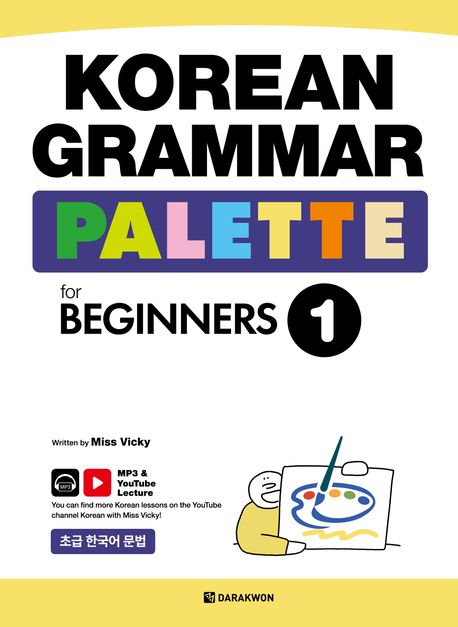
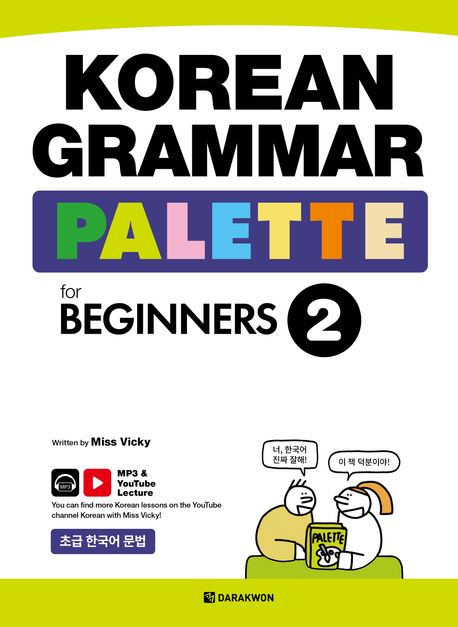
About this Book: “This book is made to help you build a strong base in basic Korean grammar, making it easier to deepen your understanding of the language and improve your skills over time.”Audio Download • You can study with just this book (and the MP3 files), or use it together with the YouTube lessons for extra support. • Each chapter starts with a clear explanation of a grammar concept, accompanied by example sentences to help you understand how it works in context. • You can test your understanding with the Practice and Quiz sections, which are designed to help you apply what you’ve learned. Occasionally, you’ll come across 꿀팁 (honey tips)—a fun Korean slang term for helpful advice—that will make your learning experience even smoother. • You can listen to audio recordings of the example sentences from the Practice and Quiz sections. • At the end of each chapter, there’s an Exercise section where you can review and reinforce what you’ve learned. Additionally, you’ll find a special section introducing aspects of Korean culture, vocabulary, or commonly used phrases, adding depth to your understanding of the language. If you’d like to continue your Korean studies and improve your language skills, feel free to visit Miss Vicky’s YouTube Channel (https://www.youtube.com/@KoreanwithMissVicky).
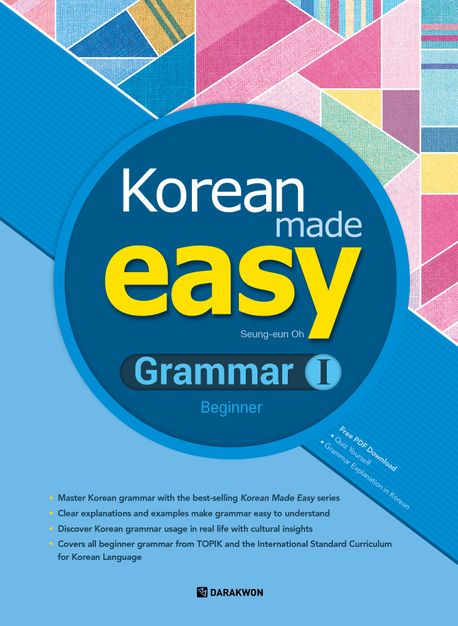
This book is the first volume in the Korean Made Easy - Grammar series, which is designed according to the difficulty levels of the TOPIK exam and the Korean Standard Curriculum. It provides a systematic and comprehensive approach to Korean grammar for beginner learners, helping them build a strong foundation while understanding how grammar is used in real-life situations. Key features of the book include:A structured curriculum tailored for English-speaking learners, with grammar concepts categorized by function and topic.Extensive examples demonstrating real-world grammar usage and cultural insights.A learner-centered structure that allows for self-paced study based on individual goals and needs.Additional resources, including QR codes linking to practice exercises and Korean-language grammar explanations for instructors.Table of Contents 서문 Preface 04이 책의 사용법 How to Use This Book 06목차 Table of Contents 08Part 1 Basic ExpressionsPeople and ObjectsLesson 01 Noun + 이다 14 Lesson 02 있다/없다 Possession and relationship 18Lesson 03 있다/없다 Existence and location 22NumbersLesson 04 Sino-Korean numbers 26 Lesson 05 Native Korean numbers 34Lesson 06 Time 40TensesLesson 07 Informal polite present tesnse -아/어요 46 Lesson 08 Informal polite past tense -았/었어요 50Lesson 09 Informal polite future tense -(으)ㄹ거예요/어요 54Sentence StructuresLesson 10 Particles 58Lesson 11 Question words 70Lesson 12 Regular and irregular conjugation 76Lesson 13 Nagation 82Lesson 14 Comperative and superlative 88Part 2 Meaning-Focused Endings and ExpressionsDesires and WishesLesson 15 -고 싶다 want to 94 Lesson 16 -았/었으면 좋겠다 I wish / I hope 98Abilities and SkillsLesson 17 -(으)ㄹ 수 있다 can 104 Lesson 18 -(으)ㄹ 줄 알다 know how to 108Commands and RequestsLesson 19 -(으)세요 Please do something 112 Lesson 20 -아/어 보세요 Try do something 116Lesson 21 -아/어 주세요 Please do something for me 120Necessity and PermissionLesson 22 -아/어야 하다 must, have to, need to, should 124Lesson 23 -아어도 되다 You may/can 128Lesson 24 -(으)면 안 되다 You must not / It’s not allowed 132Lesson 25 -(으)면 되다 just need to... 136ExperiencesLesson 26 -아/어 봤다 have tried 140 Lesson 27 -(으)ㄴ 적이 있다 have experienced 144Action and StateLesson 28 -고 있다 be...ing 148 Lesson 29 -아/어 있다 be...ing 152Intentions and GuessesLesson 30 -겠- will / must be 156 Lesson 31 -(으)ㄹ까? Shall we? / Would it be? 162Lesson 32 -(으)ㄹ게 I will... 168Lesson 33 -(으)ㄹ래 I want to 172Lesson 34 -(으)려고 하다 plan/try to, be about/going to 176Lesson 35 -기로 하다 decide / determine / promise to... 180Lesson 36 -은/는/을 것 같다 seem to, look like 184Change and ConfirmationLesson 37 -아/어지다 become / get 190 Lesson 38 -게 되다 end up ...ing, come to 194Lesson 39 - 지 Isn’t it? / Right? 198Part 3 Clause-Connecting Endings and ExpressionsCoordinationLesson 40 -고 and 204 Lesson 41 -아/어서 and 208Alternation and ContextLesson 42 -거나 or 212 Lesson 43 -지만 but 216Lesson 44 -는데 but, and 220Reason and CuaseLesson 45 -아/어서 because 226 Lesson 46 -(으)니까 ..., so 230Lesson 47 -기 때문에 because... 234Time RelationsLesson 48 -(으)ㄴ 후에 after 238Lesson 49 -기 전에 before 242Lesson 50 -(으)ㄹ 때 when 246Lesson 51 -(으)ㄴ 지 since 252Purpose and IntentionLesson 52 -(으)러 in order to 256 Lesson 53 -(으)려고 in order to 260Condition and ConcessionLesson 54 -(으)면 if 266 Lesson 55 -아/어도 even if 270SimultaneityLesson 56 -(으)면서 while 274 Lesson 57 -(으)ㄹ까? Shall we? / Would it be? 278Lesson 58 -(으)ㄹ게 I will... 284Part 4 Derivational Endings and Speech StylesDerivational EndingsLesson 59 Adnominal endings -은/는/을 290 Lesson 60 Adverbial ending -게 300Lesson 61 Nominalizing endings -기 and -(으)ㅁ 304 Speech Styles and HonorificsLesson 62 반말 Informal casual speech 310 Lesson 63 격식체 Formal polite speech 314Lesson 64 존댓말 Honorifics 318색인 Index 324
About this Book: “This book is made to help you build a strong base in basic Korean grammar, making it easier to deepen your understanding of the language and improve your skills over time.”Audio Download Each chapter starts with a clear explanation of a grammar concept, accompanied by example sentences to help you understand how it works in context. You can test your understanding with the Practice and Quiz sections, which are designed to help you apply what you’ve learned. Occasionally, you’ll come across 꿀팁 (honey tips)—a fun Korean slang term for helpful advice—that will make your learning experience even smoother. You can listen to audio recordings of the example sentences from the Practice and Quiz sections.At the end of each chapter, there’s an Exercise section where you can review and reinforce what you’ve learned. Additionally, you’ll find a special section introducing aspects of Korean culture, vocabulary, or commonly used phrases, adding depth to your understanding of the language. If you’d like to continue your Korean studies and improve your language skills, feel free to visit Miss Vicky’s YouTube ChannelContents The Author’s Message Recommendation from a Student/Proofreader How to use this book CHAPTER 1 Beginner’s Guide to Korean Grammar CHAPTER 2 은/는 & 이/가 : Topic Markers & Subject Markers CHAPTER 3 을/를 : Object Markers CHAPTER 4 Verbs CHAPTER 5 Essential Opposite Verb Pairs in Korean CHAPTER 6 에 & 에서 : Place & Time Markers CHAPTER 7 부터, 에서 & 까지 : Particles for Marking RangeCHAPTER 8 에게/한테 : to and from someone CHAPTER 9 와/과, (이)랑, 하고 & (으)로 : More Essential Particles (1) CHAPTER 10 도 & 만 : More Essential Particles (2) CHAPTER 11 Adjectives CHAPTER 12 안, -지 않다 : Negating Verbs and Adjectives CHAPTER 13 The -ㅂ/습니다 Ending APPENDIX Personal Pronouns in KoreanClosing Message
The new edition of comes with free MP3 audio download. 목차 문법 2 머리말 일러두기 등장인물 소개 01 동작동사 (으)러 가다/오다 02 ㄹ 탈락 동사 03 동작동사(으)ㄹ 래요?(1) 04 ㄷ 불규칙 동사 05 상태동사(으)ㄴ· · [중략] · · 62 반말(1) 63 반말(2) 64 반말(3) 65 반말(4) 66 종합 연습 문법3 머리말 일러두기 01 반말 종합 연습 02 상태동사 아/어하다 03 상태동사 게 04 동작동사(으)ㄴ 지 05 상태동사아/어 보이다 · · [중략] · · 71 동가 지만 동사 기는 하지만 72 동작동사 자마자,동작동사 는 대로 73 동사거든(요)동사잖아(요) 74 명사 (이)나 명사 밖에 없다 75 동사 (으)는.는데 동사 던데 76 이유 표현 종합 연습
The new edition of comes with free MP3 audio download. 목차 머리말 일러두기 교재 구성 등장인물 소개 1 한글의 이해 2 한글 배우기 3 단어 배우기 4 한국어 문장 만들기
The new edition of comes with free MP3 audio download. 목차 머리말 Preface 일러두기 How to Use This Book 등장인물 소개 Characters 01 ~입니다/입니까? 02 은/는 (1) 03 이/그/저 04 ㅂ/습니다, ㅂ/습니까? 05 이/가 06 이/가 아니다 07 아요/어요 08 이에요/예요 09 을/를 10 한자어 수(1) 11 ~에 가다 12 ~에 있다 13 한자어 수(2) 14 ~고 싶다 15 ~고 싶어 하다 16 ~하고 17 ~에서 18 고유어 수(1) 19 ~(으)세요 20 은/는 21 고유어 수(2) 22 ~(으)로(1) 23 ~에 24 ~(으)세요? 25 았/었 26 ~부터 ~까지 27 안 28 ~지 않다 29 ~도 30 의문사 31 ~(으)ㄹ 거예요(1) 32 ~께서 ~(으)십니다 33 ~만 34 (으)ㄹ까요? 35 (으)ㅂ시다 36 (이)랑 37 (이)지요?, ~지요? 38 ~겠 39 ~고(1) 40 ~(으)ㄹ 거예요(2) 41 으 탈락 42 ~지만 43 ~고(2) 44 ~(으)십시오 45 ~아서/어서(1) 46 ~에게/한테 47 ~와/과 48 ~(으)로 (2) 49 (으)ㄹ 수 있다/없다 50 ~아서/어서(2) 51 ~이어서/여서 52 ~고(3) 53 ~에서 ~까지 54 ~에게(서)/한테(서) 55 못 56 ~지 못하다 57 ~보다 58 ㅂ불규칙 동사 59 ~아/어 주다 60 ~지 말다 61 ~(으)니까 62 ~(이)니까 부록 Appendices 모범 답안 Answers 듣기 지문 Listening Script
The new edition of comes with free MP3 audio download. 목차 머리말 일러두기 등장인물 소개 1. 회상 표현 ① 동사 더라고(요)/던데(요)/데(요) ② 동사 던가(요)? ③ 동사 더라니 2. 높임 표현 ① 주체 높임 ② 객체 높임 ③ 상대 높임 3. 대조 대립 표현 ① 동사 (으)나 ② 동사 (으)ㄴ/는 반면(에), 동사(으)ㄴ/는 데 반해 ③ 동사 (으)면서도 ④ 동사 고도 4. 추측 표현 ① 동사 (으)ㄴ/는/(으)ㄹ 듯하다 ② 동사 (으)ㄴ/는/(으)ㄹ 모양이다 ③ 동사 (으)ㄹ지도 모르다 ④ 동사 지 않을까 싶다 ⑤ 동사 (으)려나? ⑥ 동사 (으)ㄹ걸(요) 5. 조건 가정 표현 ① 동사 (으)면, 동사다면 ② 동사 다(고) 치다 ③ 동작 동사자면 ④ 동작동사 다(가) 보면, 동작동사 다가는 ⑤ 동사 지 않고서는 ⑥ 동작동사 는 날에는 6. 간접 인용의 준말 ① 간접 인용의 준말 1 ② 간접 인용의 준말 2 7. 이유 표현 ① 동작동사 는 바람에, 동작동사 는 통에 ② 동사 (으)ㄴ/는 탓에, 동사 (으)ㄴ/는 덕분에 ③ 동작동사 다(가), 동작동사 느라(고) ④ 동사 기에 ⑤ 동사 (으)ㄴ/는 만큼 ⑥ 동사 (으)ㄴ 나머지 8. 선택 표현 ① 동작동사 느니 ② 동작동사 (으)ㄹ 바에야 ③ 동사 든(지) 동사든(지), 동사 건 동사 건 ④ 동사 (으)나 동사 (으)나 ⑤ 동사 다기보다(는) ⑥ 동작동사 느니만 못하다 부록 모범 답안 듣기 지문 문법 색인
The new edition of comes with free MP3 audio download. 목차 머리말 일러두기 등장인물 소개 1. 화제 표현 ① 명사은/는 ② 명사(이)란 ③ 명사(이)야말로 ④ 명사(이)야 2. 의존명사 구성 ① 동작동사는 수가 있다 ② 동사(으)ㄴ/는/(으)ㄹ 데 ③ 동사(으)ㄴ/는/(으)ㄹ 바 ④ 동사(으)ㄹ 리(가) 없다, 동사(으)ㄹ 법도 하다 3. 부가·나열 표현 ① 동사거니와, 동사(으)ㄹ뿐더러 ② 명사이자 명사은/는 물론이고, 명사은/는 고사하고 ④ 동작동사는 한편 ⑤ 동사(으)ㄴ가/는가 하면 ⑥ 동작동사(으)랴 동작동사(으)랴 ⑦ 동사(으)니/느니 동사(으)니/느니 4. 배경 표현 ① 동사(으)ㄴ/는 가운데 ② 동사(으)ㄴ/는 와중에 ③ 동사(으)ㄴ/는/(으)ㄹ 판에 ④ 동사(으)ㄴ/는 마당에 ⑤ 동사던 차에 5. 명사절·명사구 보문 구성 ① 동사(으)ㅁ, 동사기, 동작동사(으)ㄹ 것 ② 동사다는 명사, 동사(으)ㄴ/는/(으)ㄹ 명사 6. 유사·비유 표현 ① 동사듯(이) ② 동사(으)ㄴ/는/(으)ㄹ 듯(이) ③ 동작동사 (으)ㄴ/는/(으)ㄹ 듯 만/마는/말 듯 ④ 동사(으)ㄴ/는 양 ⑤ 동사다는 듯(이) 7. 양보 표현 ① 동사다손 치더라도 ② 동사(으)ㄴ들 ③ 동사기로서니 ④ 동사(으)ㄹ망정, 동사(으)ㄹ지언정 ⑤ 동작동사는 한이 있더라도/있어도 ⑥ 동사아/어 봤자 ⑦ 동사(으)랴마는, 동사겠냐마는 8. 목적 및 결과 표현 ① 동작동사고자 ② 동작동사게/게끔, 동작동사도록 ③ 동작동사(으)니 ④ 동작동사자 부록 모범 답안 듣기 지문 문법 색인
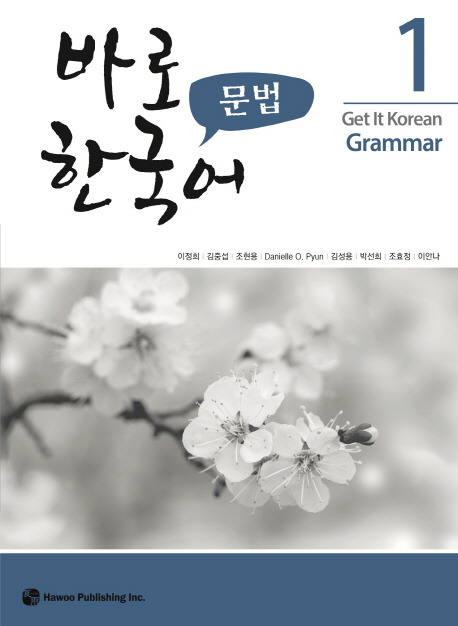
The new edition of comes with free MP3 audio download. 목차 문법 1 머리말 일러두기 등장인물 소개 01 명사 입니다 /명사 입니까? 02 명사은/는(1) 03 이/그.저 04 동사 ㅂ/습니다 동사 ㅂ/습니까? 05 명사 이/가 06 명사 이/가 아니다 07 동사 아요/어요 · · [중략] · · 60 동작동사 지 말다 61 동사 (으)니까 62 명사(이)니까 문법2 머리말 일러두기 등장인물소개 01 동작동사(으)러 가다/.오다 02 ㄹ 탈락 동사 03 동작동사 (으)ㄹ래요?(1) 04 ㄷ 불규칙 동사 05 상태동사 (으)ㄴ · · [중략] · · 60 불규칙 종합연습 61 높임말 종합연습 62 반말(1) 63 반말(2) 64 반말(3) 64 반말(4) 66 종합연습
목차 머리말 일러두기 등장인물 소개 01 동작동사 다(가) 보면 02 동사 (으)ㄹ 줄 알았다/몰랐다 03 동작동사 느라(고) 04 동사 아/어야 05 동사 (으)ㄹ 정도(로) 06 동작동사 고 나니(까) 07 아무 명사 (이)나 08 동작동사 (으)ㄴ/는 김에 09 동작동사 아/어 있다 10 동사 (으)ㄹ까 봐(서) 11 동작동사 기에는 12 동사 거든 13 명사 을/를 통해(서) 14 동사 (으)ㄴ/는 데다(가) 15 동작동사 다(가) 보니(까) 16 동사 더라도 17 동사 (으)ㄹ 뿐(만) 아니라, 명사 뿐(만) 아니라 18 동사 (으)ㄴ/는 탓에, 명사 ?탓에 19 사동 20 동사 고 해서 21 명사 (으)로 인해(서) 22 동사 (으)ㄹ 텐데 23 동작동사 는 한 24 명사 마저 25 동작동사 다가는 26 명사 에 의해(서) 27 동작동사 도록 28 동사 (으)ㄴ/는 셈이다 29 동작동사 (으)려던 참이다 30 동작동사 (으)ㄴ 채(로) 31 동사 기는(요) 32 동작동사 곤 하다 33 동사 (으)ㄴ/는데도 34 동사 더니 35 동작동사 아/어 버리다 36 동사 든(지) 37 동사 지 38 동사 (으)ㄹ수록 39 동작동사 (으)ㄴ/는 셈 치다 40 명사 에 의하면 41 동사 (으)ㄹ지라도 42 동사 (으)ㄴ/는 법이다 43 동작동사 (으)나 마나 44 동사 (으)ㄹ 수밖에 없다 45 동작동사 는 통에, 명사 통에 46 동사 기/게 마련이다 47 동작동사 (으)ㄹ 겸 (해서) 48 이중부정 49 동사 (으)ㄴ/는 모양이다 50 동사 았/었더라면 51 명사 은/는커녕, 동사 기는커녕 52 명사 에 달리다 53 명사 답다 54 동작동사 고 말다 55 명사 조차 56 동사 (ㄴ/는)다고 해도 57 동사 듯(이) 58 명사 치고, 명사 치고(는) 59 동작동사 (으)ㄹ 뻔하다 60 동사 (으)ㄹ 지경이다 61 명사 스럽다 62 동사 (으)ㄹ 뿐(이다), 명사 뿐(이다) 63 동작동사 고 나서, 동작동사 고 나니(까) 64 아무 명사 도, 아무 명사 (이)나 65 동사 (으)면, 동사 거든 66 동작동사 아/어 놓다/두다, 동작동사 아/어 있다 67 동작동사 고, 동작동사 (으)ㄴ 채(로) 68 명사 마저, 명사 조차 69 동사 (으)ㄴ/는 법이다, 동사 기/게 마련이다 70 동작동사 아/어 버리다, 동작동사 고 말다 71 동사 (으)ㄹ 수밖에 없다, 이중부정 72 동사 더라도, 동사 (으)ㄹ지라도 73 명사 답다, 명사 스럽다 74 이유 표현 종합 연습 부록 모범 답안 듣기 지문 문법 색인
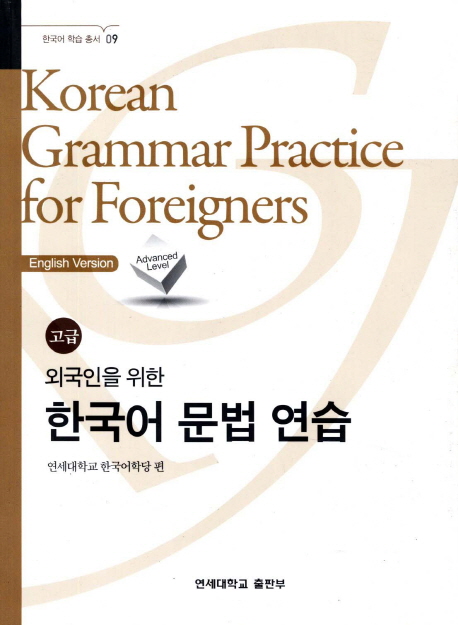
이 책은 동일한 의미 기능의 문법 항목을 비교, 대조하는 기능별 문법 교재로, 의미가 비슷한 문법 항목들의 정확한 사용에 혼란을 느끼는 중급 이상의 학습자나 교사들에게 도움을 주고자 개발되었다. 한국어가 외국어로 지니고 있는 기본 개념과 특징 즉, 한국어의 음운, 단어와 품사, 문장과 이야기, 문법 요소, 역사적 발전 과정, 문자 등의 내용을 포함하면서 기존의 모든 한국어 문법서를 참조하여 그 내용을 기능별로 나누어 설명한다. 기능 배열은 유산 의미 기능과 형태를 중심으로 해서 유사 문법 항목들의 비교를 도표와 삽화를 통해 쉽게 설명하였다.
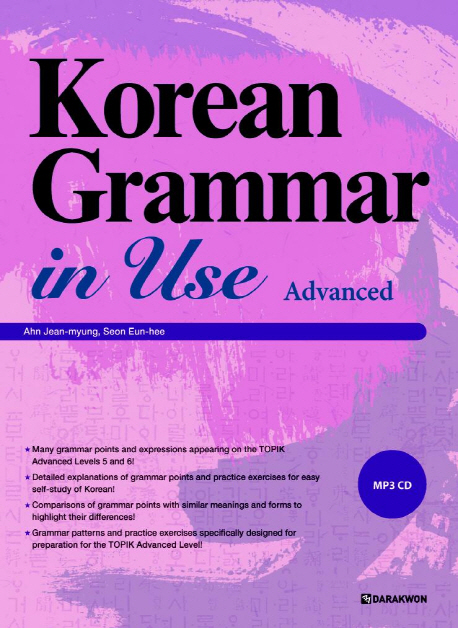
Click here to download the free MP3 audiofiles This book marks the third volume in the Korean Grammar in Use series, which presents Korean grammar in the most effective manner available for learning. This Advanced volume contains all of the major grammar points covered by the TOPIK Advanced exam (Levels 5-6). To the extent that it is designed for advanced students of Korean, we have made the example sentences to reflect an equally advanced level. Moreover, to make it easier to understand the situations in which the target grammar should be used, we have provided vivid situational illustrations. Finally, we have described grammar points in clear and concise English to help English-speaking learners of Korean better understand the complexities of Korean grammar. ▪ Full Summary of TOPIK Advanced (Levels 5-6) Grammar! All the major grammar points introduced in the textbooks used at Korean university and language institutes, in addition to all the grammar points that appear on Levels 5 and 6 of the TOPIK, are summarized in an easy, at-a-glance format. We have also included practice exercises for TOPIK grammar patterns as additional preparation for taking the TOPIK exam. ▪ Understand at a Glance both the Primary & Additional Meanings of the Target Grammar! Going beyond simply listing grammar points to be learned, the differences between grammar forms that have similar meanings and usages are highlighted, and any additional meanings and form restrictions that should be kept in mind when using the grammar are noted, thereby achieving the goal of an integrated method of grammar study. ▪ Realistic Dialogue Creation that Incorporates the Target Grammar! Learners can directly create dialogues to better understand how the target grammar is actually used in real life. Realistic dialogues that represent the actual use of the target grammar are used in place of conventional simple sentences, thus helping students to learn how to actually use Korean. ▪ Customized Solutions for both Students and Teachers! Students can understand Korean more easily while also learning how to master a wide variety of advanced-level Korean phrases, and teachers can benefit by being able to more easily organize grammar points when planning their class curriculums.
Korean Grammar for Foreigners: Semantic Functions21. 당위 2. 상반 3. 시인 4. 의견 5. 판단 6. 확인 7. 명령 권유 8. 봉사 9. 제안 10. 포함 11. 유일 한정 12 능력 13 가능
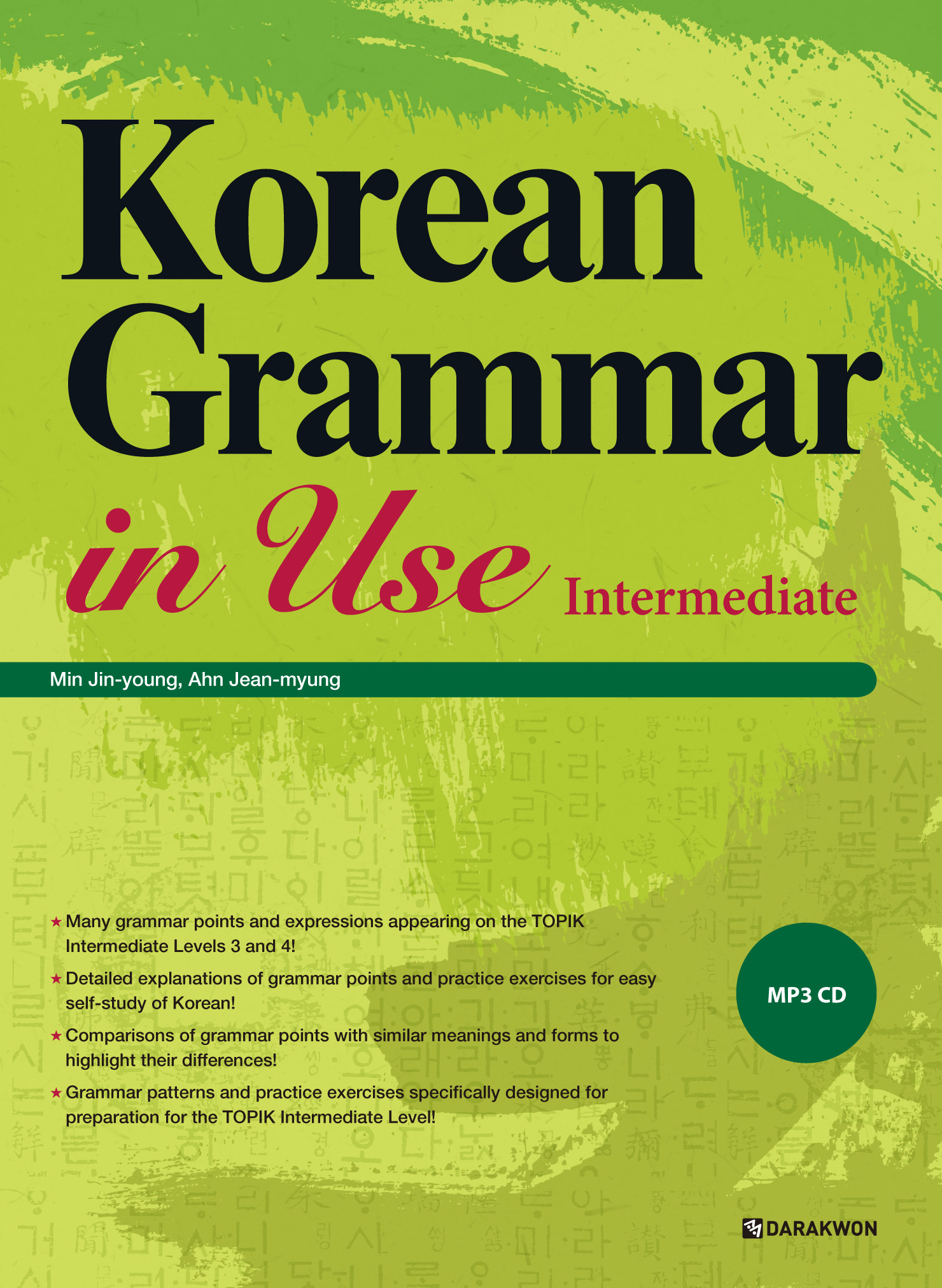
About this Book: This is the second volume in the Korean Grammar in Use series which is best selling book for the learners of Korean, one of the most effective texts for learning Korean grammar. Along with the first volume, Beginning to Early Intermediate, which covered the major grammar points learned in most introductory (Levels 1 and 2) Korean courses, this Intermediate volume covers the major grammar points learned in intermediate (Levels 3 and 4) Korean courses. Together, they form a full-scale, comprehensive Korean reference grammar. Realizing that most other Korean grammar books target beginning learners only, the authors have answered the needs of intermediate level students who want a more systematic way to focus on grammar. In addition, this series serves as a general Korean reference grammar that can be used by Korean language instructors both in Korea and abroad who experience first-hand the difficulty of teaching Korean grammar. Go beyond the basics to 'Intermediate'! -TOPIK Levels 3 & 4 Grammar! Collects the introductory grammar points normally taught in Levels 3 and 4 at most university affiliated and private language institutes. In addition, this volume includes practice pattern exercises to help students prepare for the TOPIK Intermediate level. -Target Grammar Primary and Secondary Meanings At a Glance! Organizes grammar points not as a list that simply must be learned, but as integrated groups of grammar points with similar meanings, usages, and written forms to better illustrate their differences and provide learners with the variousmeanings, restrictions, and other things to keep in mind when learning them. -Dialogues Full of Real-Life Uses of Grammar! Students will learn to make their own dialogues that use the target grammar points in ways most commonly used in real Korean conversation. The dialogues used are not simply sentences constructed for the purpose of illustrating grammar, but rather examples that reflect practical, real-life Korean conversations. -Easy Individualized Use by Both Students and Teachers! Not only can students more easily master a variety of difficult Korean grammar points, instructors can also benefit by having an accessible, easy-to-use reference for explaining such difficult aspects of Korean grammar in class.
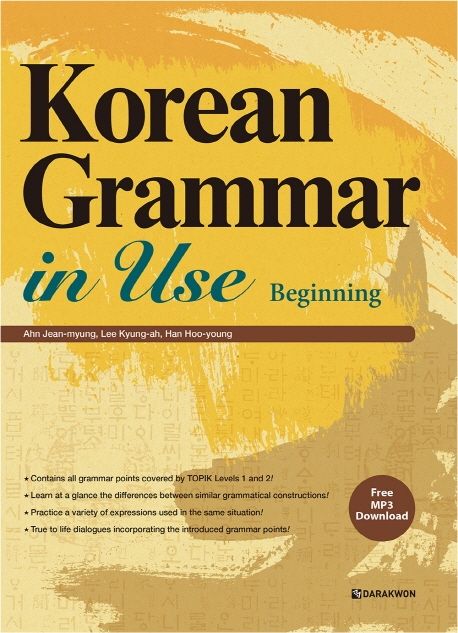
About this Book: This series is the culmination of educational know-how and systematic grammar organization acquired by the three authors from their experience actually teaching Korean to foreigners in the classroom. In focusing strictly on Korean grammar, this series represents a departure from most current integrated teaching materials, allowing foreign learners to more easily concentrate on grammar in their study of Korean. The authors have included real dialogues and illustrations to make the study of Korean more interesting, especially for those students who have heretofore felt Koran grammar to be difficult. Further, this series equally serves as a general Korean grammar reference that can be used by Korean language instructors both in Korea and abroad who regularly experience the difficulty of teaching Korean grammar first-hand. About the series: ▪ Collects the introductory grammar points normally taught in Levels 1 and 2 at most university affiliated and private language institutes. ▪ Makes it easy for learners to locate those grammar patterns they find the most confusing by providing comparisons of patterns similar in meaning and usage. This way, learners can not only clarify the differences between similar patterns, but also study how they are used differently depending on the situation. ▪ Lets the learner confirm the usage of target grammar points by illustrating how they are used in real conversation. The examples presented are not simply sentences constructed for the purpose of illustrating grammar, but rather examples of how the grammar points are actually used in real life. ▪ Includes special sections on particularly tricky grammar points to allow learners to acquire a more accurate and natural-sounding command of Korean. Further, by presenting a variety of grammatical patterns along with both practice exercises and graphic illustrations, learners can approach the study of Korean grammar with renewed interest. Contents Preface How to Use This Book Table of Contents ■ Introduction to the Korean Language 1. Korean Sentence Structure 2. Conjugation of Verbs and Adjectives 3. Connecting Sentences 4. Sentence Types 5. Honorific Expressions ■ Getting Ready 01 이다 (to be) 02 있다 (to exist/be, to have) 03 Numbers 04 Dates and Days of the Week 05 Time Unit 1. Tenses 01 Present Tense A/V-(스)ㅂ니다 02 Present Tense A/V-아/어요 03 Past Tense A/V-았/었어요 04 Future Tense V-(으)ㄹ 거예요 ① 05 Progressive Tense V-고 있다 ① 06 Past Perfect Tense A/V-았/었었어요 Unit 2. Negative Expressions 01 Word Negation 02 안 A/V-아/어요 (A/V-지 않아요) 03 못 V-아/어요 (V-지 못해요) Unit 3. Particles 01 N이/가 02 N은/는 03 N을/를 04 N와/과, N(이)랑, N하고 05 N의 06 N에 ① 07 N에 ② 08 N에서 09 N에서 N까지, N부터 N까지 10 N에게/한테 11 N도 12 N만 13 N밖에 14 N(으)로 15 N(이)나 ① 16 N(이)나 ② 17 N쯤 18 N처럼/N같이 19 N보다 20 N마다 Unit 4. Listing and Contrast 01 A/V-고 02 V-거나 03 A/V-지만 04 A/V-(으)ㄴ/는데 ① Unit 5. Time Expressions 01 N 전에, V-기 전에 02 N 후에, V-(으)ㄴ 후에 03 V-고 나서 04 V-아/어서 05 N 때, A/V-(으)ㄹ 때 06 V-(으)면서 07 N 중, V-는 중 08 V-자마자 09 N 동안, V-는 동안 10 V-(으)ㄴ 지 Unit 6. Ability and Possibility 01 V-(으)ㄹ 수 있다/없다 02 V-(으)ㄹ 줄 알다/모르다 Unit 7. Demands and Obligations, Permission and Prohibition 01 V-(으)세요 02 V-지 마세요 03 A/V-아/어야 되다/하다 04 A/V-아/어도 되다 05 A/V-(으)면 안 되다 06 A/V-지 않아도 되다 (안 A/V-아/어도 되다) Unit 8. Expressions of Hope 01 V-고 싶다 02 A/V-았/었으면 좋겠다 Unit 9. Reasons and Causes 01 A/V-아/어서 ② 02 A/V-(으)니까 ① 03 N 때문에, A/V-기 때문에 Unit 10. Making Requests and Assisting 01 V-아/어 주세요, V-아/어 주시겠어요? 02 V-아/어 줄게요, V-아/어 줄까요? Unit 11. Trying New Things and Experiences 01 V-아/어보다 02 V-(으)ㄴ 적이 있다/없다 Unit 12. Asking Opinions and Making Suggestions 01 V-(으)ㄹ까요? ① 02 V-(으)ㄹ까요? ② 03 V-(으)ㅂ시다 04 V-(으)시겠어요? 05 V-(으)ㄹ래요? ① Unit 13. Intentions and Plans 01 A/V-겠어요 ① 02 V-(으)ㄹ게요 03 V-(으)ㄹ래요 ② Unit 14. Background Information and Explanations 01 A/V-(으)ㄴ/는데 ② 02 V-(으)니까 ② Unit 15. Purpose and Intention 01 V-(으)러 가다/오다 02 V-(으)려고 03 V-(으)려고 하다 04 N을/를 위해(서), V-기 위해(서) 05 V-기로 하다 Unit 16. Conditions and Suppositions 01 A/V-(으)면 02 V-(으)려면 03 A/V-아/어도 Unit 17. Conjecture 01 A/V-겠어요 ② 02 A/V-(으)ㄹ 거예요 ② 03 A/V-(으)ㄹ까요? ③ 04 A/V-(으)ㄴ/는/(으)ㄹ 것 같다 Unit 18. Changes in Parts of Speech 01 관형형 -(으)ㄴ/-는/-(으)ㄹ N 02 A/V-기 03 A-게 04 A-아/어하다 Unit 19. Expressions of State 01 V-고 있다 ② 02 V-아/어 있다 03 A-아/어지다 04 V-게 되다 Unit 20. Confirming Information 01 A/V-(으)ㄴ/는지 02 V-는 데 걸리다/들다 03 A/V-지요? Unit 21. Discovery and Surprise 01 A/V-군요/는군요 02 A/V-네요 Unit 22. Additional Endings 01 A-(으)ㄴ가요?, V-나요? 02 A/V-(으)ㄴ/는데요 Unit 23. Quotations 01 Direct Quotations 02 Indirect Quotations 03 Indirect Quotation Contracted Forms Unit 24. Irregular Conjugations 01 �ㅡ� 불규칙 (Irregular Conjugation) 02 �ㄹ� 불규칙 (Irregular Conjugation) 03 �ㅂ� 불규칙 (Irregular Conjugation) 04 �ㄷ� 불규칙 (Irregular Conjugation) 05 �르� 불규칙 (Irregular Conjugation) 06 �ㅎ� 불규칙 (Irregular Conjugation) 07 �ㅅ� 불규칙 (Irregular Conjugation) ■ Appendix Good Things to Know Answer Key Grammar Explanations in Korean Grammar Index